
USTR-led probe to determine if they’re failing “to impose and effectively enforce a prohibition on the importation of goods produced with forced labor.”
The Trump administration last week announced two new investigations into unfair trade that has harmed American manufacturers and workers. The first, which we detailed here, is probing the excess production capacity across roughly 20 industries and 16 economies that warps international markets by flooding them with cheap goods. The second focuses on forced labor.
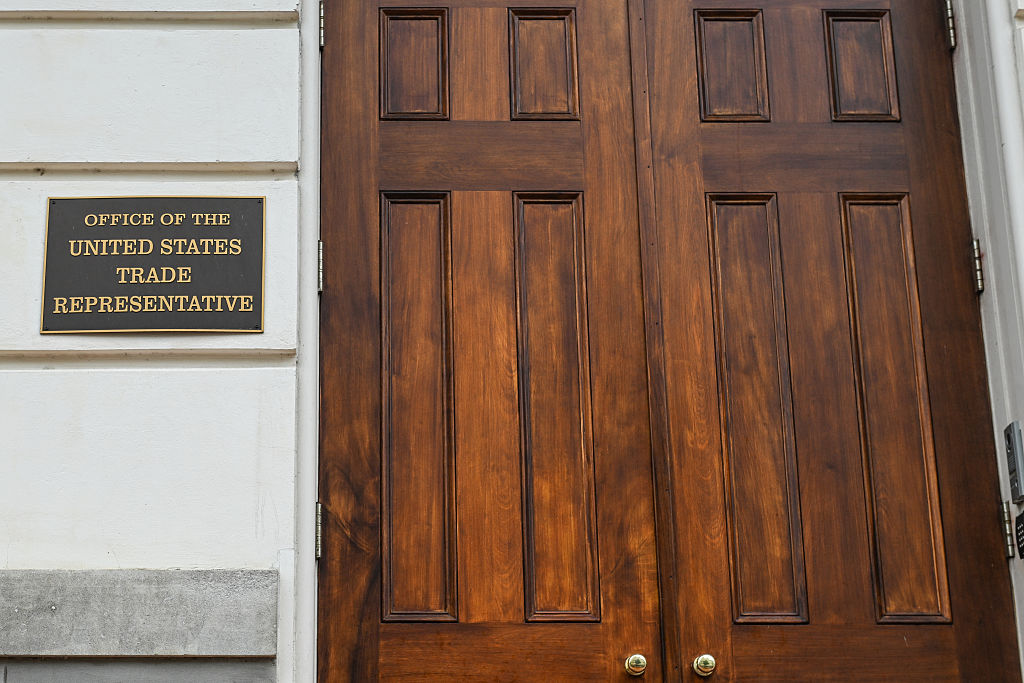
Like the overcapacity investigation before it, the forced labor probe is authorized under authority of Section 301 of the Trade Act of 1974, which allows the president to impose tariffs on nations that engage in “acts, policies, and practices are unreasonable or discriminatory and burden or restrict U.S. commerce.” The Office of the U.S. Trade Representative (USTR) will conduct the investigation, which will include consultations with foreign governments and public hearings at home before any tariffs are implemented.
By the number of countries potentially implicated, this is the bigger investigation. The forced labor 301 examines the economies of 60 countries to determine not simply if they’re utilizing forced labor themselves but rather if they’re failing “to impose and effectively enforce a prohibition on the importation of goods produced with forced labor.” And that leads to the elephant in the room.
Forced labor has been a longstanding concern of U.S. trade enforcement, so much so that in recent years we’ve even seen the enactment of a bipartisan federal law that bans products and materials produced with the forced labor of the Uyghur population in China’s Xinjiang region. China is the world’s largest manufacturer and its factories in Xinjiang sit at the heart of supply chains from textiles and chemicals to auto parts and polysilicon – a key component for solar panels, an industry that China dominates. Those supply chains stretch across plenty of borders, potentially implicating dozens of countries in the scope of the Section 301 probe.
According to reporting by The Wire China, enforcement of this law – the Uyghur Forced Labor Prevention Act (UFLPA) – has dropped during the second Trump administration. The piece also notes that some observers “suggest Trump may be holding back on the Uyghur issue as he seeks a trade deal with China.” Nevertheless, the problem of forced labor in China persists:
Experts say it is unlikely that China’s repression of Uyghurs and other Muslim minorities is declining. An independent panel appointed by the United Nations warned in January that many cases of a “persistent pattern of alleged State-imposed forced labor involving ethnic minorities across multiple provinces in China” could amount to a crime against humanity. On Thursday, China’s legislature passed a law requiring the country to promote “ethnic unity.”
Forced labor is not limited to China. It exists around the world in dozens of industries. But the findings of this Section 301 investigation could center the issue and bring to light how it’s an unfortunate feature of modern trade. American workers should not be made to compete with forced labor, just like as workers should not be made to labor against their will. We’ll be watching this investigation as it develops.