

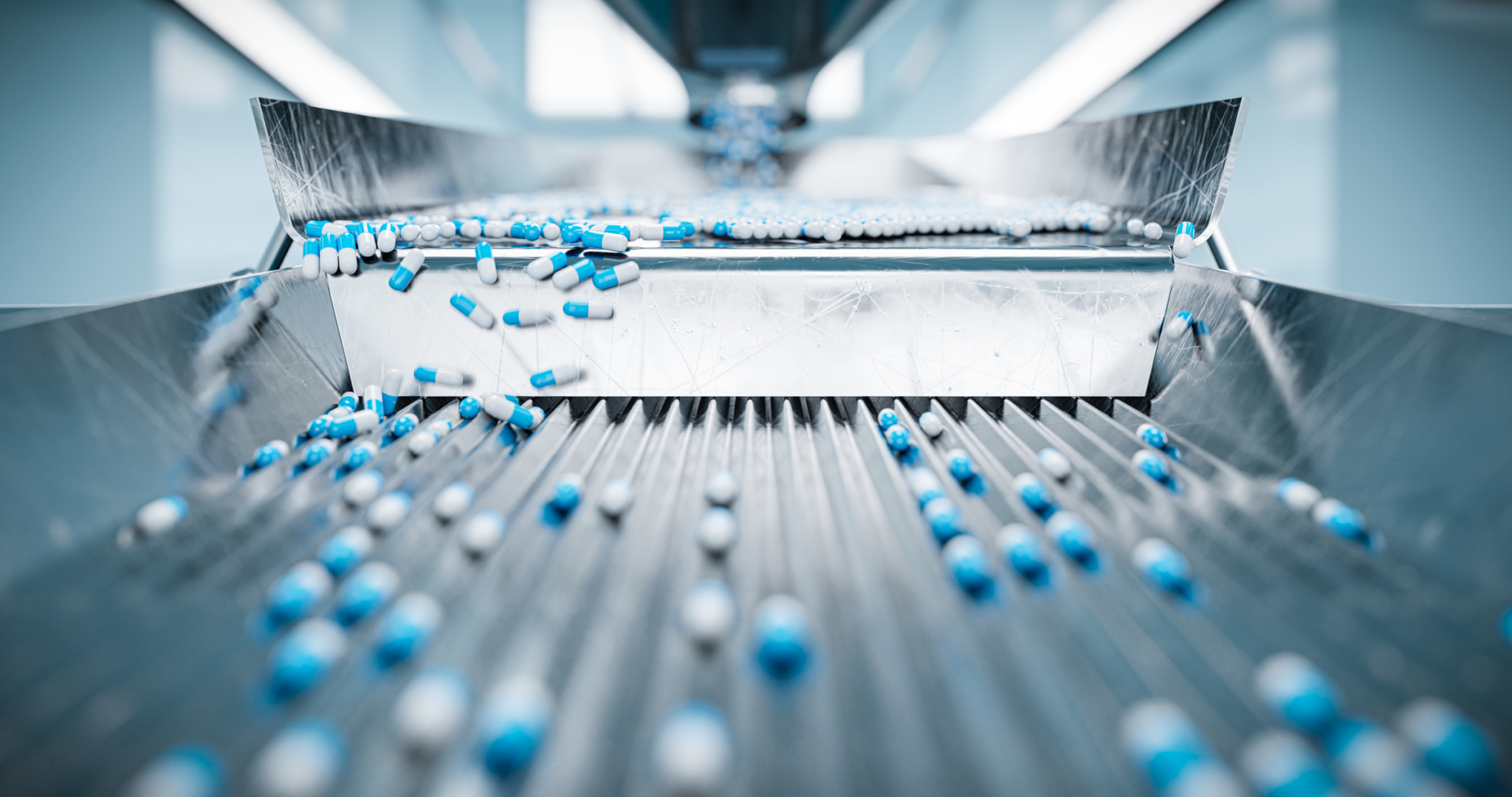
Senate Aging Committee members look to incentivize upstream pharmaceutical supply chains.
America’s medicine supply is only as secure as its weakest link. And for too many essential medicines, that link remains thousands of miles away in China or India. A bipartisan group of senators is pushing the federal government to do something about it.
Senate Aging Committee Chairman Rick Scott (R-Fla.) and colleagues Sens. Marsha Blackburn (R-Tenn.), Adam Schiff (D-Calif.), Ted Budd (R-N.C.) and Andy Kim (D-N.C.) are urging the U.S. Department of Health and Human Services (HHS) and Centers for Medicare & Medicaid Services (CMS) to strengthen the federal incentives that encourage hospitals and clinics to purchase essential medicines manufactured in the United States.
Importantly, the senators recognize that simply making the finished drug here isn’t enough.
They support incentives for finished medicines manufactured in the United States using active pharmaceutical ingredients (APIs) that are compliant with the Trade Agreements Act (TAA). But they propose higher incentives when the API and the key starting materials (KSMs) used to produce the medicine are also manufactured in the United States. It’s a distinction that matters.
An API is the ingredient that gives a medicine its therapeutic effect. But making an API requires its own upstream supply chain, including KSMs that serve as chemical building blocks. U.S. Pharmacopeia has found these upstream supply chains can remain highly concentrated in China and India even when API manufacturing appears geographically diversified.
Consider amoxicillin, an often-prescribed medicine. Although manufacturers around the world can produce amoxicillin API and formulate the finished medicine, its synthesis depends on four KSMs produced almost entirely in China. One of those materials, 6-APA, is also critical to several other penicillin-based antibiotics.
That also illustrates a potential limitation of relying on TAA eligibility alone. That’s because TAA country-of-origin determinations generally focus on where a product undergoes “substantial transformation.” As such, a qualifying API doesn’t necessarily tell policymakers where all of its critical upstream inputs originate.
This push comes as the Trump administration is taking broader steps to rebuild America’s pharmaceutical industrial base. The administration is examining domestic capacity to manufacture 86 essential medicines, including their APIs and KSMs, while pursuing strategic reserves of critical APIs and proposing additional federal investment in pharmaceutical manufacturing and supply-chain security.
The administration has also tapped trade policy, using a Section 232 investigation to examine the national security implications of pharmaceutical imports and pursuing policies intended to encourage additional domestic manufacturing investment.
Taken together, these efforts reflect an important shift in how Washington thinks about pharmaceutical security. It isn’t enough to move the last stage of production to the United States while remaining dependent on China for the ingredients needed to keep American factories running.
The same idea applies to our drugs. Whether the product is steel, semiconductors or medicine, the principle should be the same: Federal policy should reward companies that build the deepest possible supply chains in the United States.