

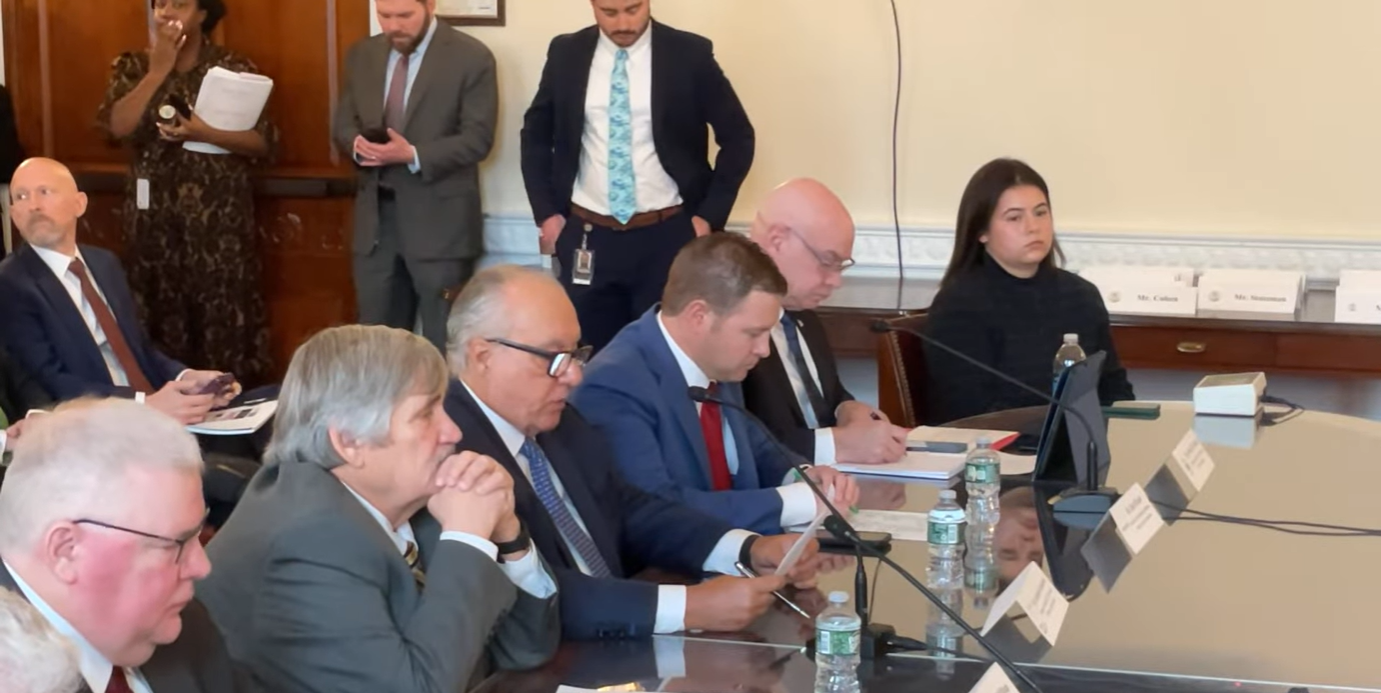
Witnesses from the biggest domestic steelmakers and the United Steelworkers urged Congress to remain vigilant against surging global steel overcapacity.
America’s steel industry is back on track after years of rising global excess capacity, thanks to Section 232 tariffs on steel imports, but there’s more work to be done, representatives of America’s domestic steel industry and the United Steelworkers testified before the Congressional Steel Caucus on Wednesday. The United States must do more to strengthen trade enforcement, improve trade agreements, and bolster Buy America policies witnesses told the bipartisan group of lawmakers who represent steel manufacturing regions.
“Tariffs work,” United States Steel Corporation President and CEO David Burritt said. “They must remain strong. And tariffs on steel-intensive goods, expanded just last year, are game-changers. They protect jobs, preserve domestic capacity, and support the investments we’re making for customers across automotive, energy, construction, and manufacturing.”
U.S. Steel, which celebrates its 125th anniversary next month, announced plans this past November to invest $11 billion in its growth and create more than 100,000 jobs across the United States.
Though Section 232 has staved off unfair competition in the U.S. market, the Organisation for Economic Co-operation and Development (OECD) estimates that excess steel capacity will rise to 721 million metric tons by 2027 with “high levels of subsidies and other policy distortions in several non-OECD economies” as “key drivers of this imbalance.”
In particular, the OECD highlights China’s role in this global overcapacity, a crisis of China’s making that extends beyond the steel market. Just this Wednesday, China hit its largest trade surplus ever. The good news? U.S. tariffs are staving off this flood of unfairly subsidized goods from distorting our market and crushing our manufacturers.
“While the American steel industry still operates below acceptable levels of capacity utilization, the trade actions implemented by President Trump’s Administration are moving us in the right direction,” Cleveland-Cliffs Inc. Chairman, President & CEO Lourenco Goncalves said. “Due to Section 232 steel tariffs, imports are down significantly, accounting for 16% of the market in October 2025. This 16% number represents a significant improvement over the 25% to 30% import penetration levels of the recent past.”
The overcapacity threat remains at our door.
“We cannot let our market be the dumping ground of other countries’ steel in an effort to keep their unemployment rate low,” United Steelworkers District 7 Director Mike Millsap said. “We will defend the American steel industry from anyone who seeks to close our plants and make our country less secure.”
Rep. Frank Mrvan (D-Ind.), who co-chairs the Caucus with Rep. Rick Crawford (R-Ark.), highlighted the role Section 232 has played in countering excess capacity while highlighting that the Steel Caucus continues to work with the White House to strengthen the measures.
“Global steel overcapacity continues to grow as countries such as China flood domestic markets with heavily subsidized – and often, unethically produced – steel products,” Mrvan said.
“It’s vital to maintain the steel caucus as a strong, bipartisan institution that serves as a steady hand guiding policy and fighting for the steel industry and its workers, long after Vice Chairman Mrvan and myself move on from Congress,” Crawford said.
Milsap urged the Trump administration to leave no room for transshipment in the United States-Mexico-Canada Agreement (USMCA), which goes under formal review this July, and for Congress to pass bills like the SHIPS for America Act, which aims to rebuild America’s shipbuilding capacity.
Goncalves shared great concern that USMCA exemptions and exclusions could undermine Section 232 action.
The Alliance for American Manufacturing has also called on the Trump administration to close loopholes in the trade deal that allow China to circumvent tariffs.