

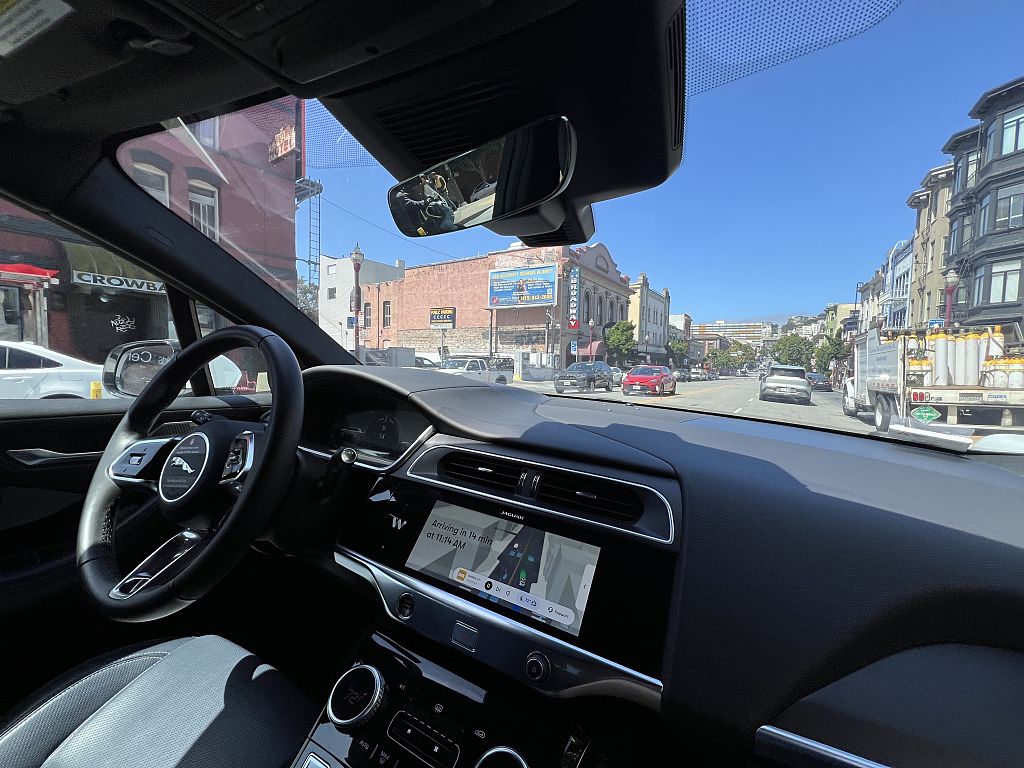
Meanwhile, the aptly named Connected Vehicle Security Act makes its way through Congress — and it targets some real AV dangers.
Who doesn’t like a good thriller novel? The last one I read was what you’d call an oldie but a goldie – “The Day of the Jackal” by William Forsythe, which is about the hunt for an assassin hired to kill French President Charles de Gaulle. It’s a real page turner, yes, but again: It’s a little dated.
A new one coming out in a few days, however, is not. Co-written by a former New York City traffic commissioner who now leads a traffic research program at Hunter College in Manhattan, “Autokill” is described by the New York Times as “a nail-biter about a terrorist plot to turn autonomous vehicles (AVs) into weapons.” And while AVs aren’t yet ubiquitous on American highways, they likely will be soon. Already, they’re operating in nearly a dozen major metro areas across the country, and plenty of other locales are preparing for them: The Washington, DC city council, for instance, after a steady lobbying blitz is weighing legislation that would allow AVs to operate commercially in the nation’s capital by 2028.
Sam Schwartz, the academic and onetime traffic commissioner behind the novel, is quite literally a professional expert on this stuff, and he expects the mass adoption of AVs to be a momentous industrial event. He’s also a measured critic of the AV industry. For example, a report produced this spring by his research program contends that “replacing a high-volume for-hire vehicle in New York City with a robotaxi would increase vehicle miles traveled and congestion.”
Problems with AV fleets, meanwhile, aren’t exactly hard to believe. Anecdotes abound of AVs driving in circles in Georgia cul-de-sacs, blinking out en masse in San Francisco and gumming up residential neighborhoods near the airport in Los Angeles.
This work of fiction, then, that imagines a near future in which AVs could be dangerously co-opted doesn’t seem so far-fetched. “Autokill” hasn’t yet been released (update: it’s been released), but an excerpt is available online and that Times write-up sheds further light on its plot:
His novel is set in the 2030s and revolves around a protagonist with a tragic past and a striking resemblance to Mr. Schwartz.
The character, Richard Corby, is a professor of ‘social justice in urban planning’ who has encyclopedic knowledge of transportation and lives in an America where politicians are in the thrall of A.V. companies. After his wife is killed by a driverless car, he spirals, until he meets a young protégée who is also worried about the industry’s growing influence.
Through narrative kismet, they become entangled with a federal agent investigating a string of unexplained driverless vehicle malfunctions. Their sleuthing leads them on a quest to stop the ‘Horizon Event,’ a catastrophic attack on New York planned by a Luddite who resents the A.V. industry.
Admittedly, this sounds like a worthy read for those interested in either speculative fiction or transportation policy debates. But this preview gives me some pause, particularly regarding the detail about its antagonist. A Luddite?
Maybe that’s the correct term, and the bad guy indeed fits the description. But it’s also possible this is not an issue with the novel’s narrative choices but with the Times reporter who wrote the article: Luddites were 19th century English craft workers who (sometimes violently) protested the unregulated adoption of industrial technology that replaced them at their jobs and left them destitute, and who were then much more violently suppressed by industrialists and the British government. Luddites weren’t anti-technology, per se; they wanted to be included in a just transition during what became the Industrial Revolution. We’ll see if that accurately describes the novel’s antagonist. But a better word, I bet, is technophobe.
What’s more, there’s an obvious, existing antagonist around which the novel could have centered: Chinese automakers and the government behind them.
The growth of the Chinese auto industry has exploded in recent decades, the result of cutthroat competition that has saturated China’s enormous domestic market and a ton of government support that encourages it to seek export markets. The resulting flood of exports has raised questions among security researchers, who have asked why Chinese-made vehicles contain “kill switches” that could allow them to be remotely disabled, or why sensitive microphones that send data back to China are found embedded in these vehicles.
In fact, those same researchers even laid out a plausible scenario in which Chinese-made electric vehicles are made to “brick” at critical spots around a European capital to demonstrate Beijing’s displeasure with western political developments. That sounds like a scene right out of the novel!
It isn’t fair to judge a book by its cover, or by the plot teaser printed on its dust jacket. So I’ll park further criticism of “Autokill” before reading it in full.
Because this indeed is a very timely book: Modern automobiles are rolling computers that collect reams of data and rely on sophisticated software, sensors and communications technologies to do it. It’s these concerns – to say nothing of that aforementioned government support that encourages Chinese automakers to seek export markets – that are the impetus behind the Connected Vehicle Security Act, which would essentially codify an existing rule to prohibit from the United States connected vehicles and related hardware and software linked to foreign adversaries.
U.S. Sen. Bernie Moreno (R-Ohio), one of the bill’s sponsors, actually grilled a Waymo executive in a February 2026 hearing about the company’s use of Chinese-made vehicles for its AV fleet:
That Waymo executive assured Moreno and the Senate committee that its Chinese-made cars have “no connectivity” and that their driving software is installed in the United States. But you can color me unimpressed by that promise. The United States would be wise to head off the security threat, inherent in ultra-wired camera platforms that are modern automobiles, by passing the Connected Vehicle Security Act. Click the link below and let your lawmaker know that you feel the same.