
What was once two brothers “making stuff” is now a luxury leather goods company.
Growing up in Minnesota, brothers Chris and “Kirk” Bray always knew they would start a company together.
It began in Southern California as Chris was trudging the difficult road of becoming a working actor and Kirk was in college studying fashion design. After 10 years of unsuccessful auditions, Chris realized a career as a thespian was not to be. And after college, younger brother Kirk heeded the call of ‘Go West Young Man’ and joined Chris in Santa Monica.
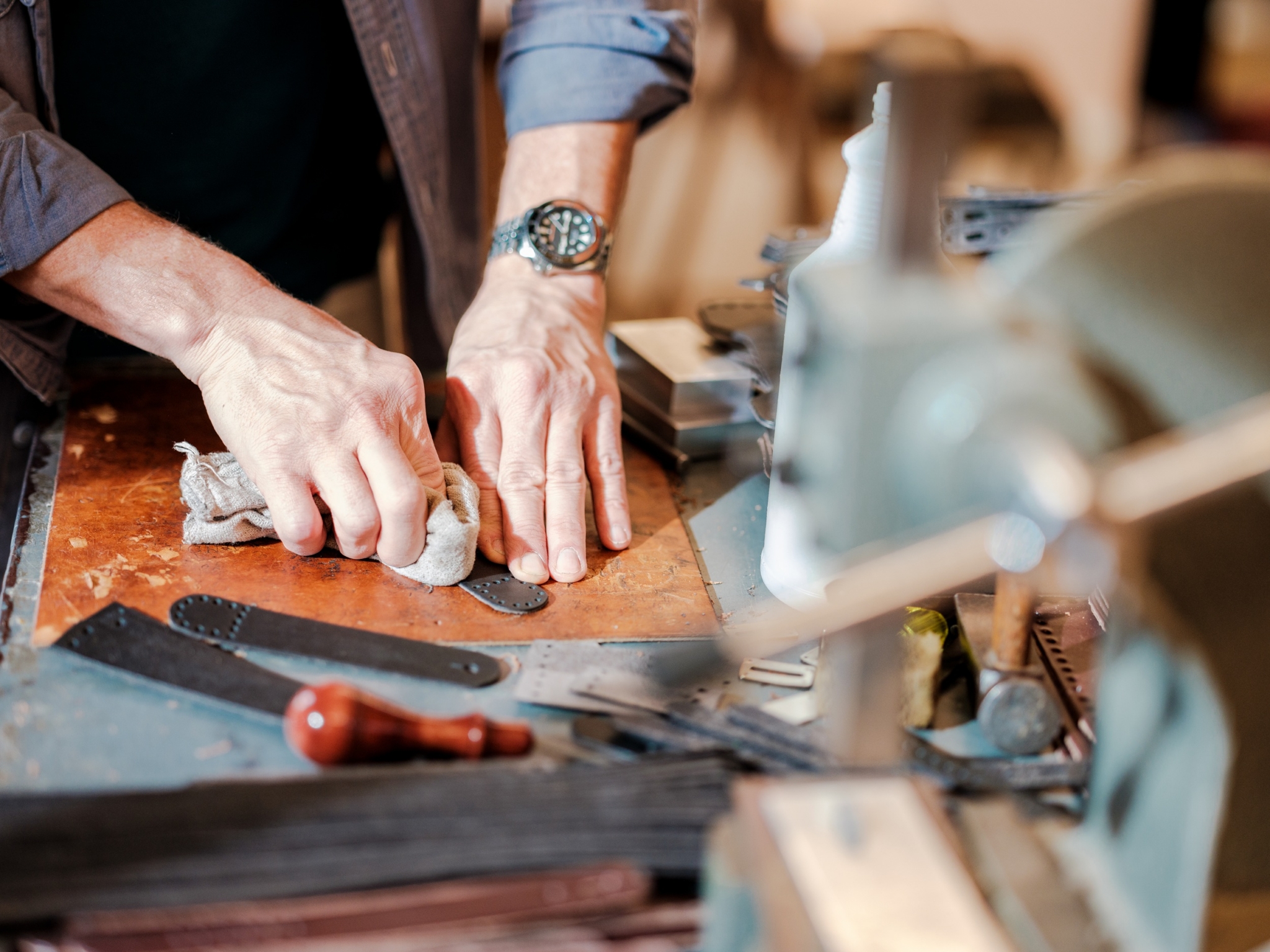
Together again, the brothers turned to what they knew best: Making things with their hands.
In 1999, after two years of honing their craftmaking skills, the brothers launched their leather goods manufacturing company Billy Kirk.
“We always knew that we were going to have a company together and that it was going to be called Billy Kirk because that’s his name, William Kirkland Bray, and our dad would call him Billy Kirk,” said elder brother Chris. “We collected vintage items and we were always making stuff.
“We’re creators, we’re designers meant to work with our hands. Our dad taught us in Minnesota how to make a leather scabbard for a knife. We grew up making stuff.”
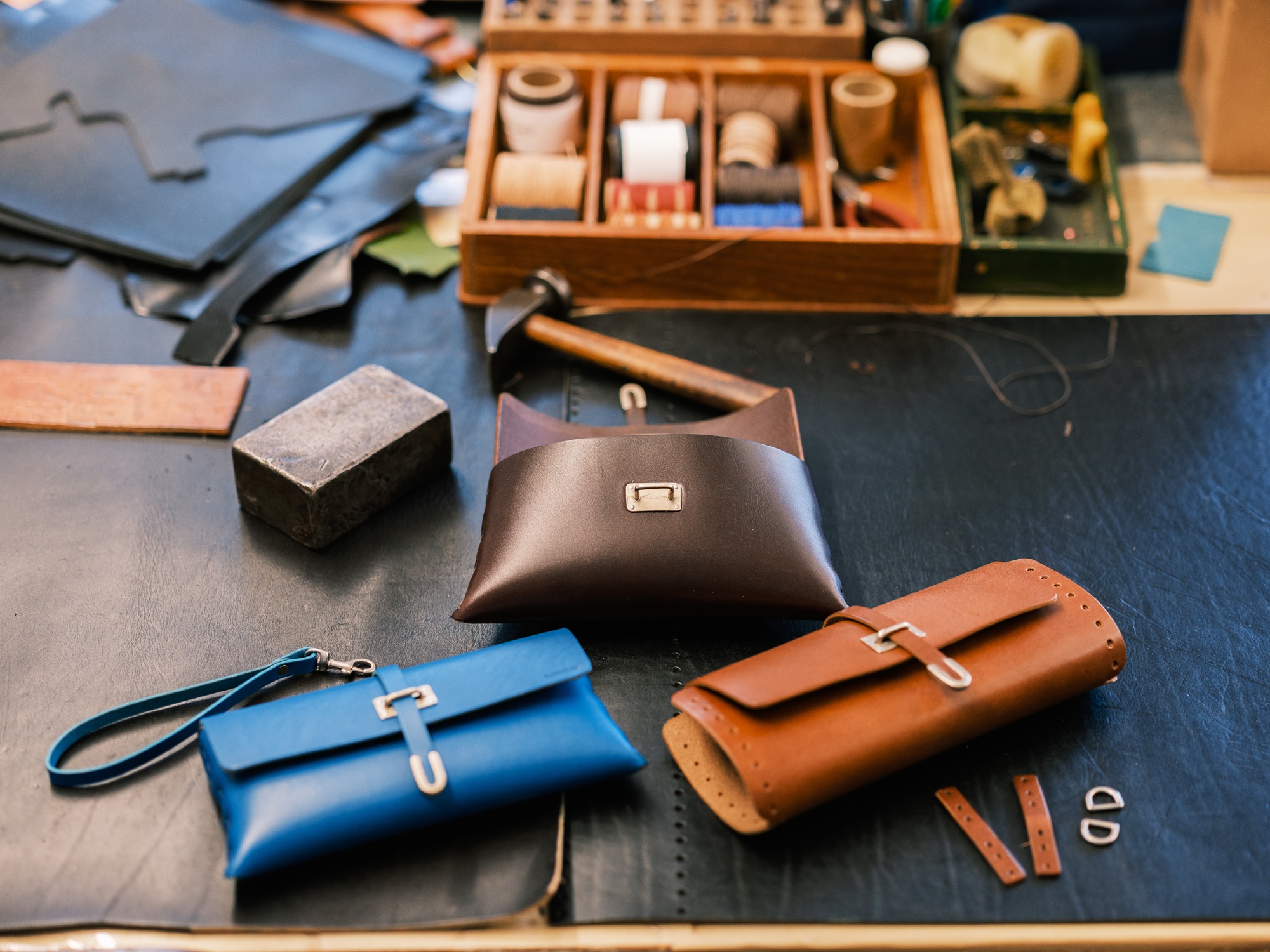
Today, the Billy Kirk team is “making stuff” on the East Coast, operating out of a small studio in downtown Jersey City. Leather belts, wallets, bags, totes and card holders are just some of the hand-crafted luxury items it manufactures.
And it all started in California with a leather watch strap they found in a Santa Monica pawn shop.
“We bought the watchstrap, this was in the mid ’90s, and Kirk was wearing it a lot and people kept commenting on it,” said Chris Bray. “These watch straps were popular in the 1970s but that ’80s punk rock scene sort of took them out of existence.
“But the watch strap was the catalyst. It made us think maybe we could make these things. So, I literally picked up the Yellow Pages, remember those? And found a leather wholesaler nearby who just sort of took us under his wing. He was really instrumental, so we just started buying leather and making things with our own X-Acto knives, trying to get the right dimensions.”
The homemade watch bands led the Bray brothers to downtown Los Angeles leathermaker Arnold Arons, who eventually let them use part of his studio. Arons Manufacturing had the tools the brothers needed to expand their product line, and Arons graciously mentored Chris and Kirk for two years.
Now on the East Coast, Billy Kirk continues to thrive on by finding niche markets for their products without being trendy.
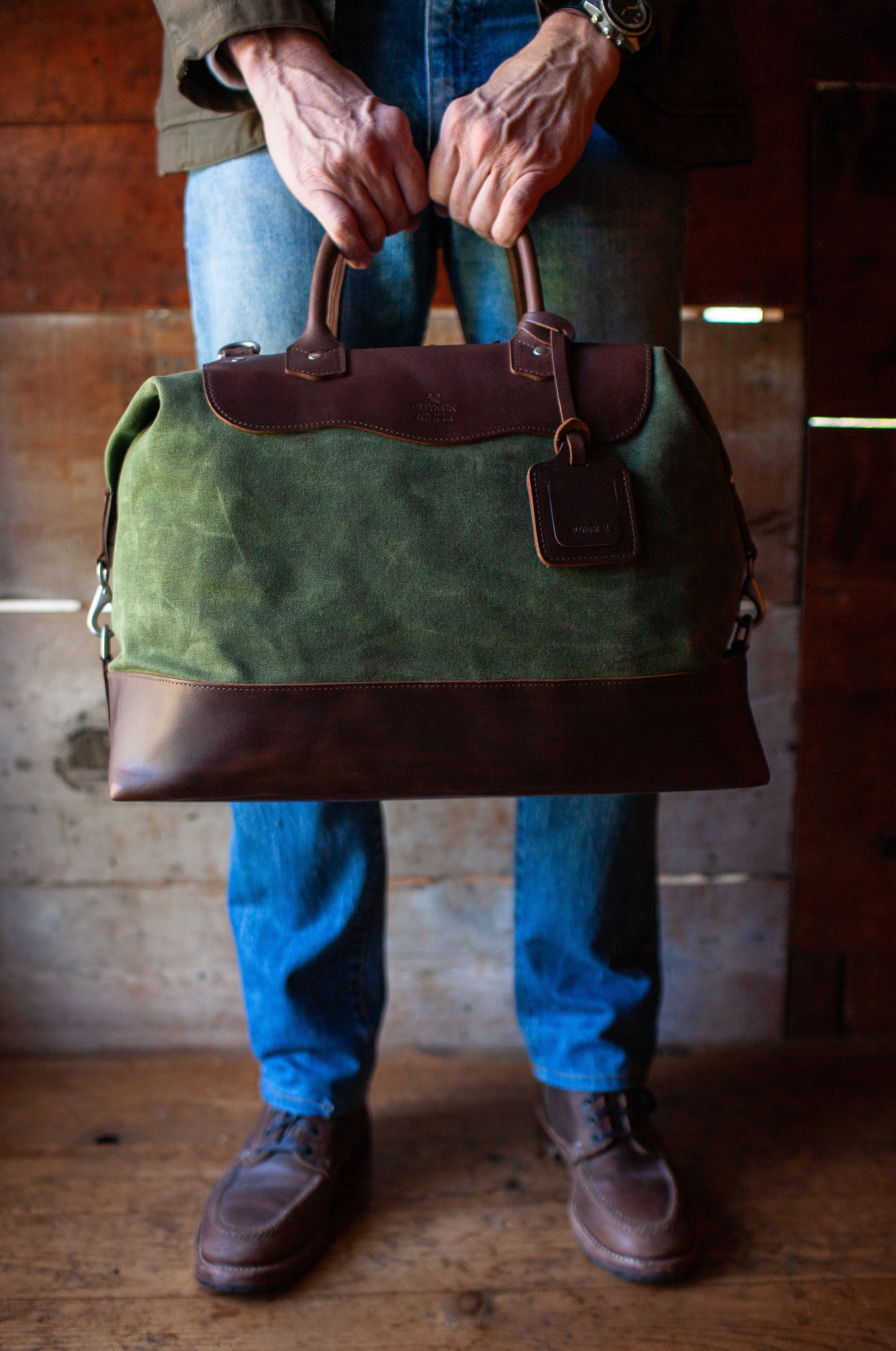
“None of our stuff looks (that way). It’s all classically designed,” said Chris Bray. “I want it all to be usable in 30 years. I won’t be embarrassed. Continuity between the collections is super important.”
A top seller and one of Billy Kirk’s most important items are its leather belts, which during the early 2000s were manufactured with the help of a Pennsylvania Amish community. Today, the leather belts are manufactured in the Jersey City workshop.
One of the belts the Bray brothers, now in their 50s, are most proud of is the “mechanics belt,” which hides the buckle but maintains a refined, classy appearance.
“One of the belts we make is one that was made by Arnold Arons’ grandfather and it is purely Americana,” said Chris Bray. “His grandad was making these for the auto industry because the flap of leather that covers the buckle is there to protect the paint job and also for electrocution.
“We sell these to guitarists who love them because they protect the guitars and don’t make noise when recording. Guys on motorcycles love them because you won’t scratch the paint on the tank. I use it as a dress belt. It is literally the only belt I wear with suits because it is seamless. It has hand-stitched details. It is one of my favorite pieces.”
As an American-made manufacturer, Billy Kirk sources its leather from tanneries throughout the United States.
“We are constantly sourcing leather because a lot of these tanneries have shut down,” said Chris Bray. “Unfortunately, Salz Tannery in Northern California shut down but we’ve used beaver leather and traditional cattle hides from Horween in Chicago, Milton Sokol Leather in Kew Gardens here in New York. Rocky Mountain is another one. The Hide House in L.A.
“The hides go onto a cutting table and we will cut it to however big it needs to be. If it’s for small leather goods you cut it accordingly. Normally, with a larger order, we use cutting dies.”
One of those larger orders will likely come from a licensed, custom-work request from Warner/Rhino Records who often orders band merchandise for one of its recording artists. A recently unveiled Grateful Dead collection is targeted to the many Deadheads across America, found in the hallways of universities as well as the halls of Congress.
“We’ve been doing a lot of band merch over the years,” said Chris Bray. “The band Portugal the Man, they are grammy winners, and we’ve done items for those guys over the years, backstage passes and merch they would sell. From that we started working more and more with Warner, making merch for Coldplay and Ed Sheeran.
“Because Warner and Rhino work together, they approached us and asked if we would be interested in doing some leather work for the Grateful Dead. The Grateful Dead merch makes more money than all of their other brands combined, easily. It’s just a huge, huge following. It’s the third generation now with grandkids getting into the Dead.”
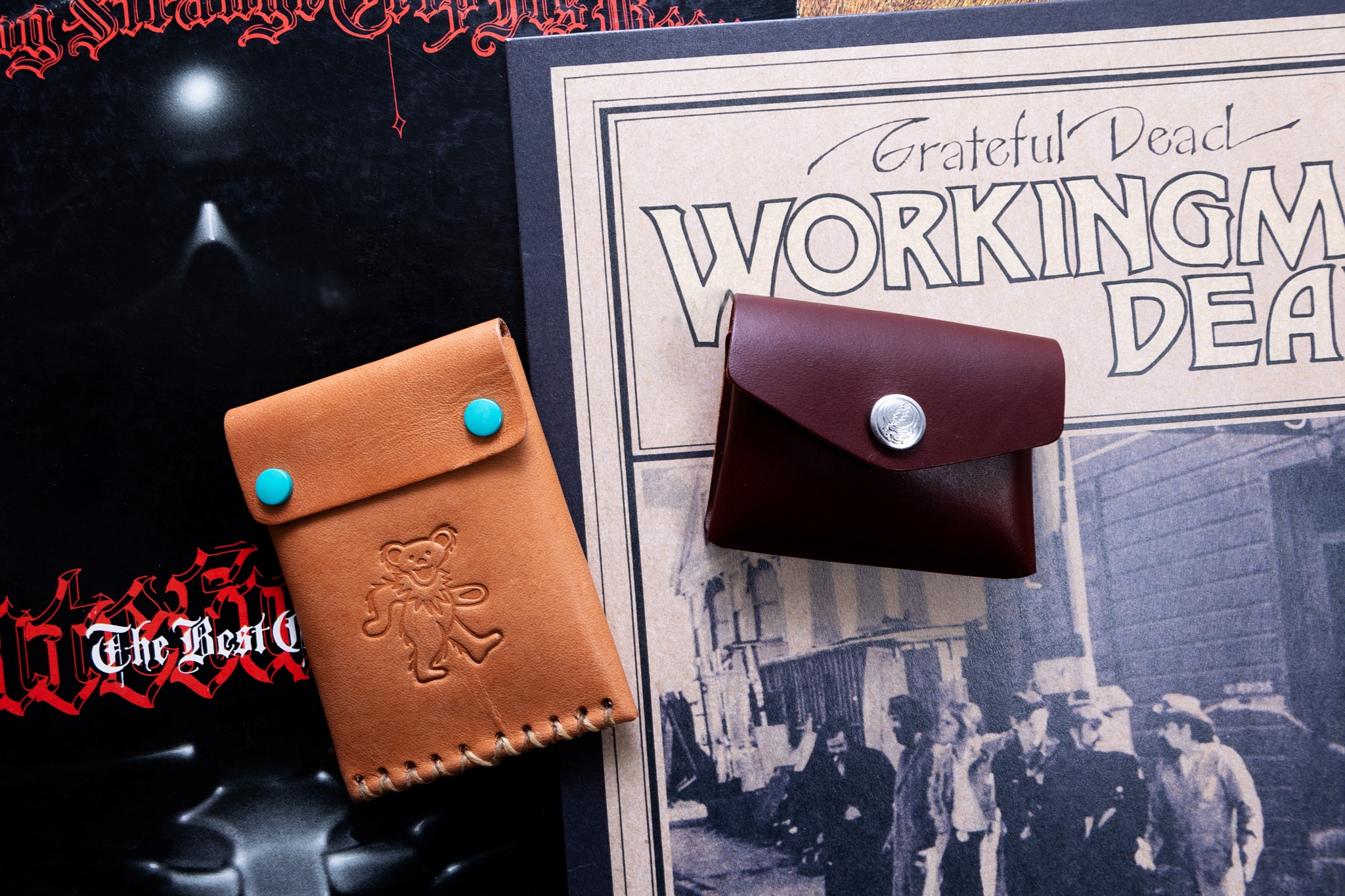
Older, longtime Deadheads who once purchased handmade goods at the unofficial concert vending area known as “Shakedown Street,” can now order exquisitely crafted American leather goods adorned with a Dancing Bear or dancing skeletons. You can even find a piece featuring a Dancing Bear kicking a soccer ball, made specifically for the upcoming FIFA World Cup.
Billy Kirk has also moved into another niche market that was badly in need of an upgrade: the corporate gifting sector. The company works with a lot of restaurants, resorts and organizations.
“We do a lot of golf stuff and activations with companies that want something classy that is American-made,” said Chris Bray. “We’ve done custom golf bag tags, scorecard holders, stationary holders and companies that want unique high-end products.
“Most of the corporate gifting, the billions that are spent, it is all garbage. I mean, who needs another water bottle? We are there for these companies that want to do something different and it reflects better on their ethos. There are so many crappy totes, it’s offensive.
“We exist for those companies that want to give something that actually gets used and appreciated. So many of these companies are finally waking up.”
As much as the corporate gifting accounts add to Billy Kirk’s profits, the company continues to do brisk business with its direct-to-consumer online sales, relying on its quality American-made workmanship and materials.
“We are using genuine, full grain, vegetable-tanned leather,” added Chris Bray. “It’s the best you can get as far as belts and small leather products. That’s what you want.”
Billy Kirk has collaborated with many other companies including Van’s Vault, Levi’s, Hudson’s Bay Co., Cole Hahn, J Crew and Target. They have also manufactured several high-end amenities for Ace Hotels.
“You can see it is never-ending what we can do,” added Bray. “And we love doing it. We think Billy Kirk will be an iconic American brand 50 years from now.”
The Alliance for American Manufacturing does not receive a commission from purchases made through the above links, nor was the organization or author paid for favorable coverage.
Labeling Note: This story is intended to highlight companies that support American jobs and that make great products in the United States. We rely on the companies listed to provide accurate information regarding their domestic operations and their products. Each company featured is individually responsible for labeling and advertising their products according to applicable standards, such as the Federal Trade Commission’s “Made in USA” standard or California’s “Made in USA” labeling law. We do not review individual products for compliance or claim that because a company is listed in the guide that their products comply with specific labeling or advertising standards. Our focus is on supporting companies that create American jobs.
For more on the Federal Trade Commission’s standards for “Made in USA” claims and California’s “Made in USA” labeling law, please also read this guest post by Dustin Painter and Kristi Wolff of Kelly Drye & Warren, LLP.