

It’s easier said than done. And experts says the economy is still heavily weighted toward export-led growth.
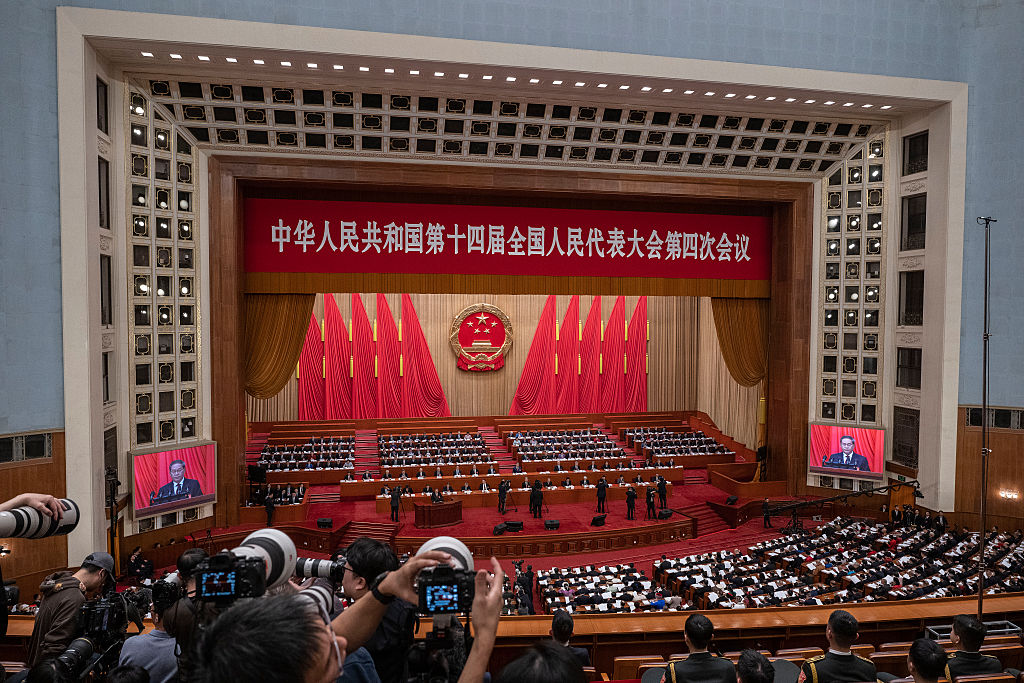
China this week released its 15th five-year plan, the broad policy blueprint laying out its social, economic and military intentions for the next half decade. In 2021, one of the plan’s targets was to achieve global technological supremacy.
This plan? Honestly, not so different. It maps annual military increases of 7%. China is still betting heavily on high-end technology, calling for 7% annual growth in R&D spending and a heavy focus on artificial intelligence. But there is one change to note.
For the first time since 1991, Beijing set its target for annual GDP growth below 5%. International media is generally interpreting that as a signal the government is finally easing off its export-oriented economic model in favor of boosting the consumption power of its own citizens – creating wiggle room so it can focus on social welfare.
Weak demand in China, however, has been an issue for years. Is China really about to abandon the economic engine that has made it the modern workshop of the world? An economist with the RAND Corporation wrote in a note that … no, this is unlikely to be a significant demand-side policy shift:
Beijing’s policy rhetoric is more variable than the policy reality. In practice, China’s leadership remains fairly small-c conservative when it comes to fiscal policy and support for households. The narrative of a shift toward consumption-led growth is stronger than the policies currently supporting it, at least in the short to medium term.
From Michael Pettis, a senior fellow at the Carnegie Endowment, responding on X to an article in Chinese state media titled “China to boost consumption, residents’ income”:
This is certainly the right thing to say – the only sustainable way to raise the consumption share of GDP is to raise the household income share – but it tells us very little. Raising the household income share means reducing the business and/or government shares.
So how will these transfers occur? Almost certainly not at the expense of businesses. Given that much of China’s manufacturing sector is barely breaking even, even after huge direct and indirect subsidies, the sector is clearly not efficient enough to tolerate a significant reversal of these subsidies. In that case rebalancing at the expense of the manufacturing sector runs the risk that the Chinese economy rebalances not through higher consumption growth but rather through much slower GDP growth.
And from the Mercator Institute for Chinese Studies comes this analysis:
Precariously balanced as it is, China’s economic policy will continue to systematically favor companies over households. Beijing will persist in slow-rolling measures to expand social welfare, while using generous subsidies and tax incentives to drive industrial growth and upgrading. The leadership is convinced this approach best serves China’s resilience in times of great power competition and its long-term economic development. They hope innovation will trigger a cascade of higher productivity, profits, wages, tax revenue and, eventually, welfare spending. But for now, their expansive industrial policy looks likely only to continue inflating China’s corporate and government debt.
Read more about China’s latest five-year plan here.