

This American-made brand brought percussion to the masses, and has an all-star list of musical clientele.
In the early days of the Beatles, drummer Ringo Starr and band manager Brian Epstein were walking the streets of London when the young percussionist spotted a drum kit in the window of the Drum City Shop. He was attracted to the kit’s black oyster pearl finish, and, upon in-store inspection, he found he favored the sound, too.
Starr immediately purchased the drum set but before leaving the store the salesman leaned over to remove the “Ludwig” decal from the bass drum.
“No, no, no, leave it on,” Starr chided the salesman. “It’s American.”
Starr’s love affair with American-made Ludwig drums began on this May afternoon in 1963 and continues to this day. Ludwig has been making its professional drums in the United States since 1909, so Starr was not the first player to spot top-quality American manufacturing.
Through the years Ludwig drums have remained synonymous with Ringo and the Beatles, so much so that Ringo’s black oyster pearl finished drums continue to be the company’s biggest seller to this day.
“It was a happy accident,” said Uli Salazar, Ludwig’s Director of Marketing and Artist Relations. “Who would have thought that from the point of him buying this kit and falling in love with it that they would catapult to stardom like they did just a few months after that.
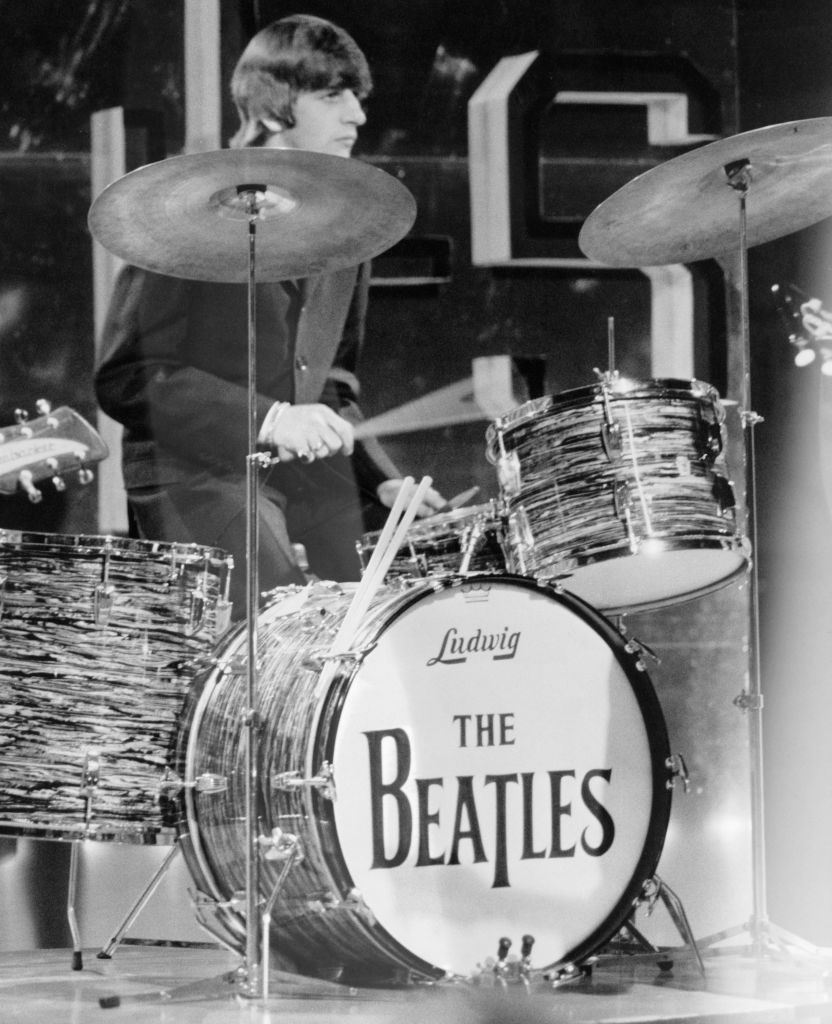
“Ringo decided to leave the Ludwig logo on and for him, it was kind of a badge of honor, which it is oftentimes for players today when they open their first set of Ludwigs and they see that script logo and the keystone badge. It definitely means something. It carries on a cachet.”
The list is long of famous drummers who have sat behind a Ludwig drum set. Led Zeppelin’s John Bonham, Mitch Mitchell of Jimi Hendrix’s band and Ginger Baker of Cream played Ludwig. Jazz greats like Joe Morello and Max Roach kept the beat with Ludwig drums. Buddy Rich, a close friend of the Tonight Show’s Johnny Carson, not only played Ludwig but turned Carson, himself a drummer, on to Ludwig.
The Ludwig legacy continues today with major players.
“Fast forward to today and you have musicians like Questlove, Anderson .Paak, Tré Cool of Green Day, so many heavy hitters that are still flying the Ludwig flag proudly,” said Salazar. “Karen Carpenter played Ludwig and today Matt Billingslea, the drummer for Taylor Swift’s band, plays Ludwig.”
Ludwig was founded in Chicago by brothers William F. and Theobald Ludwig. At the time, all percussion was played through individual drums.
“Ludwig was founded in 1909 through the invention of the first retractable bass drum pedal,” said Salazar. “The concept of a drum set didn’t really exist until about a decade after that and Ludwig was the first company to introduce drum kits. Everything used to be played just through individual drums.
“In 1918 they introduced a product called the Jazz Er Up and it was the first time that the concept of a drum set was cataloged and introduced into the musical retail market. There are a lot of innovative concepts from the first 20 years of our history that are still relevant today, which is fascinating and really cool.
“For the Ludwig brothers, it was ‘how do we create solutions not only for ourselves but also for our peers that are playing these gigs and going from orchestra to orchestra, club gig to club gig?’”
Many of Ludwig’s original one-piece drums will be heard at July 4th celebrations this weekend as marching bands perform from coast to coast.
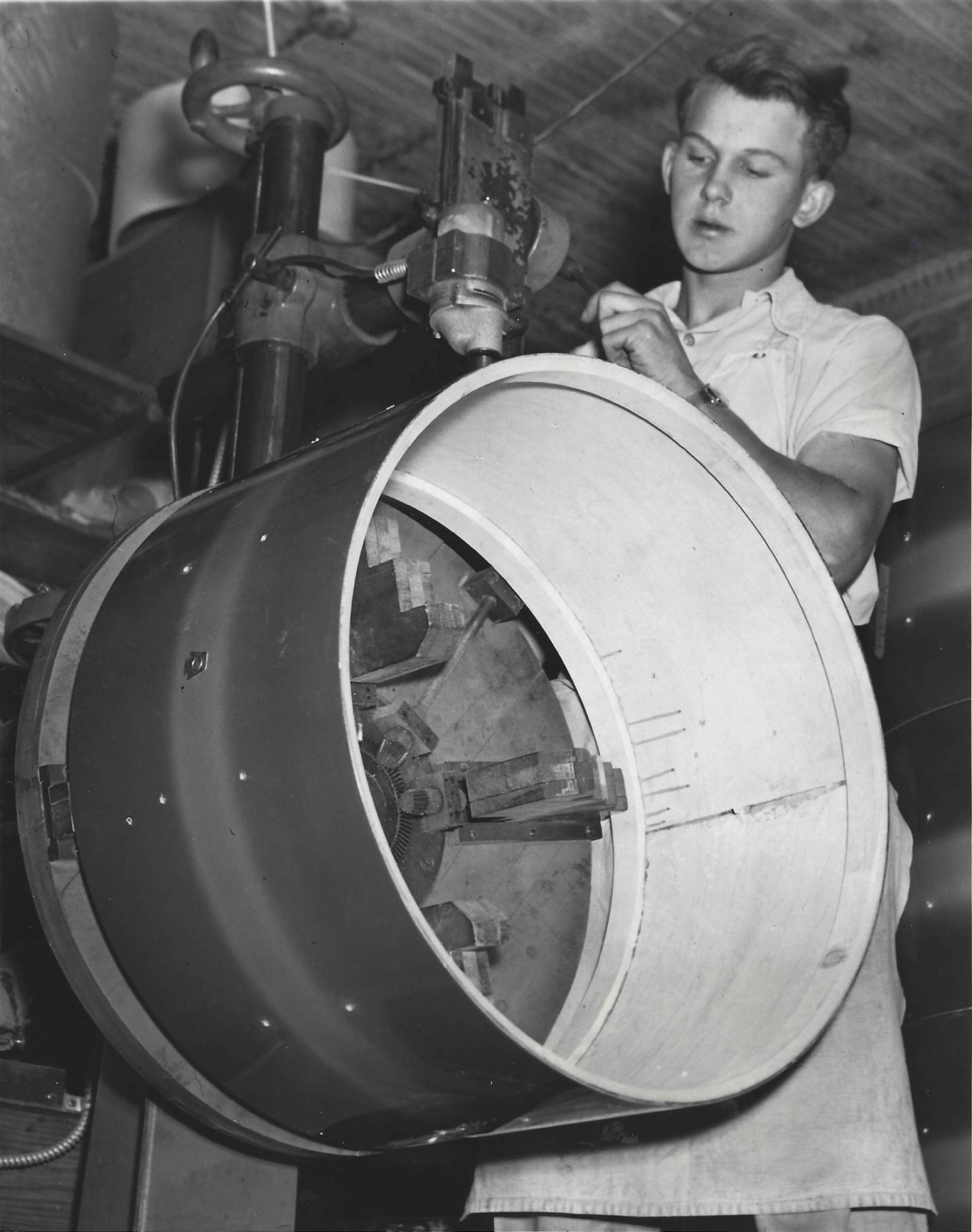
“The drums, before the drum set, they were a parade instrument,” said Salazar. “There are orchestral and parade instruments and Ludwig manufactured for both of those categories before we made the drum set. We were making drums for government institutions, educational institutions and drum corps. Marching drums, bass drums, things like that. The marching arts market is still very big. You have high school marching bands and collegiate-level marching bands that are still very big. It’s a big circuit, especially in Texas and California.”
The Ludwig brothers, both percussionists, were forced to sell the business to C.G. Conn in 1930 during the height of the Great Depression. The manufacturing was moved to Elkhart, Indiana and founder William F. Ludwig eventually got back into drum manufacturing by starting WFL Drums in Chicago in 1937.
Ludwig and his son, William Jr., bought the Ludwig naming rights back from C.G. Conn in 1957 and remained in Chicago until 1983 when Ludwig sold the company to the Selmer Corporation. In 2005, Selmer merged with C.G. Conn and today Conn-Selmer remains the parent company of the Ludwig Drum Company.
Today the manufacturing of Ludwig Drums is done in Monroe, North Carolina at a factory that is as big as four city blocks. A team of 60 employees, many of whom are drummers themselves, produce the iconic drum kits.
“Most of the folks down at the factory are drummers, from our [general manager] down to our assemblers and front office folks,” said Salazar, himself a drummer since he was 12 years old. “A lot of us have taken different paths of being a drummer. Some people played in orchestras; some played in the marching band in college. We have a large group of folks that speak drum, that’s for sure.”
Drum manufacturing begins with the curing of wood in a typical wood shop fashion. Flat stock of maple, mahogany, poplar and oak sourced from American mills is cut to size by precision CNC machines. The wood is then put into molds of varied sizes to produce veneer pieces in the shapes of the different drums.
“We bend this veneer in the mold to form the tube and we have proprietary processes to make a proprietary groove that allows for more elasticity in the shells, so we preserve a lot more of the acoustic properties and tonality of the drum,” said Salazar. “From there we do a variety of different finishes. That is most important when it comes to a finished product.”
The wooden drum pieces either go to a wrapping process, where a laminate is wrapped over the drums or they get painted.
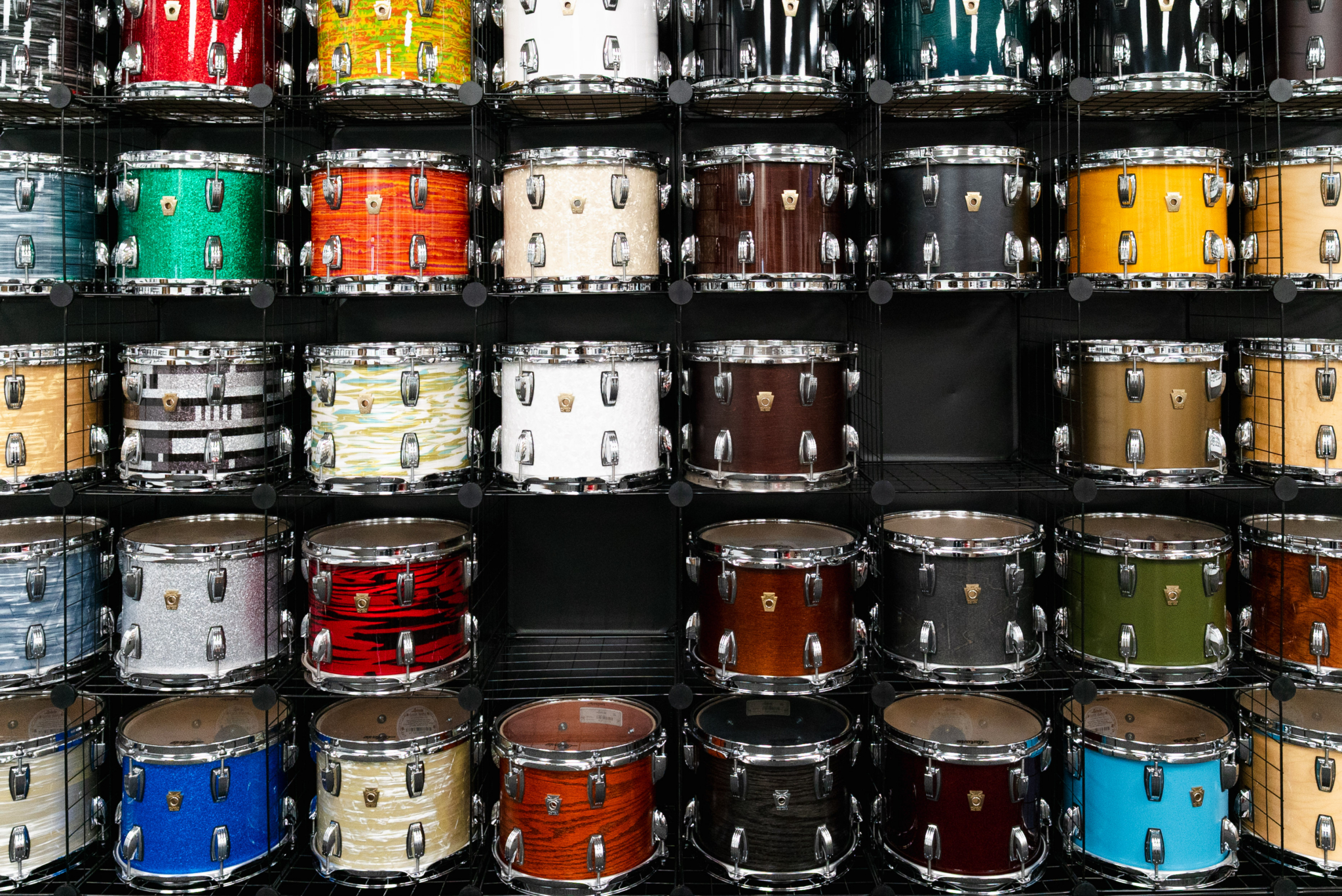
“The laminate wrapping is different colors or sparkle or pearl finish or an oyster pearl like the Ringo kit,” said Salazar. “We can also do a stain or solid paints, lacquers and things like that. When painted it gets a different look depending on if we are using maple, mahogany and so forth.
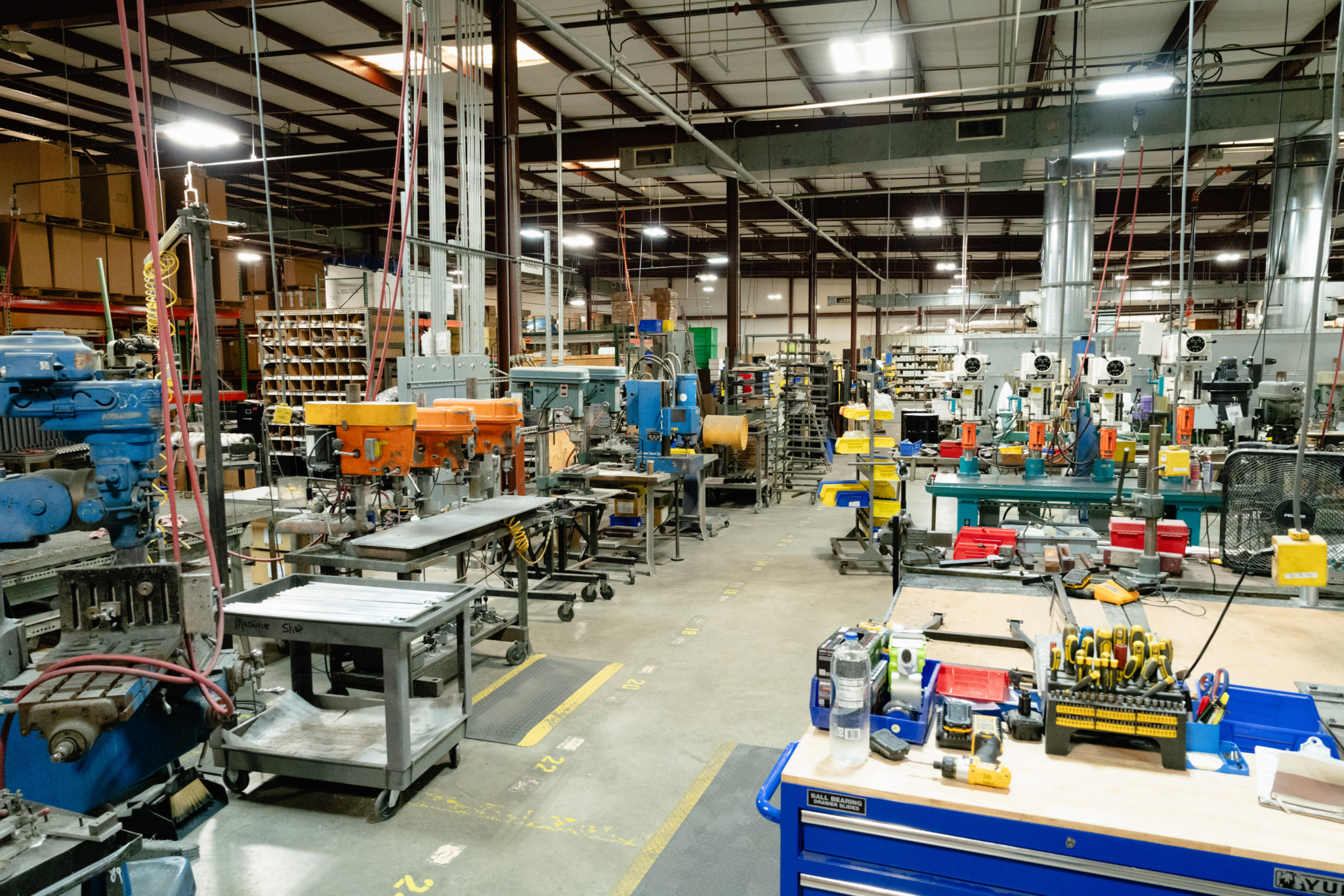
“From there it is finished by drilling all the hardware pieces and assembling the hardware so we can prepare it for lugs, brackets or any other suspension elements that are required on the drum.”
The drumheads or skins are applied before packing and shipping. Ludwig no longer makes its own drumheads but sources them from a company called Remo in California or Evans, which is owned by D’Adarrio and based out of Long Island, New York.
Ludwig Drums is a business-to-business entity and does not sell direct to consumer. Ludwig sells to musical instrument retailers throughout the world, including major chain stores like Guitar Center and Sweetwater as well as thousands of independent retailers.
The company also manufactures and sells mallet percussion instruments under the brand name Musser including xylophones, marimbas and glockenspiels.
Many drum-making companies went out of business after the wave of Beatlemania wore off, but Ludwig has managed to remain a top player in the market. The company, like major guitar brands Martin and Gibson, does offer a modestly priced children and beginner’s drum kit that is made overseas.
“All of our professional level drums are made in North Carolina and we fortunately have maintained a large chunk of the market,” added Salazar. “The fact that we have a lot of fans and a lot of loyal customers goes a long way.”
That loyalty, exemplified by Ringo Starr to this day, is certain to keep Ludwig Drums as the choice of accomplished percussionists for years to come.