
AAM offers comments on USTR’s Section 301 investigation into weak international prohibitions against goods made by forced labor.
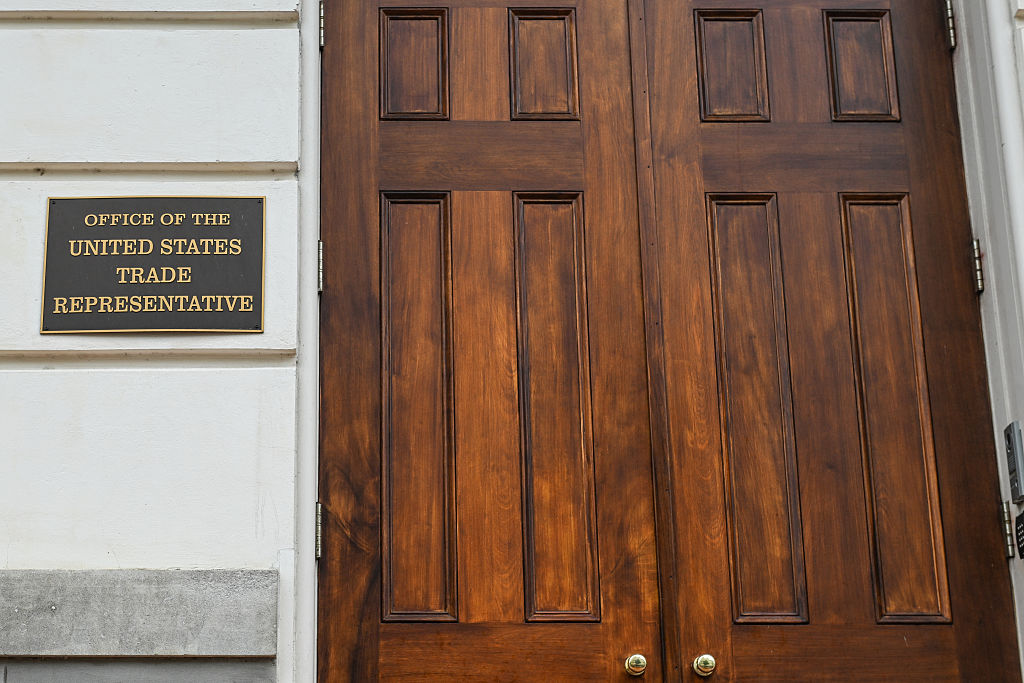
Last month, in tandem with the Section 301 investigation into global excess production capacity across a range of industries, the office of the U.S. Trade Representative opened a 301 investigation into forced labor. Specifcially, the forced labor 301 will examine the economies of 60 countries to determine not simply if they’re utilizing forced labor themselves but rather if they’re failing “to impose and effectively enforce a prohibition on the importation of goods produced with forced labor.”
These investigations follow a process that includes a public comment period. The forced labor investigation’s just ended and hundreds of individuals and groups took the opportunity to weigh in. That includes us; the Alliance for American Manufacturing (AAM) put some on the record. Forced labor, we wrote, is obviously “a human‑rights concern, but it is also a trade distorting practice that suppresses wages, lowers production costs, and confers an unfair competitive advantage to foreign producers that rely on coercive labor systems.”
More from AAM’s comments:
When goods produced with forced labor enter the U.S. market, they undercut law abiding U.S. manufacturers and displace domestic production. Forced labor enables foreign companies to compete on terms that are fundamentally incompatible with our own market‑based production, and weak enforcement allows goods tainted by forced labor to flow into the United States, harming domestic industries and workers.
We were far from the only group to weigh in with similar concerns. There were plenty of others, from different industries and vantage points. Here are a few.
From USTR’s independent Labor Advisory Committee:
Unfortunately, forced labor remains all too common in modern global supply chains. The International Labor Organization (ILO) estimates that approximately 25 million people are trapped in forced labor globally with the vast majority in the private sector. Forced labor is enormously profitable for the governments and companies involved: the ILO estimates the level of profits generated by forced labor at a staggering $236 billion annually. This figure reflects the wages or earnings effectively stolen from the pockets of workers by the perpetrators of forced labor.
The National Council of Textile Organizations:
Sadly, forced labor remains prevalent and well-documented in global textile and apparel supply chains. China’s Xinjiang cotton made with Uyghur forced labor continues to fuel textile and apparel production in Asia. Countries in South and Southeast Asia also utilize forced labor and/or child labor in the production of garments and other textile goods. None of these countries have implemented a prohibition on the importation of goods made with forced labor as the United States did nearly 100 years ago.
The American Shrimp Processors Association:
[Ecuador, China, India, Indonesia, Thailand and Vietnam permit] goods produced with forced labor to enter [their] domestic supply chain and, in turn, to be incorporated into export-oriented shrimp industries that compete directly in the U.S. market. It is unconscionable that U.S. shrimp harvesters and processors are forced to compete with imports that are tainted with forced labor abuses at every step of the production chain, from the production of fishmeal for shrimp feed to shrimp farming and shrimp processing. The systematic failure of foreign governments to prevent these violations of workers’ universally recognized fundamental human rights is unreasonable and unfair. These acts, policies, and practices also constitute a persistent pattern of conduct that permit forced labor, further supporting a finding that they are unreasonable under Section 301.
The Solar Energy Manufacturers of America:
State-imposed forced labor risk in China’s solar supply chain is centered in, but not confined to, the Xinjiang Uyghur Autonomous Region (XUAR). Public evidence shows that Uyghur labor-transfer programs extend into factories and production networks across other Chinese provinces. At the same time, non-XUAR solar manufacturers and upstream processors remain exposed through sourcing relationships tied to Xinjiang-origin inputs.
Now Secretary of State and then Senator Marco Rubio’s Uyghur Forced Labor Prevention Act (UFLPA) has been in effect since June 21, 2022, and is the world’s gold standard for combating the scourge of forced labor in polysilicon. … (But) while China is the primary culprit, any country that hosts a Chinese-owned factory manufacturing silicon solar products should be scrutinized.
You can find all the comments submitted to USTR regarding its Section 301 investigation into forced labor here.