


Thuja Outdoor Clothing is especially ready for a winter in the mountains.
In the frigid northern climes of the United States, layering is a keyword for outdoors enthusiasts looking to sway warm but comfortably agile. Whether it be hiking, skiing, backpacking, hunting or fishing, lovers of the outdoors are always looking for apparel that is not too heavy but still keeps them warm.
When it comes to warmth and flexibility, fleece is often the go-to fabric to ensure your time in the snow and cold is about nature’s beauty rather than bemoaning how cold you are.
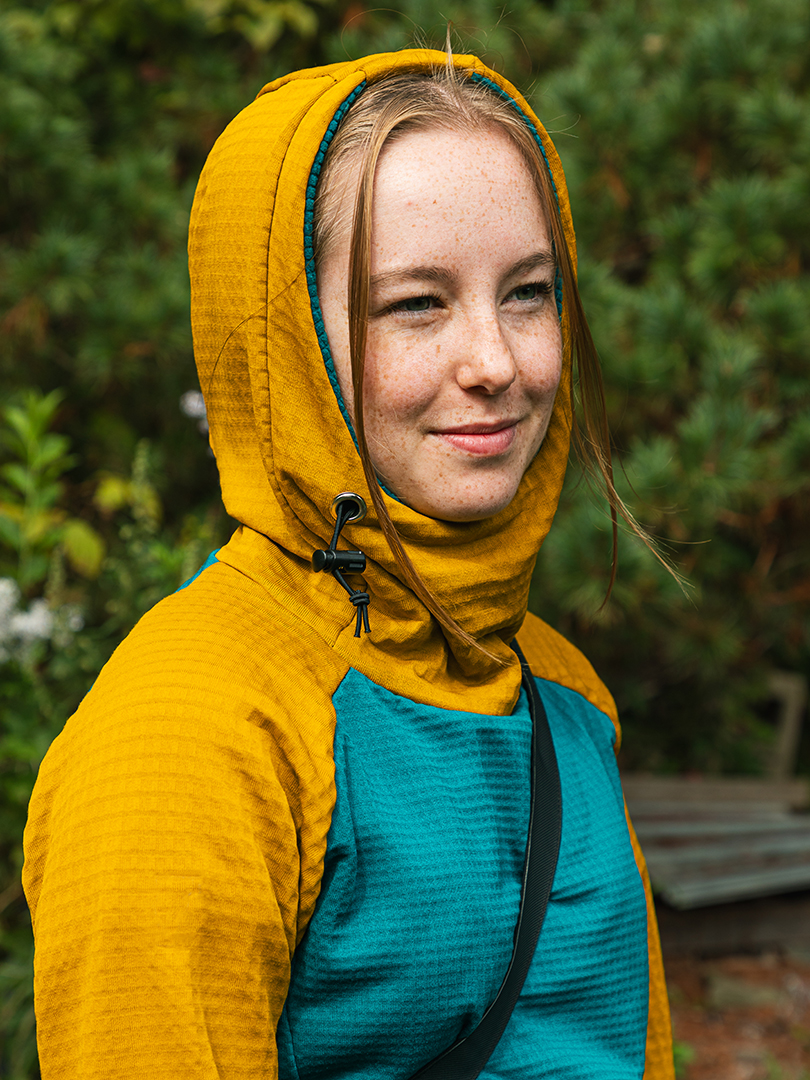
Thuja (pronounced thoo-yuh) Outdoor Clothing is a Vermont-based manufacture of hoodies and quarter-zips that are stylish, flexible and temperature regulating. The garments, made of Polartec Grid Fleece, serve as an ideal mid-layer when bundling up during the chilly winter months.
Henry Sengle started making hoodies for his personal use with the Polartec fleece in 2018. Friends and colleagues saw the hoodies and asked if he could make one for them, too. So Sengle did that as a side job until he could no longer keep up production, and officially started Thuja to meet the demand.
He brought on sewers and outdoor lovers Kimberly Piscadlo and Jake Sienkiewycz to get him through a busy holiday season and the duo joined Sengle as Thuja co-owners in 2021.
The business is based around one major product – its Custom Burrow Hoodie. Demand for the product has grown steadily each year and now includes the quarter-zip made of the same top-quality fleece.
If American Giant made its mark in the apparel business with “the greatest hoodie ever made,” Sengle feels the same success can be true for Thuja.
“The foundation of the mid-layer hoodie is the fabric,” said the 32-year-old Vermont native. “It’s a pretty cool fleece. What’s nice is that it insulates very well and is really warm when you need to be warm but when you start moving, exercising or going from cold outside to a warm indoors it is also very breathable, so it does a remarkable job of regulating your temperature.”
Customers can mix and match assorted colors for the sleeves, the torso and the pockets. With 10 colors and a few mixed pocket patterns, Thuja has the potential to make more than 2,000 distinctive styles.
Thuja sources all materials in the U.S. and does the manufacturing at its home office in Williston, Vermont. Not only is it proudly made in the U.S., but it is also proudly made in Vermont.
“We definitely are in a good place geographically for what we are doing,” said Sengle. “Vermont is a local, loyalty kind of place. I think the outdoor industry is a specific segment of clothing that people don’t necessarily mind spending more on something locally made.
“It helps that we are sourcing all our materials domestically and all our manufacturing is here in house. People like the unique, individually made things.”
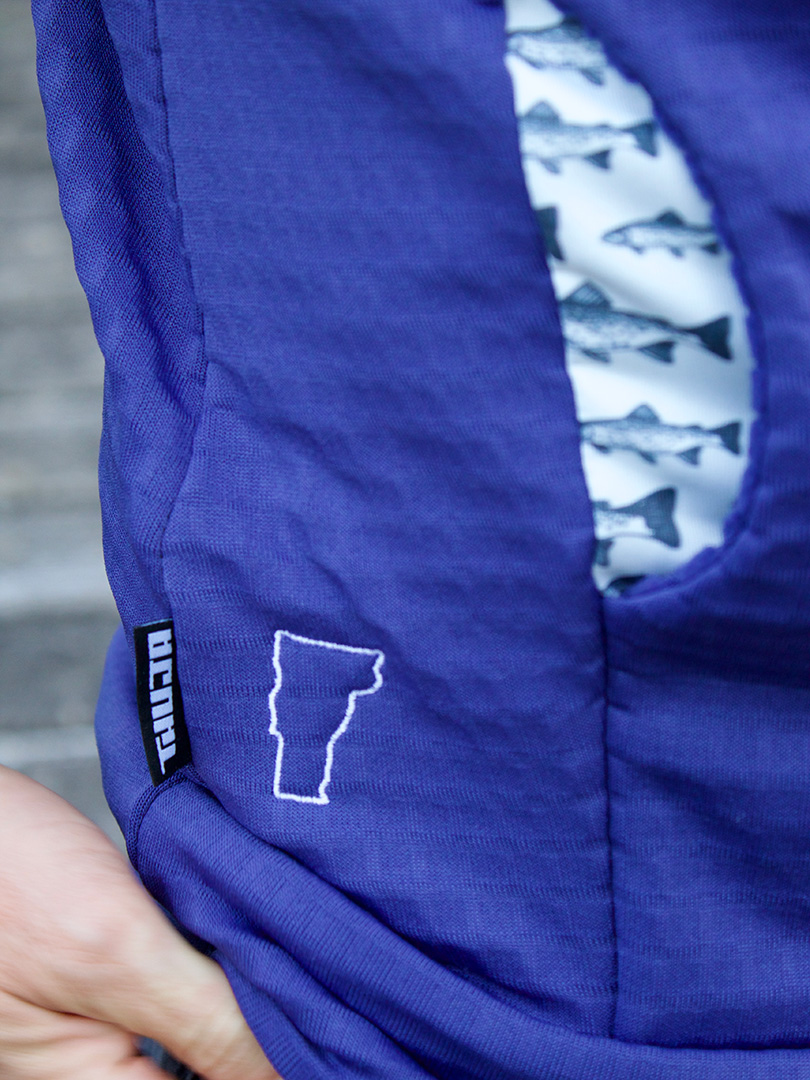
Thuja operates on a direct-to-consumer platform, and each hoodie or quarter-zip is custom made in requested colors. A bulk of Thuja’s business comes from group orders when companies or organizations order custom hoodies for their teams.
“A lot of groups get these for their members. We outfitted most of the ski patrollers in the Northeast,” said Sengle. “We are right next door to the University of Vermont and there are a whole bunch of clubs and the whole medical network where each department gets their own custom design.
“Pretty much everything we make is a unique custom version of our hoodie or quarter-zip. I do all the sales but at this point it is almost entirely inbound. It’s kind of crazy how effective word-of-mouth is.”
Business has slowly grown over the past five years and except for the month of August, manufacturing remains constant.
“Without fail, the first cold snap in September up here just flips a switch and it is pretty much full sprint from then through the holidays,” said Sengle. “We’re geared toward colder weather, so sales have been to a lot of the Northeast and all the way across the northern parts of the United States.
“The winters are pretty busy for us. Polartec is just cranking out wholesale fabric. Tennessee is where their main fabric is made and is where the fabric we use comes from.”
Thuja houses a large fabric cutting machine, an embroidery machine and a dozen industrial sewing machines. In 2025, Thuja sold about 3,000 units and outfitted more than 70 companies.
“The product itself is definitely built to make people comfortable outside,” said Sengle. “All the things that we make are for use out in nature and that’s our main motivation. For outdoorsy people who love being out in the woods or being on top of a mountain, it feels a lot better to be wearing something that is custom made specifically for you.
“It’s one of a kind and sustainably made versus wearing something that was made in Bangladesh and shipped halfway around the world without any oversight.”

The quarter-zip is made from the same grid fleece as the hoodie and both items have a cowl type collar.
“Cowl is like when you take the hood off it almost looks like a turtleneck,” added Sengle. “When you put the hood on it it sort of tucks in under your chin, which is really nice for cutting the wind and general insulation.”
And true to its outdoors lifestyle, the name Thuja means the genus of a cedar tree.
“It’s a botanical name,” said Sengle. “Like trees, we are definitely an outdoor company.”
Manufacturing can certainly cut into your outdoor time, so the Thuja offices and manufacturing space are adorned with approximately 200 small Bonsai trees. While Bonsai trees are a Japanese art form, Thuja apparel is strictly all American.
The Alliance for American Manufacturing does not receive a commission from purchases made through the above links, nor was the organization or author paid for favorable coverage.
Labeling Note: This story is intended to highlight companies that support American jobs and that make great products in the United States. We rely on the companies listed to provide accurate information regarding their domestic operations and their products. Each company featured is individually responsible for labeling and advertising their products according to applicable standards, such as the Federal Trade Commission’s “Made in USA” standard or California’s “Made in USA” labeling law. We do not review individual products for compliance or claim that because a company is listed in the guide that their products comply with specific labeling or advertising standards. Our focus is on supporting companies that create American jobs.
For more on the Federal Trade Commission’s standards for “Made in USA” claims and California’s “Made in USA” labeling law, please also read this guest post by Dustin Painter and Kristi Wolff of Kelly Drye & Warren, LLP.