
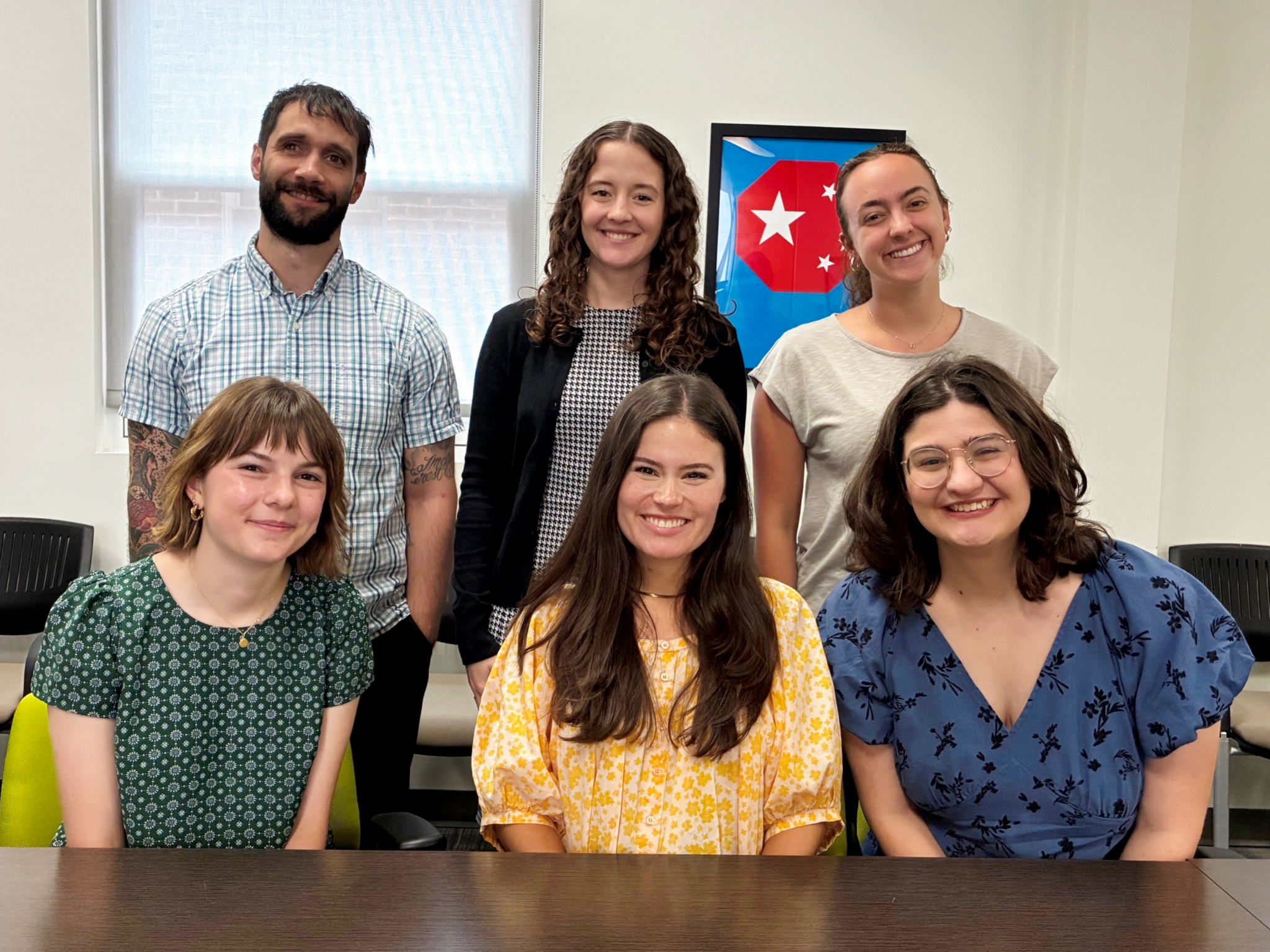
This exceptional group of men and women are ready to advocate for America’s workers and manufacturers.
Of more than 400 applications for this summer’s internship and fellowship program at the Alliance for American Manufacturing (AAM), four interns and two fellows made the cut. Many of them have personal ties to manufacturing, and all of them are passionate about advocacy.
Since you’ll see their names in blog bylines and their faces on our social media (as well as likely catch them in a Congressional hearing or two), we wanted to take a moment to introduce them with a quick Q&A. We found their responses fascinating and think you will, too!
Without further ado…
Public Policy Fellow Diego Enrique Olivieri graduated from Wesleyan University in 2024 with a Bachelor of Arts in Latin American Studies and Education Studies and a minor. He completed his Masters of Arts in International Policy and Development at the Middlebury Institute of International Studies in Monterey, Calif.
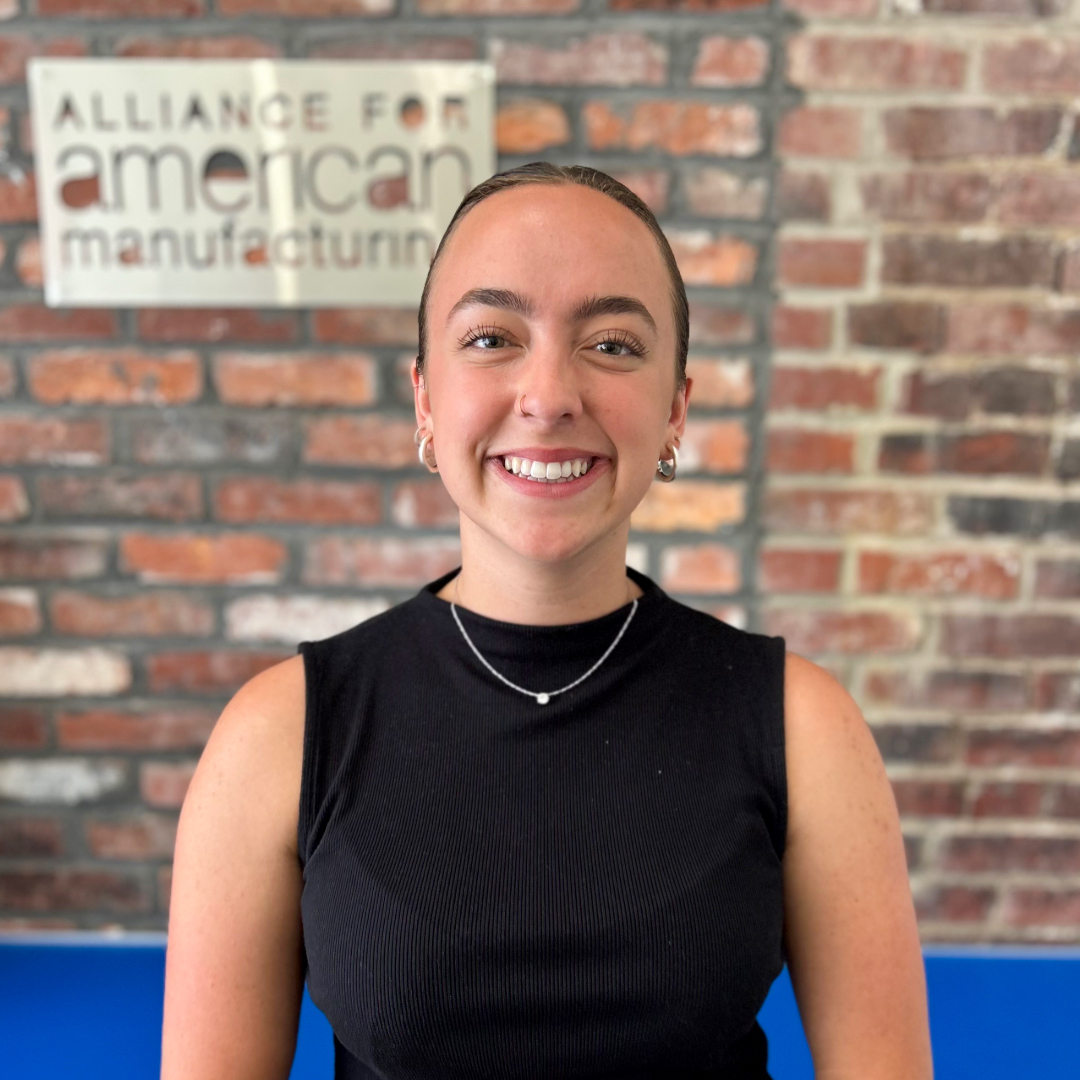
Communications Fellow Elise Noonan graduated from American University in D.C. in 2025 with a Bachelor of Arts in Public Relations and Strategic Communication.
Public Policy Intern Ashlyn Gilchriest will graduate from Penn State University in December 2026 with a Bachelor of Arts. in Political Science and minors in Sustainable Leadership and American Sign Language.
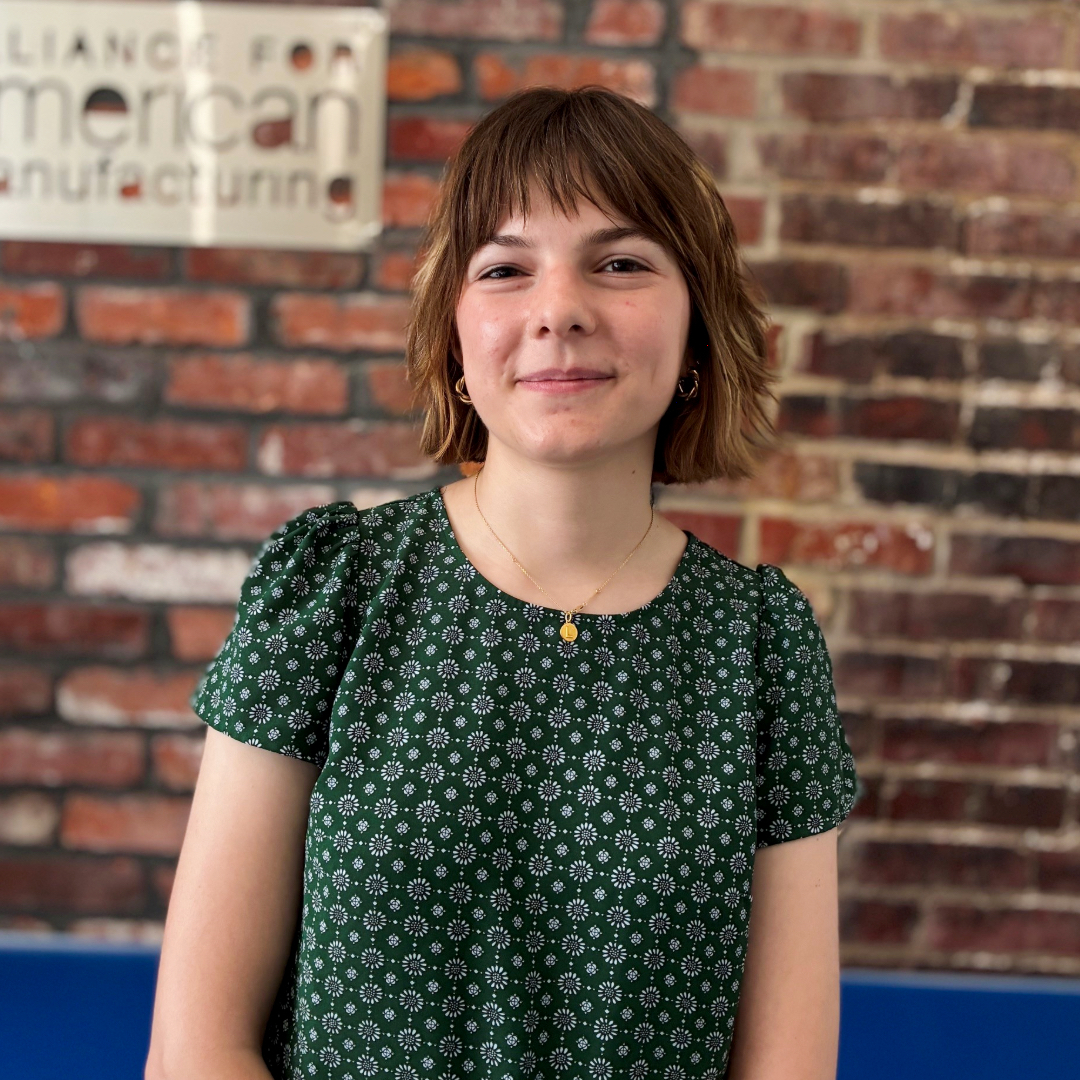
Communications Intern Margo Ellis will graduate from Denison University in May 2028 with a Bachelor of Arts in Politics & Public Affairs, Journalism, and French.
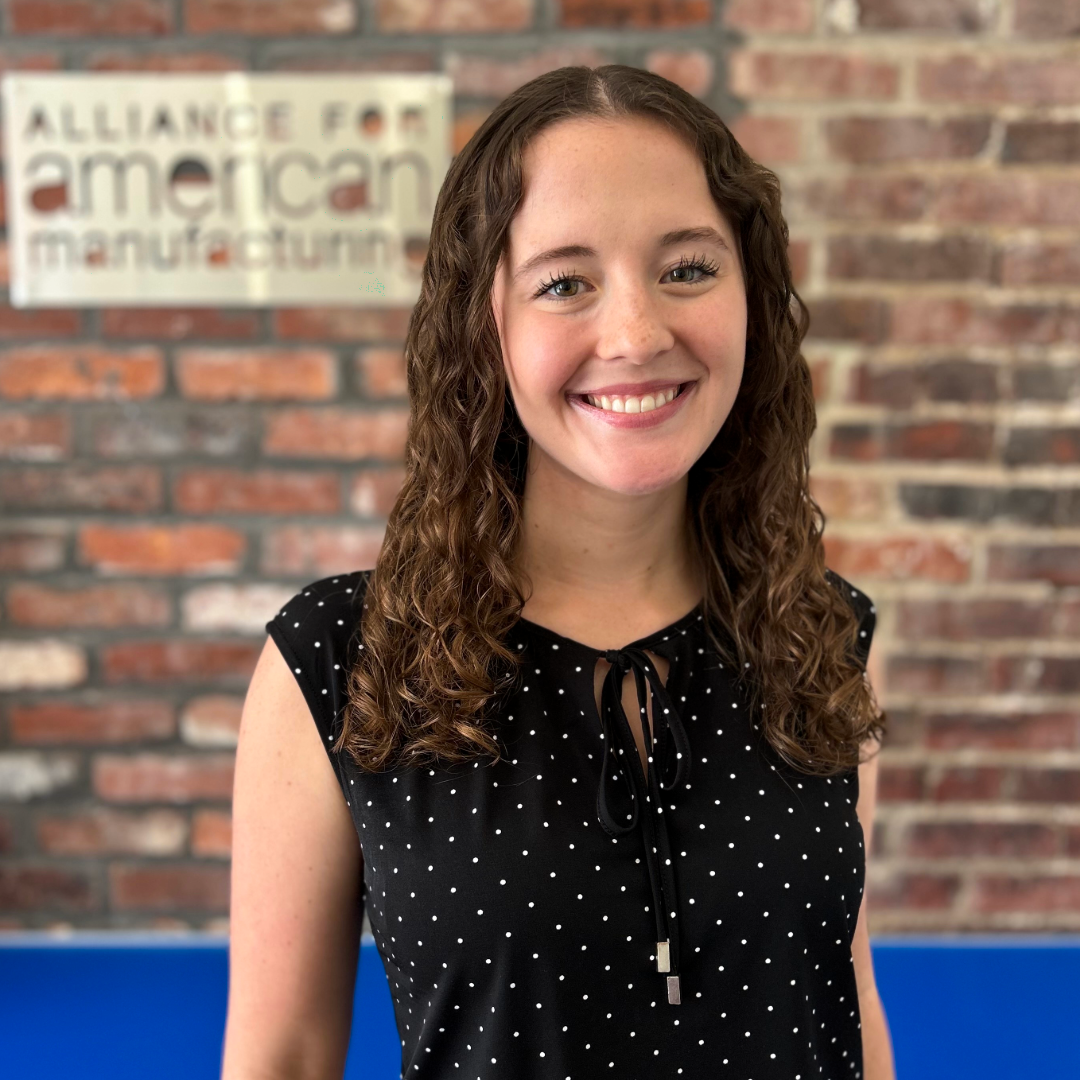
Public Policy Intern Sarah Francis will graduate from the University of Notre Dame in 2028 with a major in Political Science.
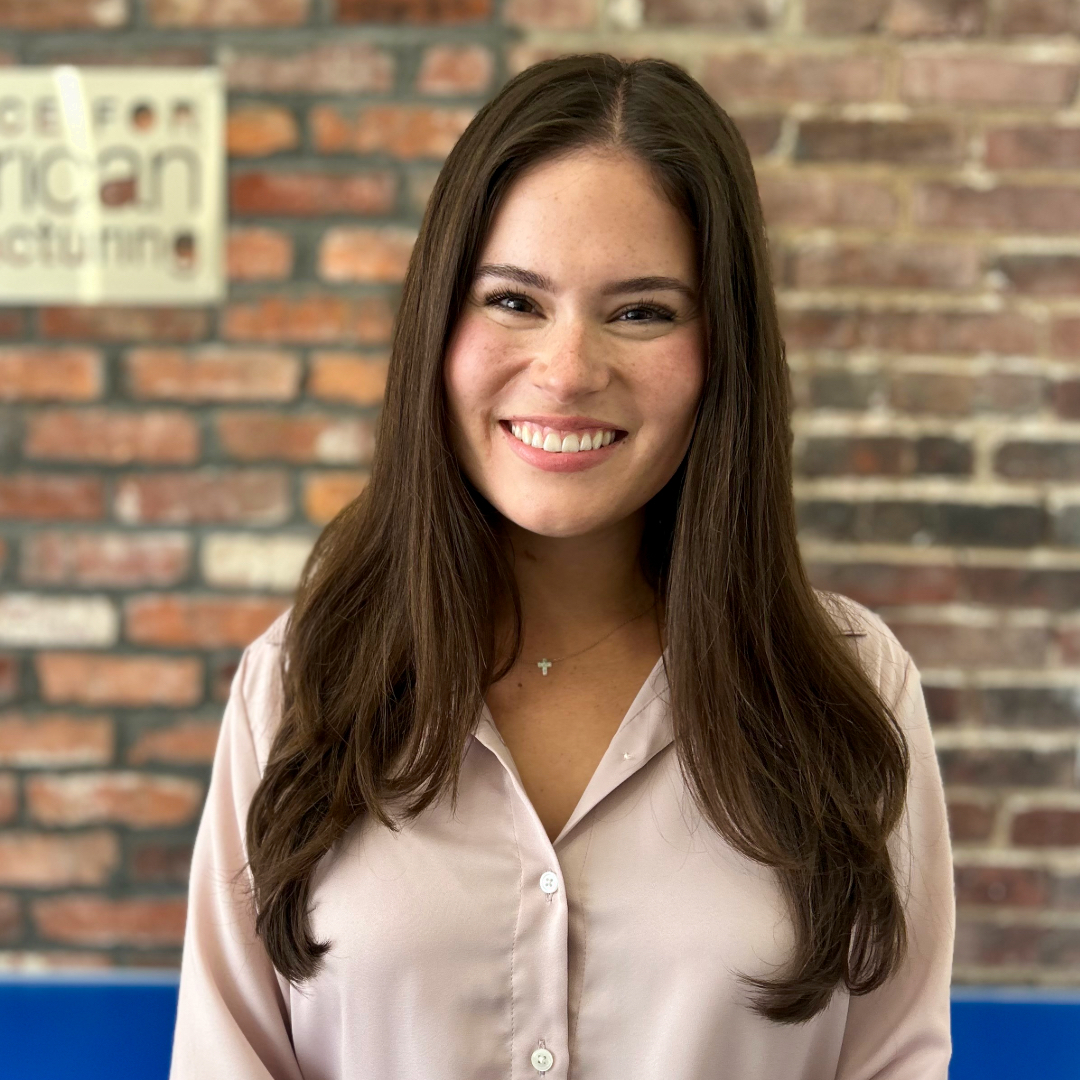
Communications Intern Sarah Schwartz will graduate from the University of Alabama in May 2027 with a major in Public Relations.
What product made in your home state should everyone know about?
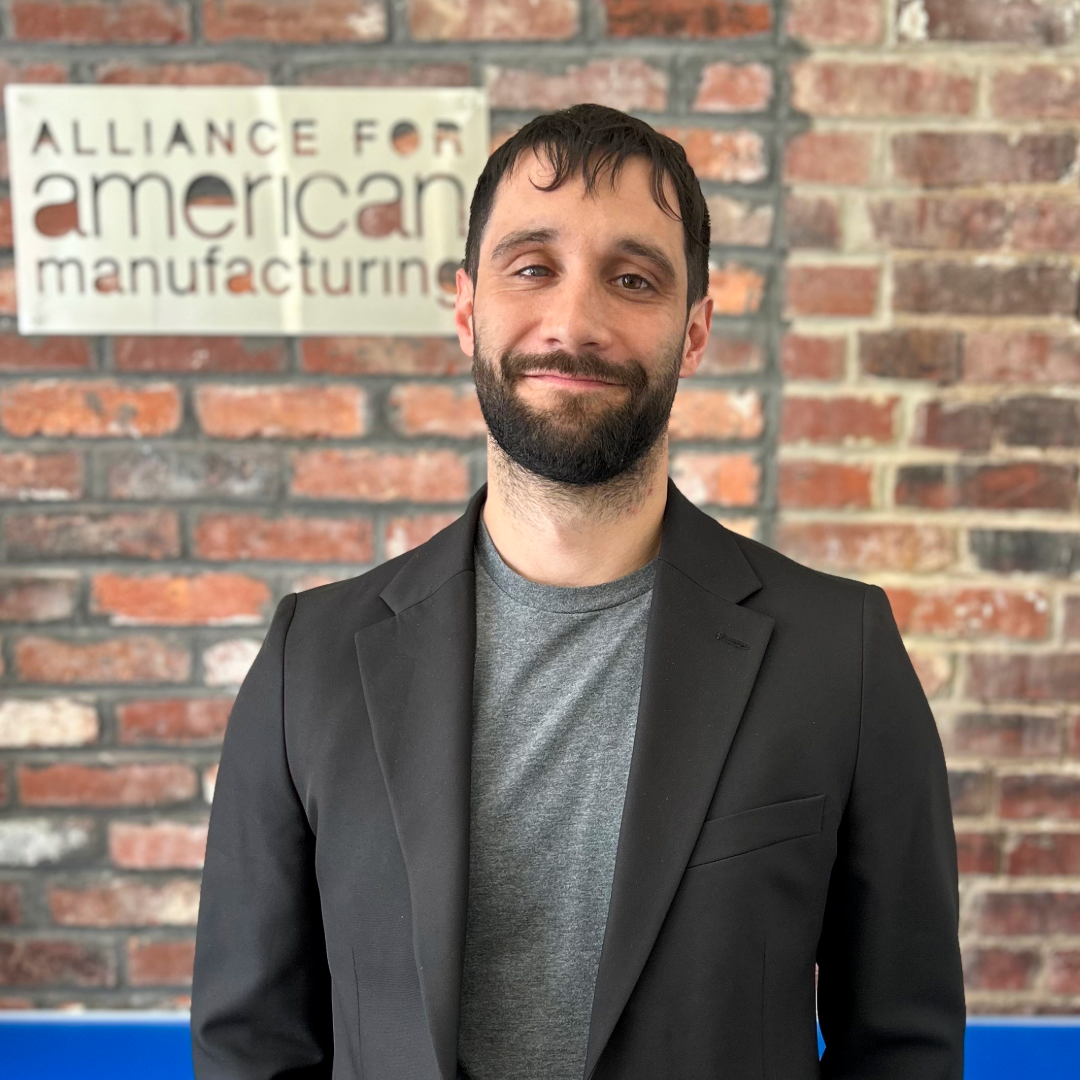
Diego: Port City, a Virginia-made brewery that has a diverse range of beers to choose from that cater to everyone’s unique taste buds. Many craft breweries focus on IPAs and higher than average ABV’s as their selling point. While Port City has those beers, such as its Hazy IPA and its Porter, this brewery, located in historic Alexandria, Va., also has great Lagers, Pilsners, Sours and a Non-Alcoholic Hoppy Sparkler. Ensuring that every customer has a chance to try this fun Virginia Product.
Elise: I’m originally from Minnesota, and my favorite made in Minnesota product is Faribault Mill Company. I actually found out about them from working here. They’ve been around since 1865, which is crazy! They make super cool and cozy blankets, towels, and apparel, and their products are really high quality. The mill is right on the Cannon River, which is fun because I’ve gone tubing on that same river before. It’s so cool to support a company that has such a long history. Now, when I visit home, I notice Faribault Mill everywhere!
Ashlyn: My favorite lotion, Simplified Soap, is made in small batches in Seadrift, Texas. I usually pick it up at Buc-ee’s when I’m back home. It’s a goat milk-based lotion, and the oatmeal, milk and honey scent is by far my favorite. It smells amazing and always reminds me of home.
Margo: Malley’s Chocolates based in Cleveland, Ohio! Malley’s has been producing a wide variety of chocolates and sweets since the 1930s and makes all of their products in a facility in southwest Cleveland. They have several retail locations (many of which I grew up shopping at), and their signature “CHOC” bumper stickers can be found on cars all over Northeast Ohio. The company is still family-owned and continues to make some of the best dark chocolate I’ve ever had!
Sarah Francis: Everyone should know about Dad’s Root Beer! The brand is a Midwest staple that was originally developed in Chicago but is now headquartered in Jasper, Ind. Seeing a glass bottle of Dad’s Root Beer in the store gives me nostalgia of a treat from my childhood, and I think we can all appreciate the memories that the brand’s old-fashioned sodas bring.
Sarah Schwartz: One product made in Florida that everyone should know about is Sunrise Chair Co.’s Beach Chairs (with footrest). My all-time favorite activity is reading at the beach, and because of the footrest and adjustable recline, these chairs keep me at the beach until sunset. One of my summers was spent in 30A running a coffee and cocktail bar, and across the street, nearly every beach service used Sunrise Chair Co. Unlike other beach chairs that are imported, Sunrise uses rust-proof brass hinges and rivets (believe me, this is a game changer) and can support up to 300 pounds.
How has American manufacturing impacted your life?
Diego: As someone who has worked on the end of a conveyer belt, I think all Americans should be aware of the invisible but hard work working-class people clock in daily to ensure this country’s needs and luxuries are met. Understanding that my work here in D.C. is tied to ensuring those people’s hard work does not go to waste.
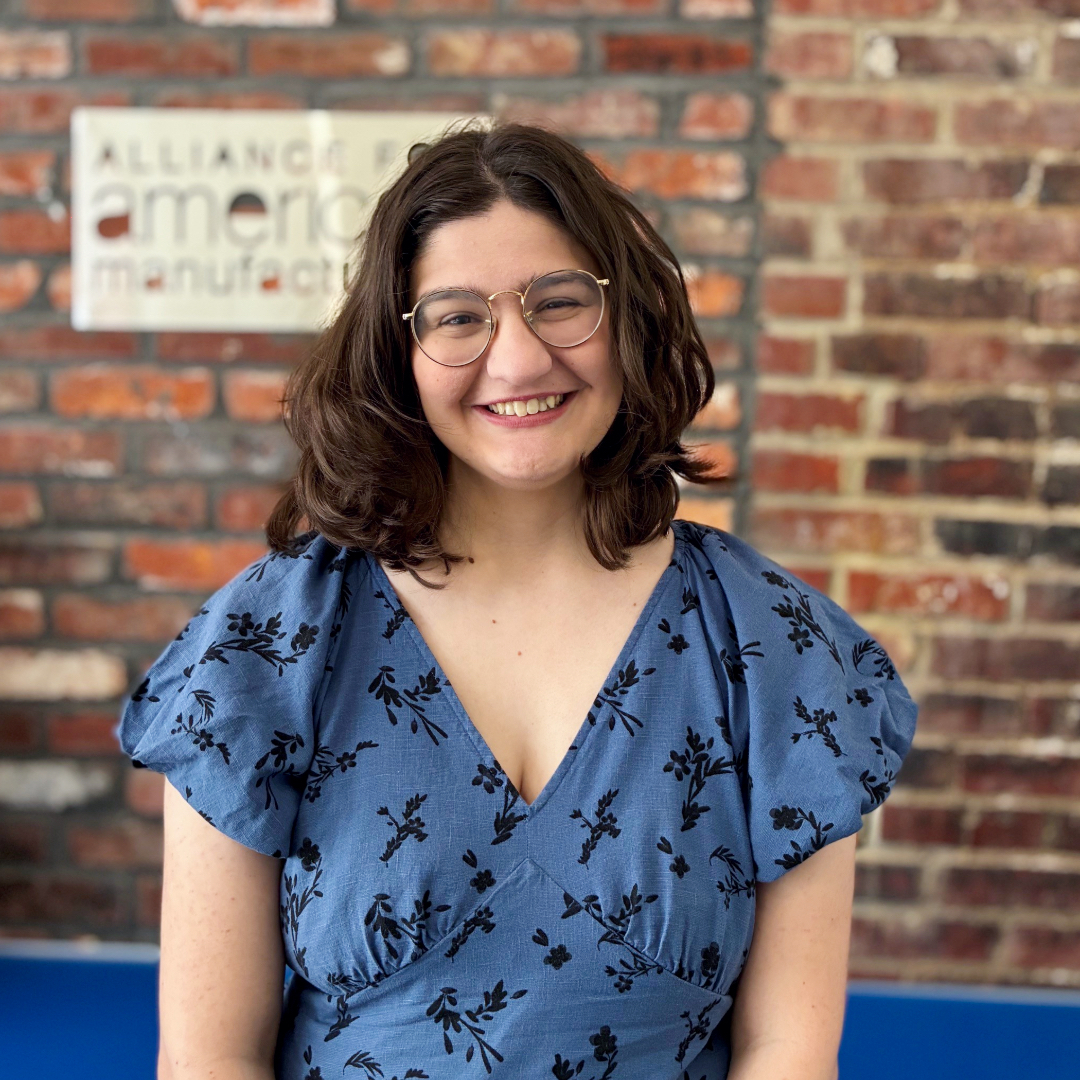
Elise: My dad has worked in sales for various manufacturing companies my whole life, so I’ve always had an appreciation for the work that goes into making items we take for granted and the importance of maintaining a robust manufacturing sector. Since working here, I’ve noticed how many companies I love make their products in the U.S. — for example, Nalgene water bottles are made here! It’s been neat to notice all the things that are made here, and I’ve started checking labels on everything at the store.
Ashlyn: I grew up with my Paw Paw always telling me to buy things made in the United States. He wouldn’t settle for the first product he found and always seemed to be satisfied with his purchases because of it. Over time, I began to understand and appreciate his wisdom. It was a full-circle moment to tell him that I am interning with the Alliance for American Manufacturing.
Margo: American manufacturing is probably the reason I exist. In the 1950s, my maternal grandfather and his dad founded a tool & die shop in Akron, Ohio (Acro Tool & Die Co.), which eventually became my mom’s place of employment and where she met my dad (a mechanical engineer from Tallmadge, Ohio). After my parents got married, my dad was offered a job at the family business, where he eventually became the general and sales manager, doing everything from designing parts and selling services to improving the overall efficiency of the company. Within the past 10 years, however, an increase in Chinese competition severely hurt Acro’s business. In an effort to modernize their services and widen their customer base, Acro rebranded and became Metalcraft Solutions, aiming to serve more customers from the medical and aerospace industries. Unfortunately, in May of 2026, my family sold the company due to struggles in finding a successor to run the business within the family, and pressure from foreign production and manufacturing. Essentially, without American manufacturing, my family would never have been as successful as they’ve been, and I would never have received the opportunities I’ve had throughout my life.
Sarah Francis: Growing up in a largely blue-collar community, I have long recognized the importance of the manufacturing industry that serves as the backbone for workers, families, communities and economic growth. The domestic manufacturing sector is one that many do not commonly consider in their day-to-day lives yet has been one of the most critical industries in the United States both historically and today.
Sarah Schwartz: American manufacturing has impacted my life by being the backbone of my hometown of Panama City, Fla. Trades are incredibly valued in my home community and are seen throughout the many manufacturing companies. Whether building Long Island ferries at Eastern Shipbuilding, bottling root beer at Buffalo Rock, creating sustainable HVAC systems at Trane Technologies, or employing defense contractors at our two military bases, manufacturing provides steady employment for residents. This industry has supported our economy and been the provider for many families, especially in the winter when tourism slows.
Describe American manufacturing in one word.
Diego: Strengthening
Elise: Innovative. So many inventions and advancements in manufacturing happened here in the U.S. Unfortunately, we’ve seen a lot of the growth move overseas, but there are still so many smart people in America working in manufacturing who are coming up with new products and ways to do things. We need to bring back more manufacturing, so we can continue this growth!
Ashlyn: Intentional
Margo: Resilience. Despite pressure from other countries that produce faster, cheaper goods, American manufacturing is based on the idea that anyone can build their life on blue-collar, hardworking careers. We have remained resilient, and will continue to do so, not just as an industry, but as a community as well.
Sarah Francis: Encompassing – Manufacturing reaches all interests and industries. From stamped steel to skincare, manufactured goods reach almost all aspects of our lives and the things that we use every day.
Sarah Schwartz: Foundational. Whether recognized or not, domestic manufacturing is foundational to the health of our economy, employment rates, supply chain, and national security.
What are you most looking forward to working on or doing during your time at AAM?
Diego: Researching and advocating for new, meaningful legislation that strengthens and improves the lives of working-class Americans
Elise: I love uplifting Made in America companies. A lot of them are smaller, so the support means so much more to them than a big conglomerate making products overseas. It’s rewarding to see the impact our work here has.
Ashlyn: I am already really appreciating the exposure I get to current legislation, the political climate, and the intricacies of how things really move through D.C. Having a front-row seat to these issues and examining them through AAM’s lens has already been worthwhile. I am looking forward to attending in-person hearings as I continue to learn about stakeholders and the behind-the-scenes process of legislation.
Margo: I’m most looking forward to meeting manufacturers and factory workers and telling their stories, whether that’s through a podcast, blog post, or something else. I love listening to people talk about their lives and what’s important to them, and I think it’s incredibly important to share these stories with as many people as possible.
Sarah Francis: I am looking forward to the opportunity to attend Congressional hearings in-person (and hopefully meeting some politicians through the process)!
Sarah Schwartz: I am most looking forward to working on gaining earned media and press coverage to educate external audiences on the importance of American manufacturing and raise awareness of its role in our nation.
What’s one component of American manufacturing or issue in this arena that you’d love to learn more about?
Diego: Shipbuilding
Elise: I think shipbuilding is so interesting!
Ashlyn: I am eager to learn more about trade law and tariffs, as these issues are incredibly salient in today’s political and economic landscape. I have really enjoyed becoming more informed about the news, legislation, and policy debates surrounding trade, as well as the very real impacts these decisions have on American workers, businesses and communities.
Margo: I’d really like to learn more about how the public can get involved with the manufacturing community and support their local manufacturers and factory workers. For individuals outside of this sphere, it might be hard to understand why these jobs are so important to the US. If I could learn how to best spread awareness about the importance of American manufacturing to (hypothetically) a random person on the street, I think that would be really valuable.
Sarah Francis: I would love to learn more about trade law issues, specifically rule of origin criteria that determine how products are traded and labeled.
Sarah Schwartz: One component of American manufacturing that I would like to learn more about is our trade laws with foreign countries, and how our work at AAM influences public policy.
What’s your favorite spot in D.C. so far?
Diego: Outside of Nationals Stadium during a day game on a Saturday or Sunday. There is a large grassy area where you can set up a picnic, hear live music on the street, the sounds of the game from inside the stadium, and enjoy the atmosphere
Elise: Since I went to college in the area, I’ve had a lot of time to explore the city. Even after all this time living here, though, I still think my favorite spot is the National Gallery of Art. It’s such a gorgeous museum with so many cool pieces (including the only Leonardo di Vinci painting in the Americas!). Plus, one of my favorite cafes, Good Company, has a location right across the street, so you can enjoy the art and then get coffee and donuts after!
Ashlyn: The Smithsonian National Portrait Gallery has some of the most beautiful architecture I’ve seen so far. It was fun to explore with friends, and the courtyard is a great place to get work done. In other news, I am always on the hunt for a good cinnamon roll, and Sweet Crimes Gluten Free Bakery delivered the best gluten-free cinnamon roll I’ve had to date!
Margo: So far, I’ve really loved exploring the National Mall and all of the museums located there. Even with all of the tourists and visitors to the area each day, it’s a really calm place for me where I can just sit and watch everyone go by.
Sarah Francis: I am still exploring the many things this city has to offer, but so far, my favorite activities are window shopping in Georgetown or browsing the National Gallery of Art.
Sarah Schwartz: My favorite spot in D.C. is the Navy Memorial. Right outside of the office, it is a beautiful view that reminds me how lucky I am to be in D.C. I am also in awe of the U.S. Navy Band that provides free concerts at the Navy Memorial and provides free arts and entertainment for the community!
If you were to found your own Made in America company, be it as a solo artisan or a multi-employee manufacturer, what would you make?
Diego: I would make rolls of film. In the age of digitalization and artificial intelligence, there is beginning to be a cultural pushback as people become more aware of the lack of privacy, selling of data, and lost physical art. What started as a part of a niche hipster-coded activity a few years ago, such as collecting records, has now turned into a growing market of people wanting to take Polaroid pictures or develop rolls of film in darkrooms.
Elise: I’d make book journals! There are a few Made in America notebook brands on the market (like Decomposition, my favorite!) but I haven’t found one that focuses on book journaling. I love reading and reviewing books and tracking my stats, so it would be great to offer a product like that to my fellow bookworms that is domestically made!
Ashlyn: I would create a scrapbook and stationery company. I love documenting memories and thoughts, so it feels like a natural fit for me. Building an American-made company with domestically sourced products would be both meaningful and rewarding.
Margo: I would make ceramic dishware — cups, plates, bowls and other handmade pottery. I love ceramics and would love to create pieces that I know people will use in their daily lives.
Sarah Francis: I think I would combine my hometown roots in agriculture and raising pygmy goats in creating a company that produces goat milk products. I have never had dairy goats or made goat milk products, but I think it would be a fun challenge to raise some new breeds and learn how to make things like lotions and soaps!
Sarah Schwartz: If I were to found my own Made in America company, it would be a pointe shoe manufacturer. There are currently no pointe shoe manufacturers in the United States, despite being home to the world’s best dance companies such as New York City Ballet and American Ballet Theatre. Dance has played a pivotal role in my life, and it would be fulfilling to partner with domestic companies to provide affordable, high-quality shoes that meet the needs of today’s dancers.
Anything else we should know about you? Do you have a Black Belt in martial arts? Build CAD models for 3-D printers in your spare time? Paint murals for friends and family? Let us know!
Diego: I love sports, and I am hoping to finish writing my first fiction book before the end of the year.
Elise: I’ve lived in five different states plus D.C. (Texas, Washington, Indiana, Minnesota and Florida). I lived in Florida while I was doing the Disney College Program, where I got to work at Disney World!
Ashlyn: I’ve been skydiving, and I absolutely loved it. I will definitely be doing that again!
Margo: I am a musician and currently play the banjo and sing in my college’s American Roots/Bluegrass Ensemble. In the past, I’ve played the piano, guitar, drums (kit & auxiliary percussion), and bass guitar. I speak French and have a dog named Lady. I also crochet and have been working on a blanket since last July!
Sarah Francis: I have danced for 16 years and have continued to dance and choreograph for fun at Notre Dame in the styles of Jazz and Contemporary.
Sarah Schwartz: One thing you should know about me is that I love the arts! Dance is by far my favorite, whether I am participating or viewing. The performing arts never fail to move me, whether through music, movement or spoken words. Being in D.C is nothing short of a dream to explore the art scene by viewing live performances and exploring the many Smithsonian museums!
Watch out for these amazing young professionals! They’re going to do great things at AAM and beyond.
If you or someone you know is interested in joining our fall intern and fellow cohort, you can find job descriptions and application instructions here.