
Ever wonder who goes out into the field, engages local unions and helps strengthen AAM’s impact? Meet our Regional Advocacy Coordinators!
At the Alliance for American Manufacturing (AAM), we wouldn’t succeed without the handful of advocates scattered across the country. Our seven Regional Advocacy Coordinators work tirelessly to help further AAM’s mission on a local level, engaging with their local union chapters and traveling throughout their regions to advocate for American manufacturing. We’re incredibly grateful for all the work they do and can’t wait for you to meet them. Up first is Meghan Hasse, a former paper mill worker from Green Bay, Wis.!
Meghan Hasse has been ‘in’ with the union since… well, birth.
Born and raised in Green Bay, Wis., Meghan is now a Regional Advocacy Coordinator and Communications Associate with AAM but came to know her local union chapter as a child. Her father, who worked at a local paper mill, was a Paper, Allied-Industrial, Chemical and Energy Workers International Union member (now part of United Steelworkers) and got Meghan and her family involved with the union from a young age.
“As a kid, I went along to help throw candy in the parades,” Meghan said. “We did a lot of community work; we would collect coats for kids in the winter and toy drives at Christmas. We would do phone banking to get people out to vote.”
While she’d been involved with the volunteer aspects of the union growing up, Meghan said she’d never really stepped foot inside the paper mill where her father worked. That was, until she graduated high school, and the mill offered jobs to recent graduates who were going to college in the fall.
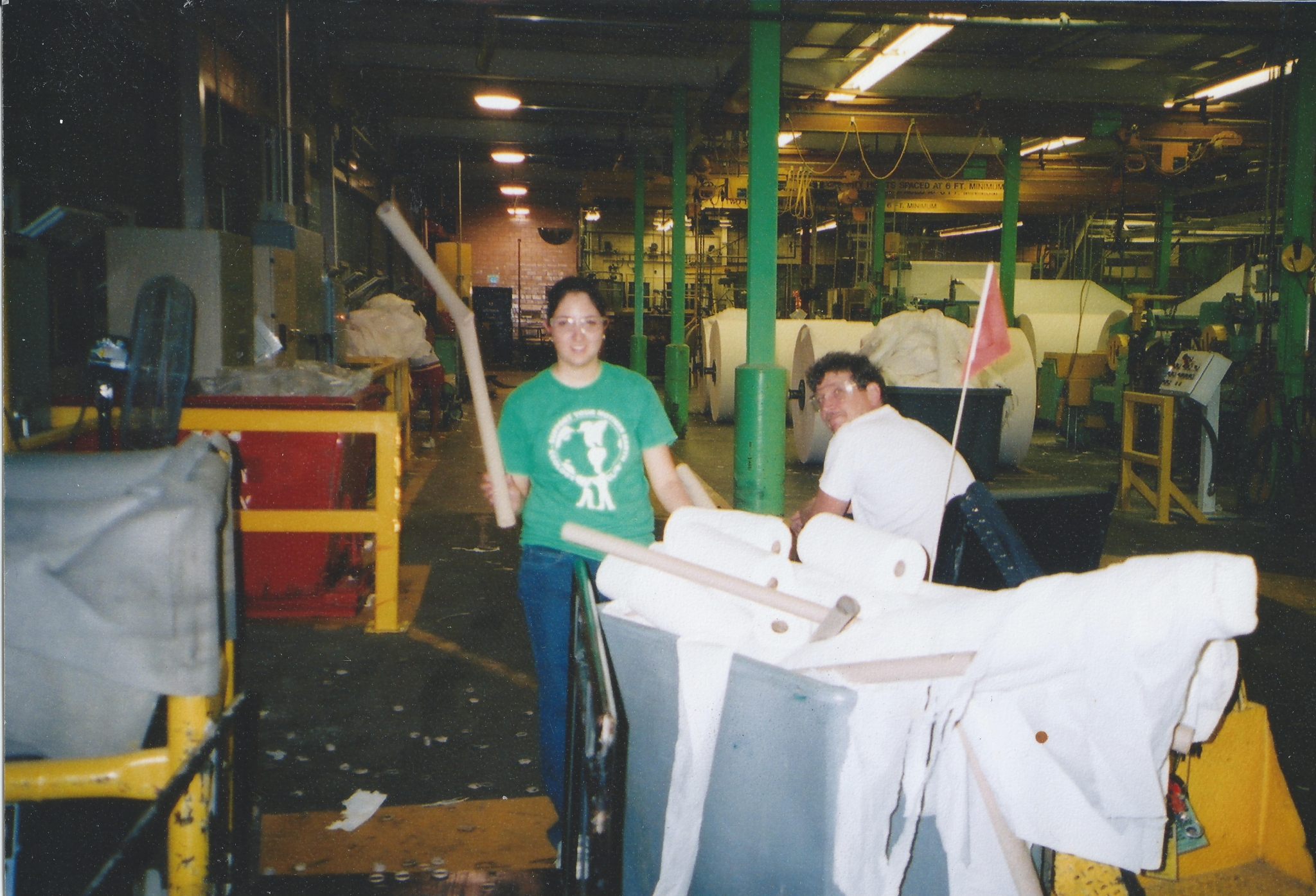
“As long as you were going off to college, you could work your summers back at the mill, make really good money and help pay for college,” she said. Meghan also recalled that when she was younger, the mill would hold summer picnics for the workers and their families, where she and other kids would run around the festivities. Years later, she ended up working alongside those same kids in the mill.
Meghan said, “When it came time to go work at the mill, we were more like becoming adults but working with a lot of familiar faces. And it was like a community. There was a pride to work in the mill that I’ll never forget.”
The summers she spent in the mill also helped her connect with someone else – her father.
“As a kid, I didn’t always understand why he was working 12-hour shifts. It felt like he was always working, from a kid’s perspective,” she said. “[Working there] put into perspective of what it was that he was doing and why it was so important, and getting to experience that firsthand was really cool… I got to appreciate that he wasn’t just working all the time. He was actually helping pay for my college, and he was helping pay for family vacations and to have a cottage and the house and the boat and all those things that he provided for the family.”
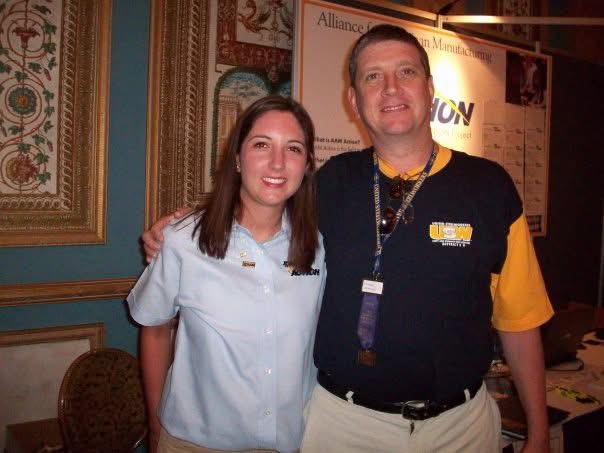
But college didn’t last forever, and neither did her summers working at the paper mill. Meghan graduated and started looking for a job in her field. When most availabilities weren’t what she was looking for – low pay, dangerous, or odd hours – she came across this role at AAM. She says she hasn’t looked back since.
“It wasn’t until I started at AAM that I really started learning about what we were fighting for,” she said. “I learned more about what unfair trade looked like and getting to teach workshops and meet people in the community and really felt like I was making a difference. And it made it feel to me like this is where I was supposed to be.”
Since starting at AAM 18 years ago, Meghan said that her role has changed a lot, but that she’s loved evolving along with it. Years ago, talking about issues like Made in America wouldn’t garner much interest, and most people she talked to were unfamiliar with the movement. Nowadays, she said that “it’s just a known.”
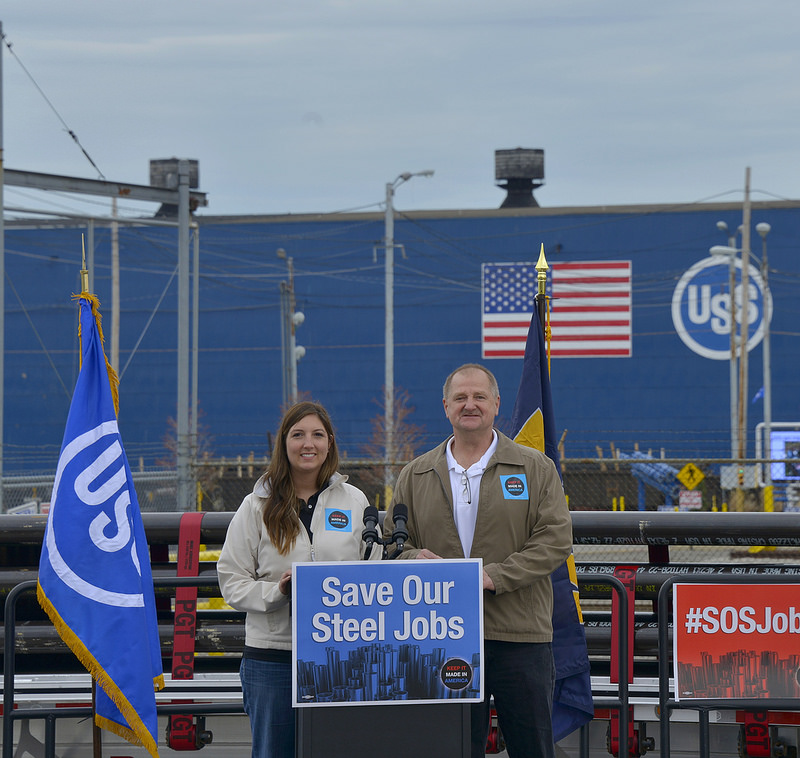
“Anyone I talk to, they’re immediately like, ‘That’s so cool. Yes, we should support Made in America,’” she said.
In her day-to-day, Meghan carries a lot of responsibilities throughout her region (consisting of Wisconsin, Michigan, Minnesota, Iowa, North Dakota, South Dakota, Montana, Wyoming and Nebraska).
Most of her work depends on what legislation we’re working on over here at AAM, as we spend a lot of time looking for co-sponsors and support for issues on a national and state level. Meghan tracks legislation, hearings, caucus meetings, and committees that deal with issues we’re interested in. She also travels quite a bit, covering different events and conferences that pop up around her region.
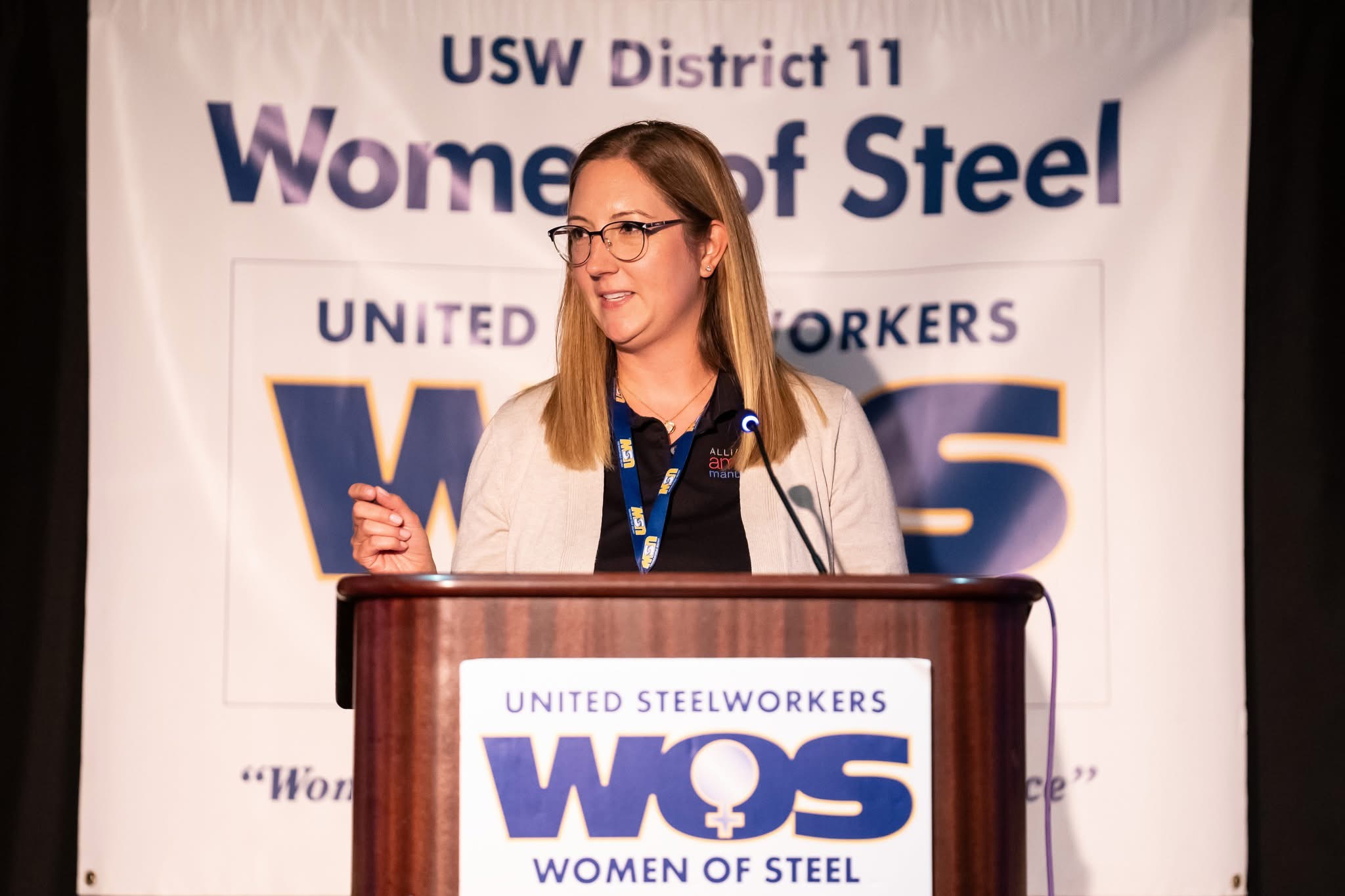
“So, it just depends what month it is, but those are some of the constants,” she said. “And then other things kind of fill in that space, we might get asked to attend and host a workshop at a different conference, or we might shift priorities and learn about a new bill.”
More recently, Meghan also began working as a Communications Associate, writing blog posts and helping with our yearly Made in America Gift Guide endeavors.
“I really love connecting with an owner of a company and doing an interview and hearing their backstory,” Meghan said. “It makes me want to support their company, and I’ll never forget when I’m out in the field to mention that ‘Hey, these wool mittens that I bought from this company in Wyoming has been an awesome product,’ and I don’t hesitate to tell people about it.”
She has a lot of advocacy work to be proud of, too. When asked what she was proudest of, Meghan knew right away what story to tell.
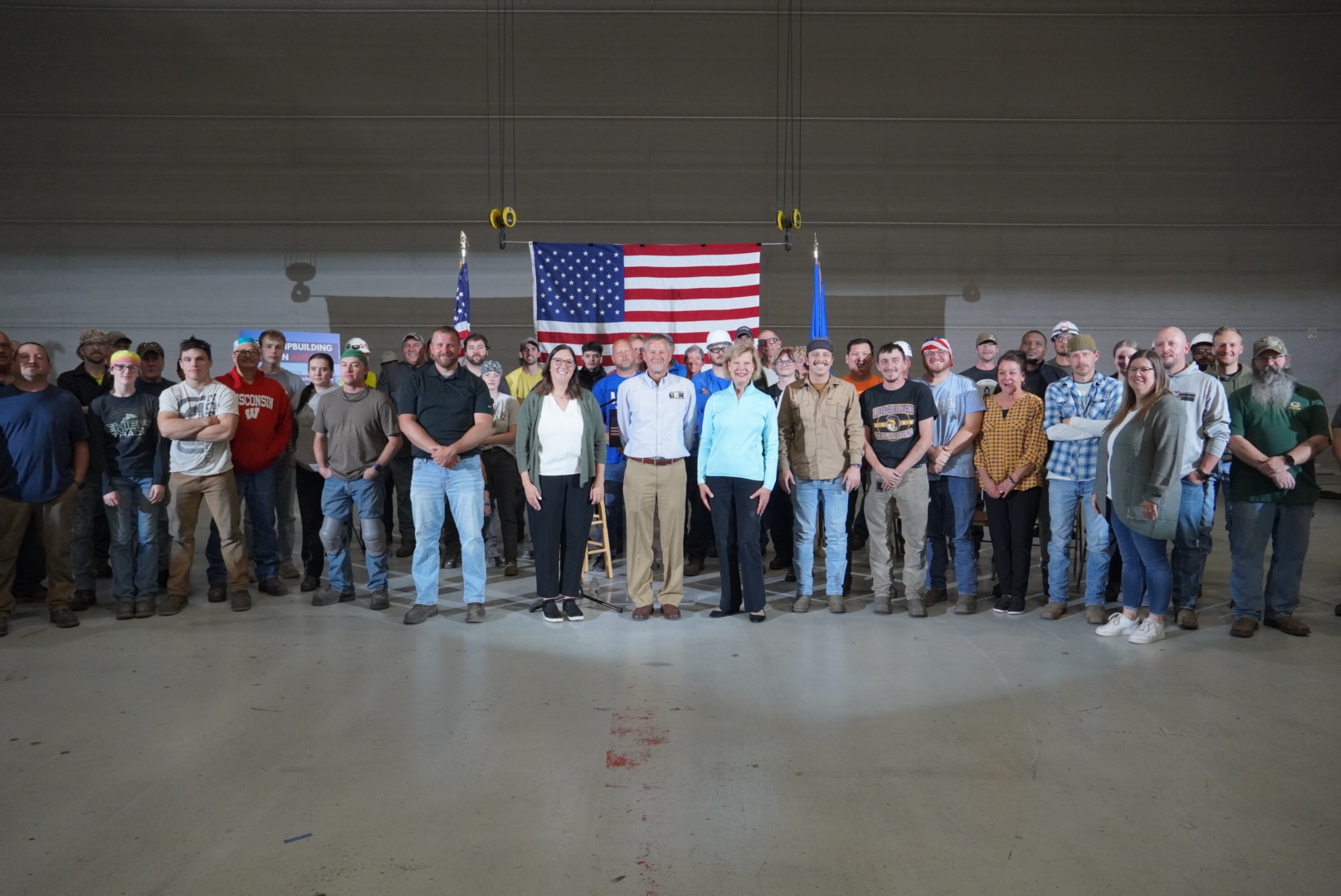
Back in 2009, just after she’d started at AAM, Meghan and another coworker got the opportunity to travel to Canton, N.C., and other communities in the South during a paper trade case to tour ‘paper towns,’ areas that had been built on the backs of paper mills.
“We did this tour for a few weeks around the paper towns down there,” she said. “And we interviewed everyone, like the CEO of the hospital, the flower shop owner, the grocery store workers. We interviewed the local steel workers and asked, ‘What does the mill mean to the community?’”
Meghan and her coworker were able to consolidate the interviews and videos they took into a YouTube documentary, called “Papertown.”
“We were able to put together the interviews and use that footage of around the town and tell a real heartfelt story of what the mill means to the community. And these were jobs that were at stake, with this paper case,” Meghan said. “And we were able to bring that, I believe, to Washington, and really be impactful in that decision.”
While she wasn’t sure about the state of those mills today, Meghan said that the paper mill she worked at closed in 2023, and that the community felt the loss.
“It was sad,” she said. “My dad was president of the local, he was planning to retire when he got the notice that the mill was closing. So, the timing thankfully worked out really well for him. He stayed until the last day. I remember driving there and picking him up from his last day, and even just watching him walk out of the mill for the last time, [which] was normally supposed to be a happy moment, like retirement, but it was really sad at the same time, because no one’s ever going to walk back in that mill.”
Even though her dad was able to retire with the mill closure, some workers weren’t as fortunate.
“All of it was just so… sudden,” she said. “Everybody was gone, and a lot of these people would get together for happy hours, or they would get together for brunches, and it’s like that community and all of those events they did… all went away with that.”
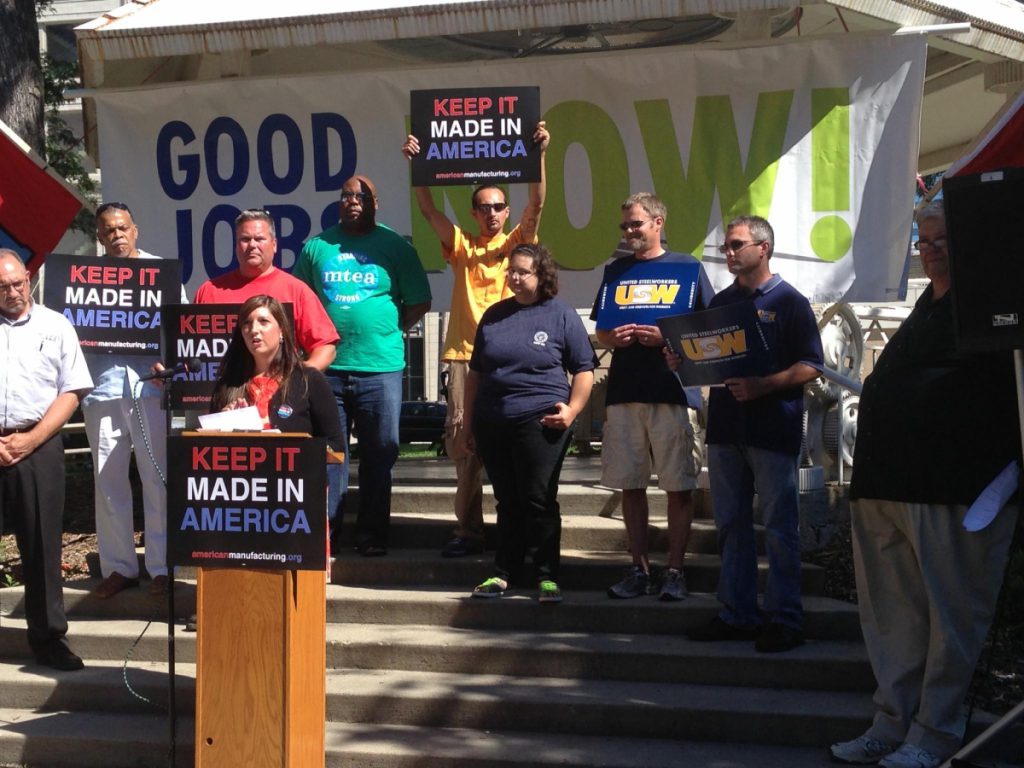
Despite this, Meghan is continuing her work, advocating for the very people that she worked with at the paper mill. More recently, she’s spoken at multiple press conferences with Sen. Tammy Baldwin (D-Wis.) in support of America’s shipbuilding industry.
She’s been able to take her work home, too – now that her kids are older, she’s had the opportunity to teach them about the importance of Buying American.
“They see this candy on their YouTube videos, and they’re like, ‘We gotta get this viral candy!’ And we go to the store, and immediately they look at the back and they’re like, ‘Mom, this is made in China… we’re not buying that,’” she said. “But it opens up a whole discussion of why we’re not.”
Even if she didn’t know it then, Meghan had been raised the same way – to support American manufacturing.
“Growing up, my siblings and I always handmade our own greeting cards, and always… would have the back drawn with an American flag and ‘Made in the U.S.A.,’” Meghan said. “So, whether I even realized it at the time or not, I was being brought up to understand and support Made in America.”
We hope you enjoyed meeting Meghan and learning more about her impact and involvement with AAM! Next, we’ll be featuring Lou Delatore based in West Virginia.