

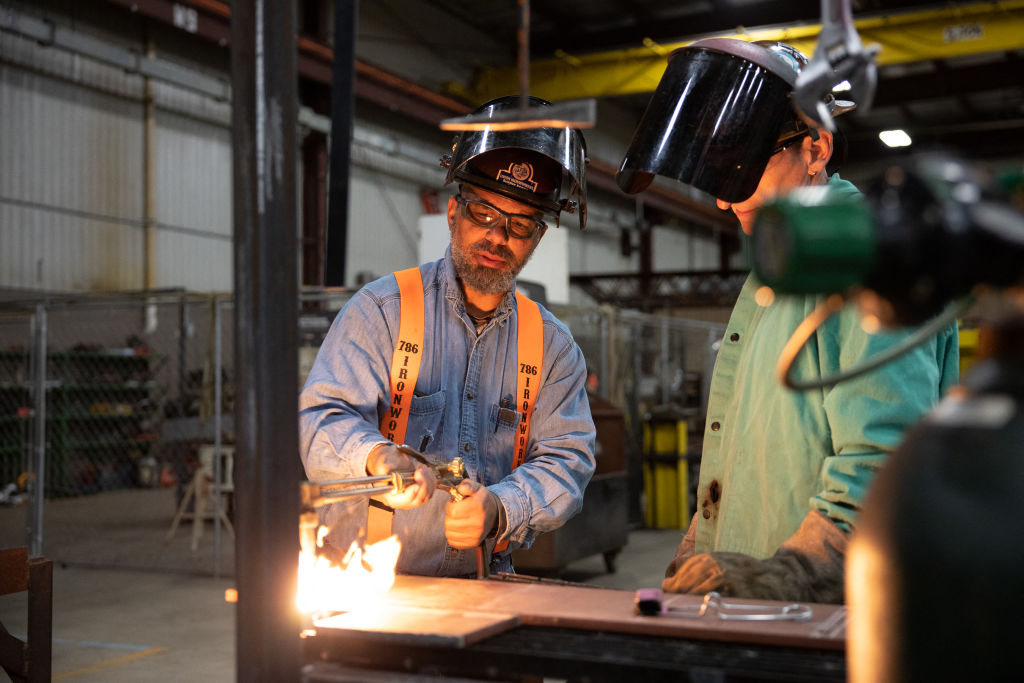
More needs to be done to open workforce training pipelines in the United States.
We all know the old saying: Give someone a fish and they eat for a day. Teach someone to fish, and they can eat for a lifetime. But the underlying assumption in the old proverb is that there is someone doing the teaching of fishing and, in the age of automation, industrial apprenticeships play a key role in ensuring people know how to build a rod, spool a reel and cast a line.
Apprenticeships are key to ensuring many advanced manufacturing industries have a workforce qualified to staff them. No one can simply teach themselves the skills needed to be a competent sheet metal worker or a machinist. They can’t sit at home watching 5,000 hours of YouTube videos and expect to have the proper knowledge to perform the tasks of a millwright or refrigeration mechanic. Complex machines require human power to build, operate and maintain. And without a properly educated and trained worker, these machines are worthless. It’s the workers behind the machines that give them value.
Think about it: How can we expect to rebuild our country’s manufacturing sector without people who know how to build the infrastructure, machines and tools needed for that manufacturing? The short answer is we can’t and we won’t. This country needs to scale up the number of workers who are trained in the key industries that keep us moving, and doing that means addressing head on the lack of resources that have been allocated toward industrial apprenticeships. As of June 2026 there are almost 500,000 job openings in the manufacturing sector and, while the federal government has wisely instituted programs like a Workforce Pell Grant that will expand financial assistance to short-term workforce training program, it’s not funding other job training programs nearly enough. Our own AAM staff has difficulty finding portals for industrial apprenticeships around the country.
It shouldn’t be so difficult. The training for these jobs requires in-person, hands-on instructions from knowledgeable experts who have worked in the industry and seen it evolve overtime. But their funding and promotion must be maintained; without that maintenance the pipeline of applicants dwindles, creating understaffed worksites and, ultimately, fewer people with the knowledge needed to pass down to the next generation. This under-staffing in turn only incentives the offshoring of jobs, as manufacturers will use the of a lack of talent in the U.S. as justification to close the factories and look for other countries in which to operate.
Through user friendly, centralized online portals, applicants can shop for local industrial apprenticeship programs. Pennsylvania currently has over 70 different program sponsors for Machinist apprenticeships throughout the state, Indiana has over 80 different Machine Repairer apprenticeship programs. Pair this with a well-compensated job after completion of a program, and we can incentivize people into these fields as a path toward establishing economic security for themselves, their families and their communities. Public investment in these apprenticeships will also de-risk the manufacturing sector and encourage reinvestment by the private sector. This kind of workforce development will lead to more sustainable growth in the U.S. as wages, profits, investments, tax revenue and standards of living continue to increase due to the cycles of increased output and wealth.
But we can’t skip steps in this process, and the first step is education and access. Invest in the infrastructure of industrial apprenticeships, teach people to fish and they’ll feed themselves and their families. That feeds all of us.