

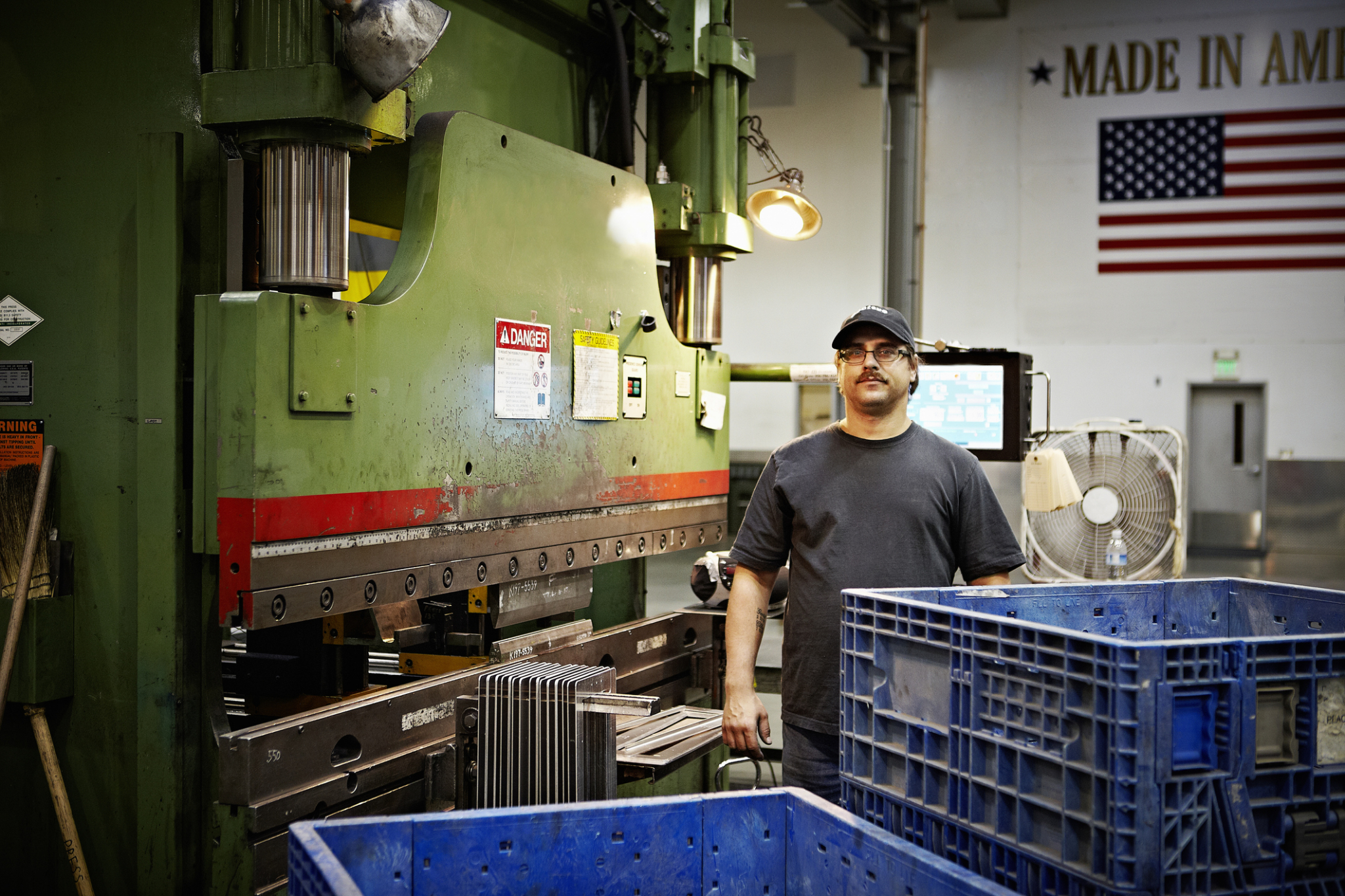
A policy discussion in Washington delves into what’s shaping industrial trends in the United States.
What do tariffs, humanoid robots, AI and China all have in common?
They are all forces shaping U.S. manufacturing today.
The Brookings Institution earlier this month hosted a discussion of those forces and the future of manufacturing policy. The event, a part of the 15th annual John Hazen White Forum on Public Policy, brought leaders from academia, business and government together to discuss what stance the U.S. government should take in response to everchanging forces. Panelists discussed the challenges manufacturers face, from changing tariff policies and trade uncertainty to rapidly expanding technologies like robots and AI. The discussions demonstrated the importance of policy stability and predictability for business planning and investment decisions.
The first of two panels focused on the impact of trade, tariffs and war on manufacturing. And at the forefront of this discussion was the role of U.S. policy in supporting manufacturers in sectors that provide critical infrastructure or national security priorities.
With China’s rise and ongoing investigations into Chinese investments in the United States, it has become increasingly important to ensure the U.S.’s place in the global supply chain. One action by the current administration has been pressuring other trading partners to cut trade with China. The question is: Is it working?
Kari Heerman, senior fellow and director of Trade and Economic Statecraft at the Brookings Institution, posed it differently.
“The question is what are we trying to achieve,” Heerman said. “I think the concern with a lot of investment is that China has accumulated a lot of market power in a number of sectors, and what that allows it to do is to place pressure on countries where jobs, where investment, where economic security and household well-being [are] on the line.”
Policy is not only important on the national stage but at the state level. “Each state has the chance to draw or drive away both people and business,” said John Hazen White Jr., CEO of Taco Industries and the program’s namesake.
“I would be looking at the entire ecosystem for manufacturing, not just the number of factories,” added Heerman. “What kind of workforce development do you have? What kind of tax policy do you have? What [does] the future look like, not just what does the immediate environment look like?”
The second panel, on AI, robotics and automation, centered another question: Are we actually having a manufacturing renaissance?
The take from Brookings Senior Fellow Mark Muro: yes and no.
“For the last 15 years, manufacturing employment has been slowly recovering from the calamitous previous losses to globalization and the China shock,” he said. But “output has been growing faster than jobs.”
Muro noted that the U.S. has continued to lose ground compared to China, especially in the global market share. However, Muro remains optimistic about the sector.
He emphasized workforce upscaling and rescaling to incorporate new technologies, using tools such as state-based Manufacturing Extension Partnerships (MEPs), to improve manufacturing’s competitiveness.
“Adoption is the name of the game, but adoption doesn’t just happen,” he said. “We need a concerted effort to support, especially medium sized businesses, to scale up on and adopt AI and robotics and related technologies.”
You can watch the entire program online. Find it below: