

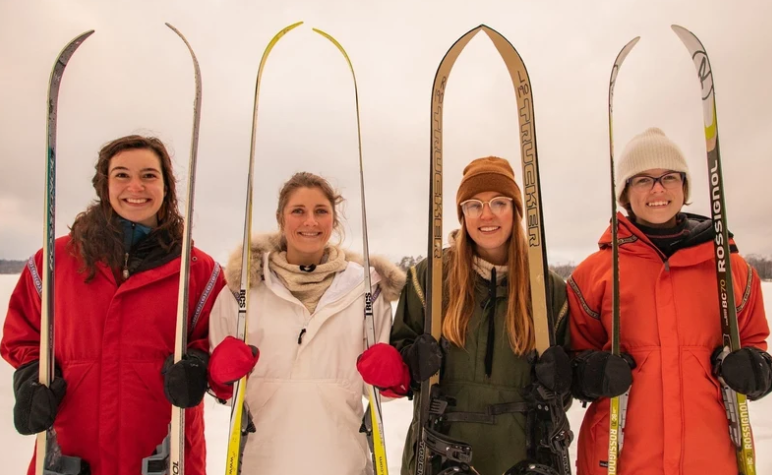
Located on the Boundary Waters, Wintergreen Northern Wear knows how to dress for the cold.
Winter is more than a season in Ely, Minn. It’s a way of life.
Perched on the edge of the Boundary Waters Canoe Area Wilderness and just a few miles south of the Canadian border, the town is home to Wintergreen Northern Wear, a small manufacturer whose colorful anoraks have become icons among dog mushers, winter campers, Arctic travelers and outdoor enthusiasts who refuse to stay indoors when temperatures plunge.
“We like to think of ourselves as the anorak company,” said owner and president Jackson Harren. “It’s our most recognizable product and our most proven.”
At Wintergreen, the anorak is more than a jacket. It is the centerpiece of a layering system refined through decades of use in northern Minnesota and some of the coldest environments on earth.
“To really thrive in the cold, if you’re going to do something active in the cold, there’s a systems approach to it,” Harren said. “There’s a science. You can be warm and comfortable in any weather condition if you’re dressed for it.”
That philosophy is stitched into every garment that leaves Wintergreen’s factory in Ely, where workers cut fabric, sew clothing and build products that are still made in Minnesota by Americans who understand winter firsthand.
The company’s signature products are its Expedition Fleece Anorak and Expedition Shell Anorak. Designed to work together, the two garments form the foundation of a cold-weather system that has been tested everywhere from Minnesota trails to Arctic expeditions.
“Our clothing is designed to be layered,” Harren said. “You have your wicking layer, which is a layer of breathable fabric that’s against your body. Then you have your warmth layer and the best example of that is our fleece anorak. Over the top of that you have a thin, highly wind-resistant layer.”
Harren calls the formula the “three Ws” for wicking, warmth and wind.
The first layer of wicking moves moisture away from the body.
“We don’t do cotton,” Harren said. “Cotton just keeps that moisture against you and makes you freeze to death. You want a synthetic material or a Merino material wicking that keeps moisture away from you.”
The warmth layer is the company’s signature fleece anorak.
“It’s a 400-gram fleece that we have specially made for us,” Harren said. “It’s the thickest fleece on the earth that we can find. It’s a very beautiful, highly functional jacket or coat.
“Its primary function is to trap air inside. It’s slightly oversized. You can put more layers on underneath it depending on how cold the conditions are going to be.”
The final layer is the shell anorak.
“If you have that whole system, that outer wind-protection anorak, that’s where you’ll often see the fur ruff over the hood,” Harren said. “Now you’re getting another aspect of protection because that fur ruff is going to keep your face from the coldest wind and snow conditions.”
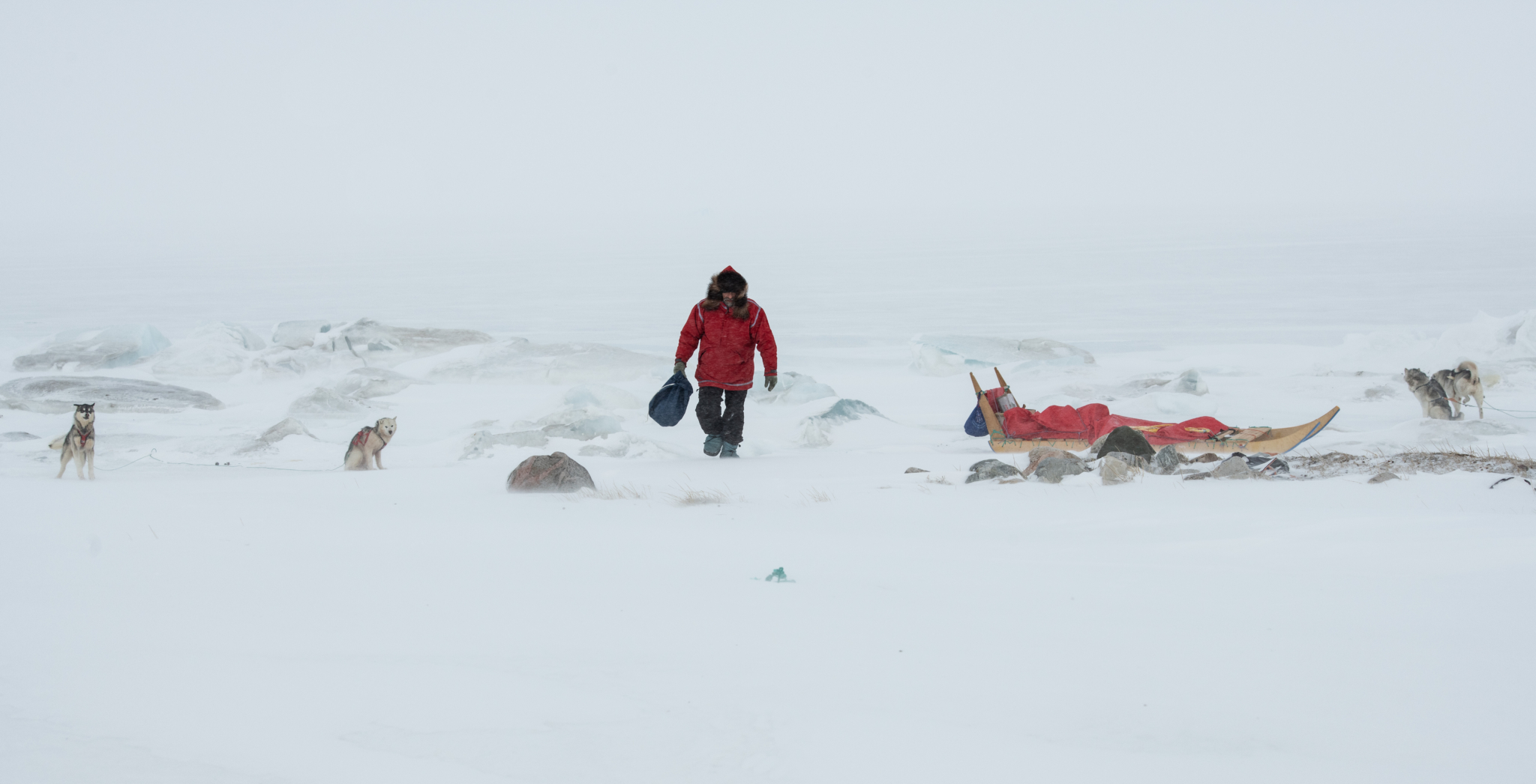
Wintergreen also offers a Combo Anorak that combines fleece and shell layers into a single garment, along with Merino base layers and shell pants. The Expedition Fleece and Expedition Shell are the backbone of the business and the Expedition style name reflects the company’s beginnings with polar explorer Paul Schurke and his wife, Susan.
The Schurkes founded Wintergreen after struggling to find clothing capable of meeting the demands of Arctic travel. During Paul Schurke’s unsupported dog-team expedition to the North Pole in 1986, much of the clothing had been designed and sewn by Susan.
“They couldn’t find what they felt was suitable clothing for this type of adventure,” Harren said. “Sue made the clothing and then it just kept growing and growing from there.”
The expedition gear eventually became a business, and the colorful anoraks with a signature striping became synonymous with outdoor life in northern Minnesota.
The company entered a new era in 2021 when Harren, his brother and their wives purchased Wintergreen from its founders.
“We were a little bit of that classic gray-wave situation,” Harren said. “Baby boomers building a business and not really having anybody to hand it off to. Their kids weren’t interested.”
The transition occurred during a turbulent period. Wintergreen had spent part of the pandemic producing hospital gowns, and inventory was scarce.
“When we bought it, they had no inventory because the company was making hospital gowns,” Harren said. “When you buy something like that, it’s a startup all over again. It’s got its foundation and some momentum, but we had to learn a lot about the apparel industry and find out what really makes Wintergreen tick.”
The answer was quality.
“That high standard of quality in every stitch that’s protects you from the harshest elements made the anoraks stand out,” Harren said. “It’s made in Minnesota. It’s made in the USA. It’s been proven to the extreme weathers of the earth. That’s the story we try to share with people, to maintain that legacy.”
For Harren, preserving that legacy meant preserving manufacturing in America.
A manufacturing engineer by training, he grew up in northern Minnesota, earned an engineering degree from the University of Alabama in Huntsville, completed an MBA and eventually returned home.
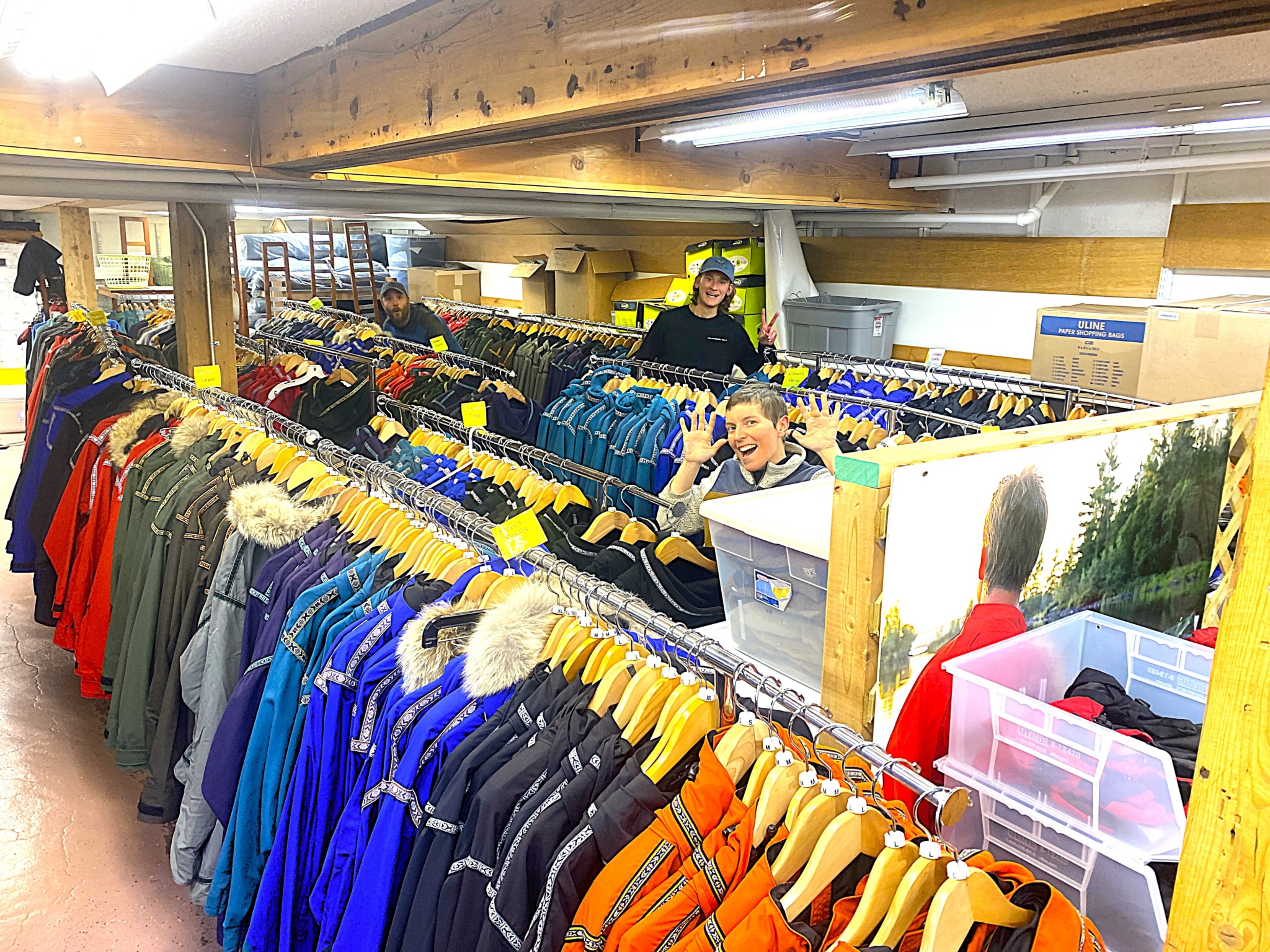
Today, Wintergreen operates from a two-story building in downtown Ely where customers can browse the retail store and see production taking place in the same main street building.
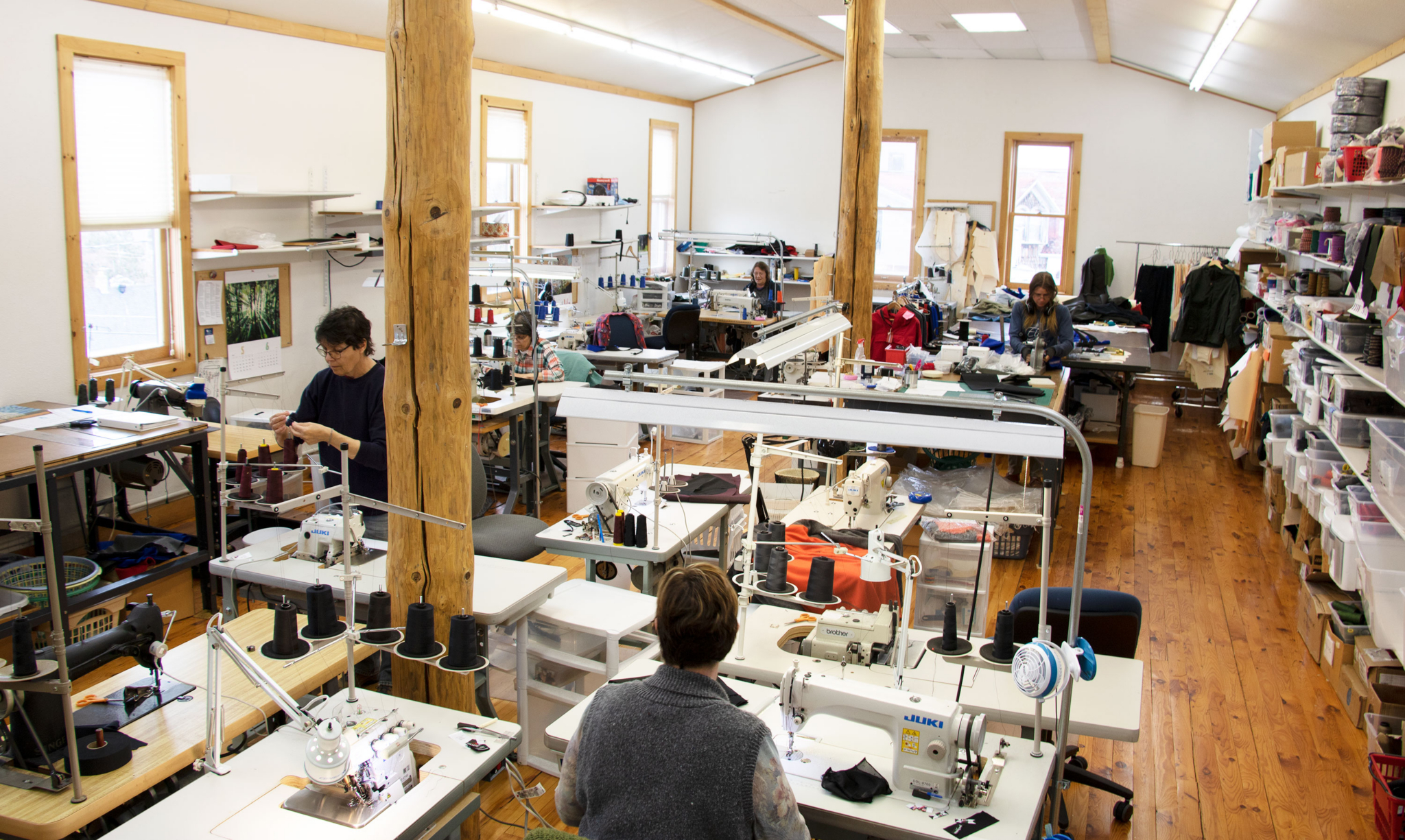
The manufacturing process begins with what is like a deconstructed anorak. Fabric is cut with a CNC machine and those pieces are placed in a large bag along with accessories like zippers, labels and trim. The bag is then given to a sewer.
“So, one sewer has all the parts that go into a garment and they sew it from start to finish themselves,” Harren said. “Just one person.”
The company employs roughly 20 people, including several experienced home-based sewers.
“I probably have seven or eight women that sew from home,” Harren said. “They have the same sewing machines and setup tables as someone that is sewing in our own production facility.”
Wintergreen also operates a wood-products workshop in Warroad, Minn., where it manufactures traditional toboggans and other outdoor products. But domestic apparel manufacturing remains the heart of the company.
“We’ve heard from overseas manufacturers but our commitment is to make our garments in America,” said Herren. “We’re proud to be made in the U.S. and proud to be made in Minnesota.”
Customers increasingly appreciate that commitment.
About 95% of Wintergreen’s sales are direct to consumers, and more than half come through its online store. Customers come from across the United States, Canada and other cold-weather regions around the world.
“A lot of shoppers out there these days want to have less things but better things and they want to know where they came from,” Harren said. “That’s somebody we can really relate to and do business with.”
Many become devoted customers.
“We’ve got that feeling of a business where people have one of everything we make and they buy the same for their friends,” he said.
For a company located on the doorstep of the Boundary Waters, that kind of loyalty speaks to something larger than a well-made jacket.
Wintergreen’s anoraks were born from Arctic exploration, refined in the North Woods and are still sewn in Minnesota by workers who understand winter firsthand. In an era when much of the apparel industry has moved overseas, the company continues to build products designed not simply to protect people from the cold, but to help them embrace it. “We like to say there’s not bad weather, there is only bad clothing,” Harren said. “Winter is such a wonderful time. We want to encourage people to get out there. Our clothing is made with our mission of helping people get out there and enjoy the winter. We’re not trying to help people survive the cold. We’re helping them thrive in it.”
The Alliance for American Manufacturing does not receive a commission from purchases made through the above links, nor was the organization or author paid for favorable coverage.
Labeling Note: This story is intended to highlight companies that support American jobs and that make great products in the United States. We rely on the companies listed to provide accurate information regarding their domestic operations and their products. Each company featured is individually responsible for labeling and advertising their products according to applicable standards, such as the Federal Trade Commission’s “Made in USA” standard or California’s “Made in USA” labeling law. We do not review individual products for compliance or claim that because a company is listed in the guide that their products comply with specific labeling or advertising standards. Our focus is on supporting companies that create American jobs.
For more on the Federal Trade Commission’s standards for “Made in USA” claims and California’s “Made in USA” labeling law, please also read this guest post by Dustin Painter and Kristi Wolff of Kelly Drye & Warren, LLP.