

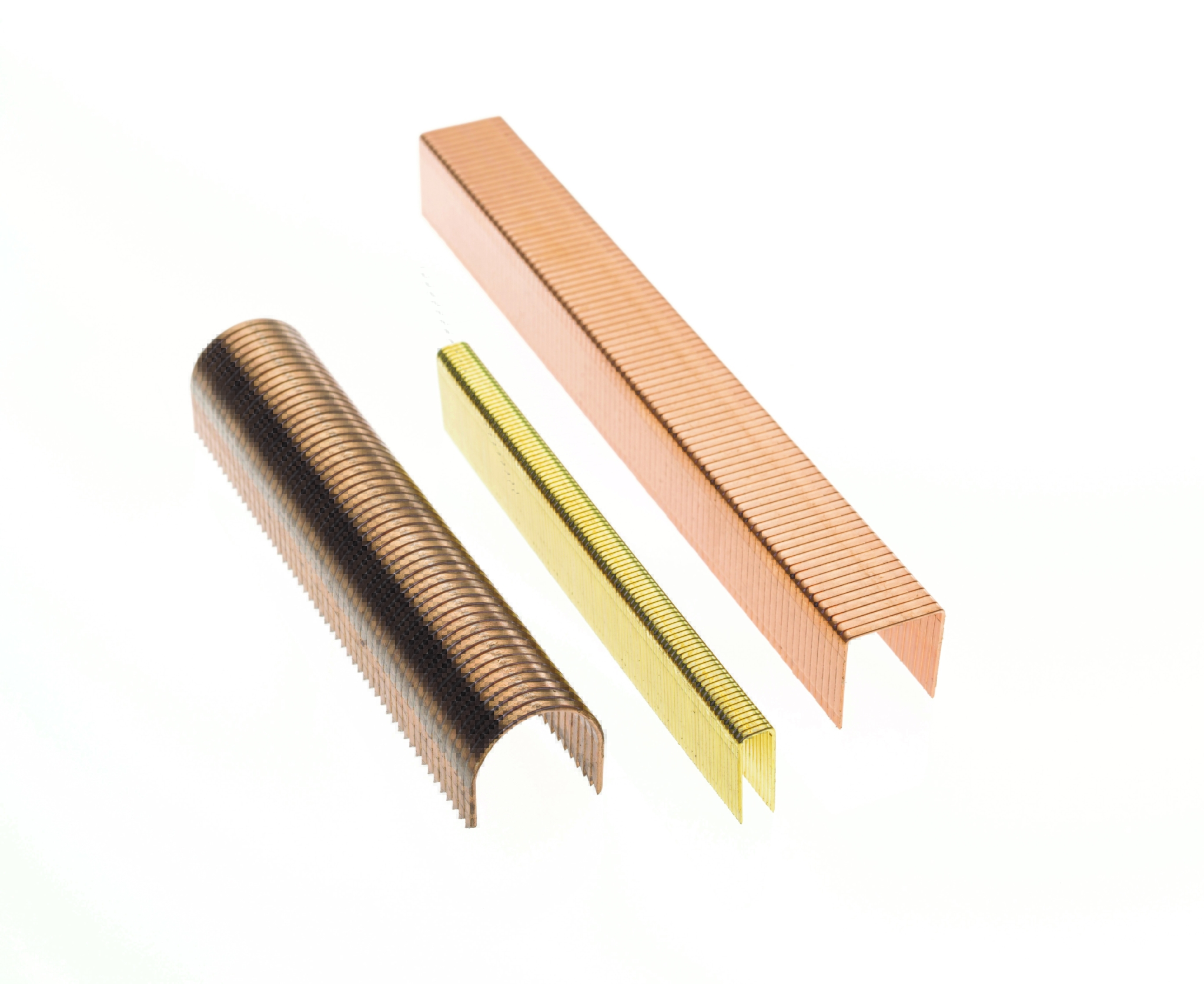
And New Hampshire’s ACME Staple Company has been making them for more than 130 years.
Most people are familiar with staples as a tool for fastening sheets of paper together. So familiar that we can even be aware of staple use just by the sound of a stapler impaling paperwork.
But there are hundreds of other applications for staples of all sizes, shapes and materials. The fastening industry is dominated by nails, but staples can complete some jobs in a much quicker and more efficient way than any nail or screw.
There are many global staple manufacturers supplying the world but today there are only three major staple-making companies in the United States. One of them, ACME Staple Company in Franklin, New Hampshire, dates to 1894.
“Eighty percent of staples in the United States are coming in containers from China, Vietnam, Cambodia, India, Turkey and the UAE,” said Tom Gold, owner and CEO of ACME Staple Company. “We are a specialty manufacturer. We do have some products that are more mainstream, but those tend to be specific applications.”
There are many recognizable uses for staples, many of which we can only realize on close inspection. Staples are widely used in the construction industry, agriculture, electronics, upholstery, telephone work and in television cable installation.
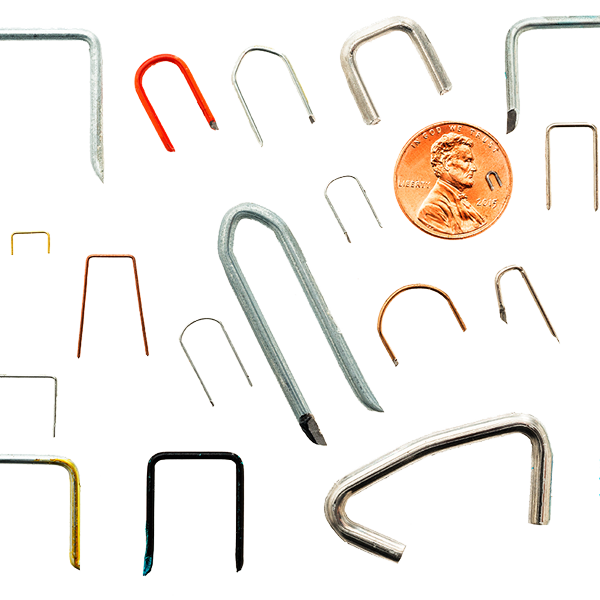
“We’ve made 800 different kinds of staples over the years,” said Gold. “We have standard ones for the telephone, and we have special ones that people use to install the little tracks for model train railroads. When you want to put down the ties, you can’t use a regular spike. You’ve got to use a staple spike.
“We have staples that are used in caskets and tires, and all different kinds of applications. One of the big areas we are getting into now is fence stapling where people put up wooden fences and string wires across them; they use staples to fasten the wires to the posts. If they are raising a lot of sheep, cows, horses or whatever, we sell into those markets as well. And we export a lot of our staples to other countries for their agricultural needs.”
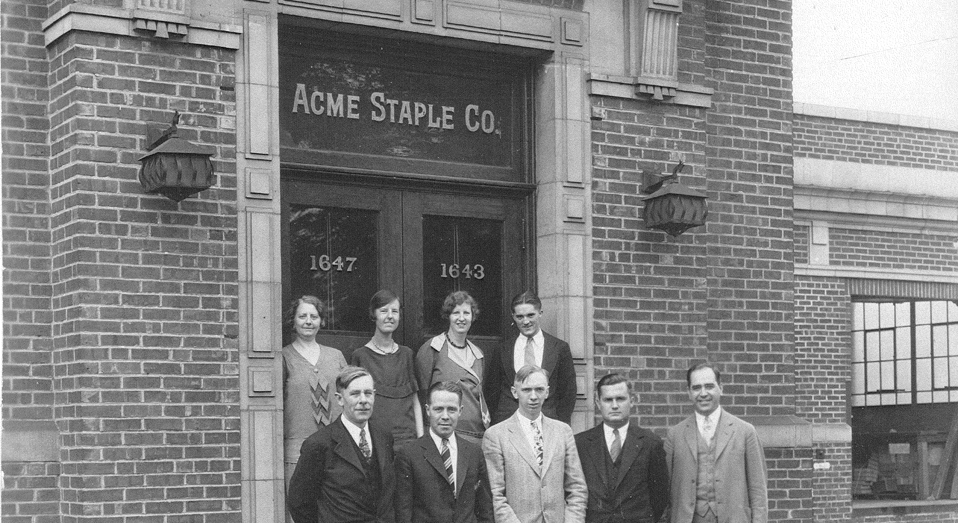
ACME Staple Company began manufacturing in Philadelphia in 1894 before moving to Trenton, New Jersey and finally Franklin. ACME became a Gold family enterprise when Tom Gold’s father bought the company in 1972. His father was a Yale- and Harvard-educated attorney, a path the younger Gold also followed.
ACME Staple Company operates out of a 40,000 square-foot factory that sits on 40 acres of mostly vacant land northwest of Concord. There are anywhere from 20 to 25 employees manufacturing staples in the rural outpost.
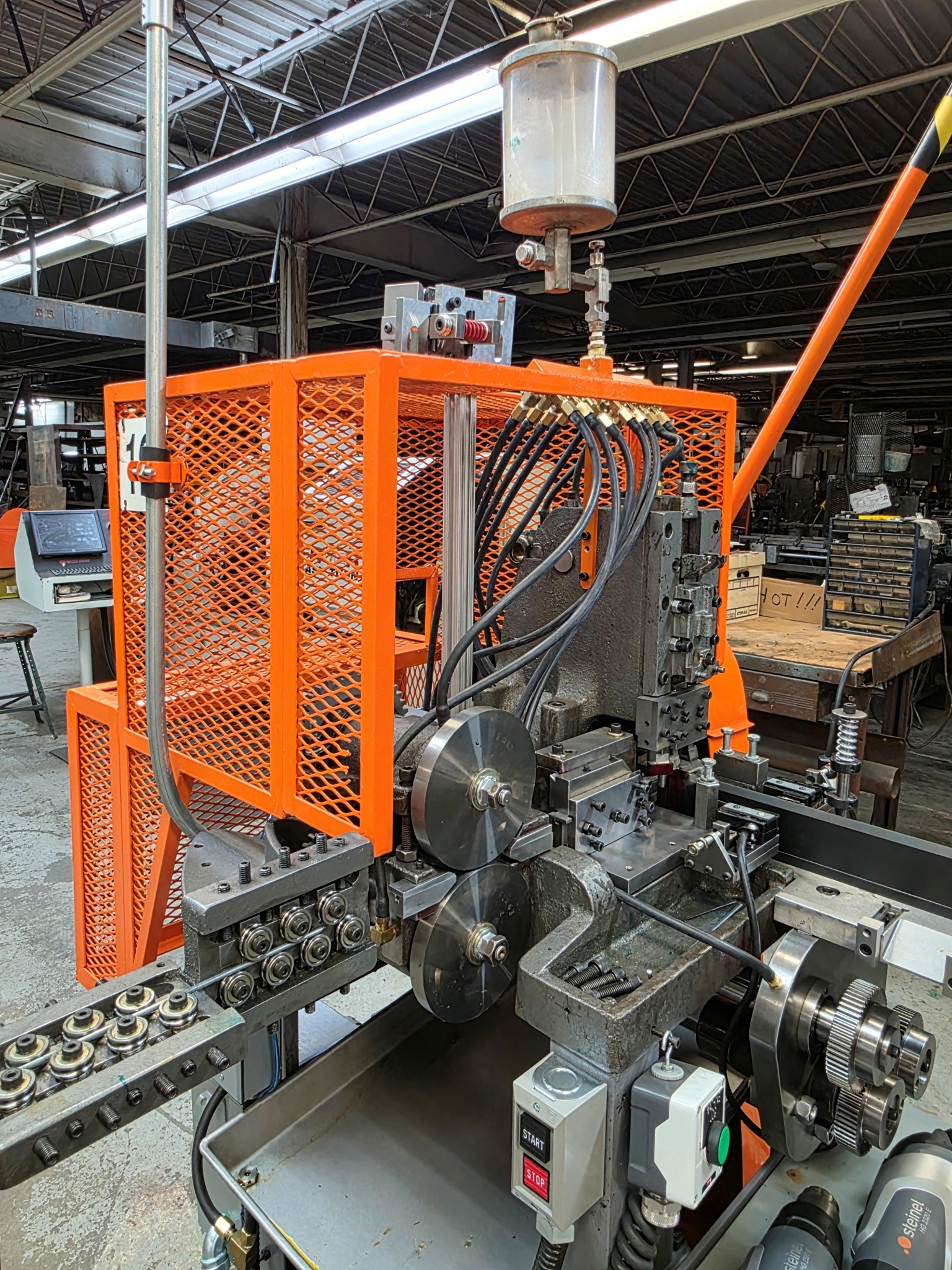
Staple manufacturing is done by machines that bend diverse types of wire into specific shapes and sizes.
“Wire can be made out of galvanized steel, aluminum, copper or stainless steel,” said Gold. “There are some other high rust resistant materials like Inconel and Monel that we use. We get calls for other kinds of wires, but typically they end up being too expensive for the solution to make sense. Somebody wanted titanium wire for the space programs, but they found a better way to do it.”
Gold says ACME sources most of its wire from manufacturers in Arkansas and Connecticut.
“The raw material for wire is called rod, which is an extruded thick, thick wire that is drawn down through a series of dies until it gets down to the right size and other properties that you need,” said Gold. “One of our biggest suppliers is Bekaert, a multi-national with facilities all over the place but they are buying rod in the United States.”
Bekaert supplies wire that is made and melted in the U.S., is Buy America compliant and meets Federal Highway Administration (FHWA) requirements. Bekaert works with domestic steel producers to create specialized products like tire bead wire which is in great demand from American tire manufacturers.
“A lot of staples are for wood, some are for paper, and we have some that are used to cohere internal pieces of other products. For example, we have staples that are used in tires,” said Gold. “The thing that holds the tire rim and the tire together so that they don’t fall off is the bead. A bead is a group of wires that are held together and then vulcanized into the edge of the rubber of the tire so that on the hard surface of it you can get adhesion.
“They used to hold the wires together with string, but we developed a staple that is the same material as the bead material in the tires, and they use that to hold them together.”
Gold says ACME can continue to thrive because of its specialty business.
“We are making staples that nobody else is making. That is partly why we get the customers,” said Gold. “Like the staples used in tires. The telephone staples that we make, other people are making them, but we can be competitive with them. And we make a lot of fence staples.
“We can be more competitive when raw material is the higher part of the cost. So bigger staples make us more competitive but there are all kinds of specialty staples.”
Among the specialty staples ACME has manufactured is a tiny, round-top staple that is so small, it is hard to pick up by hand. It was used in the manufacturing of ladies’ shaving razors.
“They would use it to attach the blades to the plastic housing that the razor comes in,” said Gold. “The staples were made of aluminum and the blades were stainless. Ladies leave their razors in the shower longer than men do and basically they can rust. These little aluminum staples wouldn’t rust so the razor would last longer.”
ACME staples are a variety of flat or rounded tops with varying lengths of the posts.
“When you look at an office staple, you probably don’t see it but there is a sort of little ‘v’ at the bottom, a chisel shape,” said Gold. “That’s the standard point an office staple or construction staple will have but there is also a blunt or divergent point at the bottom which goes in different directions on each side so that when you install the staple the legs spread apart, which gives you better holding power. It’s kind of like a Molly bolt.”
Staples manufactured by ACME can be found on Verizon trucks for telephone applications or on houses wrapped in DePont Tyvek during construction.
It’s called building America, with products built in America.
The Alliance for American Manufacturing does not receive a commission from purchases made through the above links, nor was the organization or author paid for favorable coverage.
Labeling Note: This story is intended to highlight companies that support American jobs and that make great products in the United States. We rely on the companies listed to provide accurate information regarding their domestic operations and their products. Each company featured is individually responsible for labeling and advertising their products according to applicable standards, such as the Federal Trade Commission’s “Made in USA” standard or California’s “Made in USA” labeling law. We do not review individual products for compliance or claim that because a company is listed in the guide that their products comply with specific labeling or advertising standards. Our focus is on supporting companies that create American jobs.
For more on the Federal Trade Commission’s standards for “Made in USA” claims and California’s “Made in USA” labeling law, please also read this guest post by Dustin Painter and Kristi Wolff of Kelly Drye & Warren, LLP.