

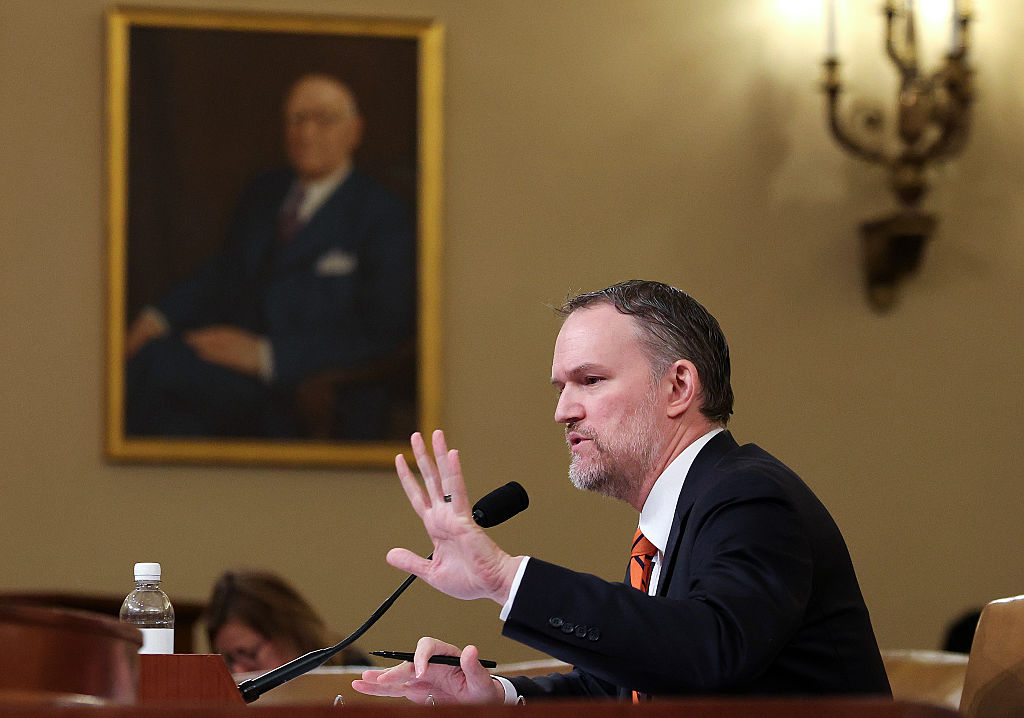
Jamieson Greer also throws cold water on the idea of U.S. market access for Chinese automakers.
U.S. Trade Representative (USTR) Jamieson Greer this week completed a marathon appearance before the U.S. House Ways and Means Committee, during which he detailed the trade policies, plans and priorities of the Trump administration. He was at it for roughly four and a half hours. I just looked it up; that’s enough time to watch both Star Wars and The Empire Strikes Back with a 15-minute break in between to stretch your legs.
The committee and the ambassador covered a lot of ground during that time, and Greer said a number of notable things about trade items the Alliance for American Manufacturing (AAM) is tracking.
For the sake of brevity, we’ll focus on an exchange with Rep. Brian Fitzpatrick (R-PA) that touched on a number of big-ticket items in USTR’s portfolio, namely: Ambassador Greer’s priorities in the renegotiation of the USMCA with Mexico and Canada, and the specter of China’s automakers gaining access to the American auto market.
“Recognizing that the joint review will need to be completed by this coming July 2026,” said Fitzpatrick, “can you expand on any details of the review that you are particularly focused on as we approach that deadline?”
Said Greer:
I have a team in Mexico this week. I just came back myself and as an initial matter we are addressing with Mexico topics like rules of origin and economic security and supply chain resilience. This is kind of trade jargon, but what it means is if Mexico and the U.S. are going to have a close trade relationship, we need to make sure that the goods are actually from the U.S. and Mexico and not some third country using Mexico as an export hub to get into the U.S. without any obligations of the agreement. We want to make sure that we’re reshoring things like electronics and pharmaceuticals and semiconductors, etcetera. And that if Mexico is going to have a trade relationship with us, it needs to be in support of those goals.
Greer, in this exchange, specifically mentions “rules of origin,” (ROO) which are a major AAM focus as USTR continues USMCA renegotiation discussions with Mexico and Canada. Here’s what we wrote in a summary of our priorities regarding the deal:
Our main point of contention with the USMCA is China’s exploitation of the deal through one of its signatories: Mexico. The agreement was designed with bipartisan cooperation to strengthen North American production and supply chains and ensure the deal’s benefits accrue to workers on this continent. Since its implementation, however, it’s opened a significant backdoor through Mexico for Chinese goods that evade U.S. tariffs, circumvent U.S. trade enforcement measures, and exploit the deal’s ROO — allowing lots of Chinese-made content to enter the U.S. market.
This was not the end of the exchange between Fitzpatrick and Greer, however.
“Specific to autos,” asked Fitzpatrick, “will USMCA economic security discussions include ways to address subsidized Chinese autos? And if Canada is brought back into discussions, will the U.S. ask them to change their tariff rate quota for Chinese EVs?”
Said Greer:
Well, I think that if the if the Mexicans and the Canadians want to have preferential access into the US market, they need to make sure that they’re controlling their own economic borders. And that includes with respect to subsidized autos coming from China or anywhere else, for that matter. We are focused on this. Each of these countries have their sovereignty and they can decide what they want to do. Mexico has already independently taken steps to raise tariffs on various items from Vietnam and China. We think that’s a meaningful step and we look forward to their further alignment with us.
That “subsidized autos coming from China” response suggests that no, Chinese automakers will not be allowed into the American market, despite suggestions otherwise. That’s very important too: AAM has argued for years that allowing heavily subsidized Chinese automakers into the American market would be “an extinction-level event for the U.S. auto sector.”
You can read more about our USMCA renegotiation priorities here. Read more about the threat posed to the U.S. auto industry by trans-shipped Chinese vehicle imports in our 2024 report. And find Ambassador Greer’s entire appearance before the House Ways and Means Committee in the video below.