
Wyoming mill Mountain Meadow Wool is keeping the full process under one roof in an industry that has largely moved overseas.
At the base of the Bighorn Mountains on Wyoming’s western plains, in the small town of Buffalo, raw wool still enters one side of a building and finished garments leave the other.
That’s the daily rhythm at Mountain Meadow Wool, a family-owned mill working to preserve a shrinking segment of the American textile industry. When I spoke with Operations Manager Ben Hostetler, I wanted to understand how a small mill in rural Wyoming continues to carry out a process that much of the industry has outsourced or fragmented.
Mountain Meadow Wool traces its roots to the region itself. Hostetler explained his mother started the company after his youngest brother graduated from high school. She had always loved wool and natural fibers and, in a region steeped in wool history, it didn’t make sense that local fiber had nowhere to be processed.
“That seemed like a shame to have this great quality product that we produce regionally and not be able to use it,” Hostetler said.
Wyoming’s wool legacy runs deep, shaped in part by Basque sheepherders who settled the region in the late 1800s. In the 1960s, the state produced roughly 20 million pounds of wool annually. Production today is closer to 2 million pounds, about 90% less than it once was. That drop mirrors broader shifts across the country, where domestic textile processing has been in steady decline for decades.
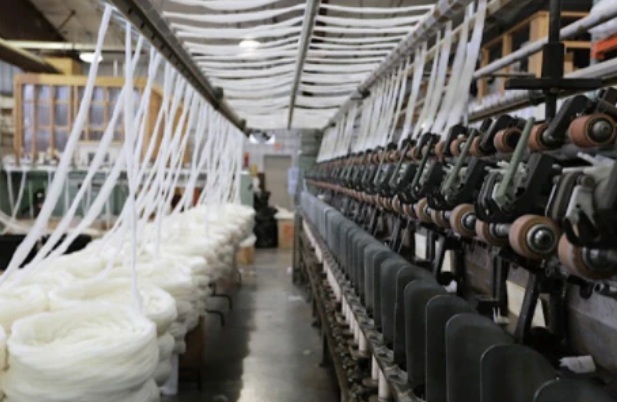
Scouring, the washing of raw wool, is just the first step. Then comes carding, combing, spinning, dyeing and knitting. In the modern textile economy, those stages are often spread across multiple facilities, frequently overseas. At Mountain Meadow, the full progression still happens in Buffalo, taking wool from greasy fleece to finished yarn, apparel and home goods. The mill even welcomes visitors for self-guided tours, allowing people to watch the full production process from above. In an era when much manufacturing happens out of sight, Mountain Meadow makes its work visible.
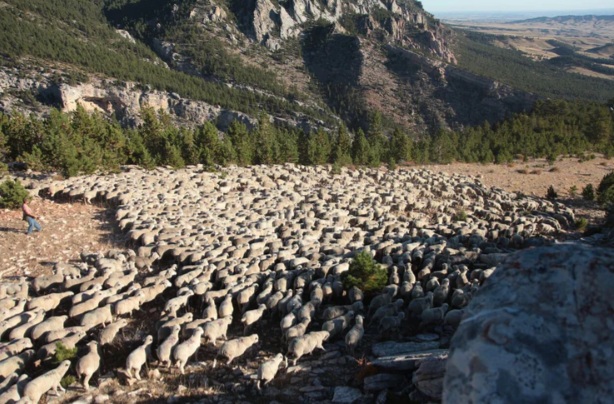
The mill works directly with six to eight ranching families, sourcing most of its fiber within 150 miles. Many of those ranchers manage sizable flocks, numbering in the hundreds and sometimes the thousands. Through its producer program, Mountain Meadow pays ranchers well above global commodity prices. In some years premiums have reached 150% above market rate, meaning ranchers earned more than double what they could have received through traditional commodity channels. Rather than sending wool through brokers, where it’s blended and sold without a clear connection to its source, Mountain Meadow tracks its fiber back to the ranch of origin. Wool is labeled, stored and processed with traceability in mind, something that has become increasingly rare in global supply chains.
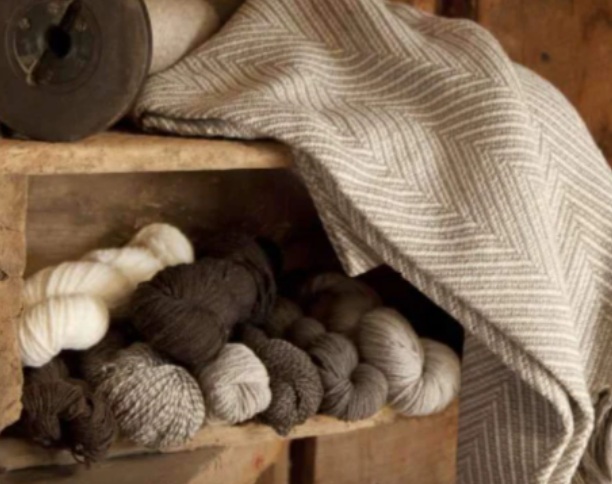
The company’s signature Mountain Merino wool comes directly from that network of Wyoming ranchers. Sourced from fine-wool sheep raised in Wyoming’s dry climate, the fiber is soft enough for next-to-skin wear and naturally moisture-wicking, odor-resistant and biodegradable.
That level of integration has become increasingly rare in the United States.
“China has around 200 large-scale scouring operations. We have one in the United States,” Hostetler said.
The imbalance isn’t just about scale. It’s also about infrastructure. Hostetler recently traveled to Pennsylvania to look at equipment from a shuttered wool mill, hoping to salvage machinery before it was scrapped. In some cases, he explained, even when equipment still exists, the technical knowledge to run and maintain it has largely disappeared in the United States. It’s one of the biggest challenges facing the domestic wool industry.
Against that backdrop, the way Mountain Meadow operates feels especially deliberate.
Mountain Meadow follows a closed-loop production approach. Lower-grade fibers are repurposed into felt or 100% wool dryer balls. Scraps created during machine setup are reprocessed into their RENewe yarn line. Wastewater from scouring is treated on-site and reused. The mill uses biodegradable soaps and vegetable-based spinning oils to preserve wool’s natural lanolin. Even the dye process is evolving to reduce residual waste and improve water reuse.
In an industry often driven by the lowest production costs, sometimes in places with minimal environmental oversight, that approach is deliberate.
“It does cost to do that,” Hostetler said. “But long term, it sets you apart from global production that often goes to the cheapest places with the lowest environmental regulations.”
Competing strictly on price with overseas production isn’t realistic.
“There’s not even a chance that we can compete with global overseas competition,” Hostetler said. “We’re going to be double, at least, if not triple what they can get it for overseas.”
Instead, the mill has built a loyal base of repeat customers and brand partners who value transparency, accountability and domestic production. For Mountain Meadow the decision isn’t about chasing the lowest price point, but about maintaining control over how its products are made and where its impact lands.
When I asked whether the “Made in USA” label still carries weight, Hostetler said:
“Our customer base definitely values Made in USA, and that’s probably one of the main reasons they come to us.”
At Mountain Meadow, that label carries tangible meaning. It means paying ranchers premiums above market rates. It means employing about 30 people in a town of 4,000. It means offering flexible schedules that accommodate families. It means preserving the skills needed to wash, spin, dye and knit wool, many of which have steadily disappeared from much of the country.
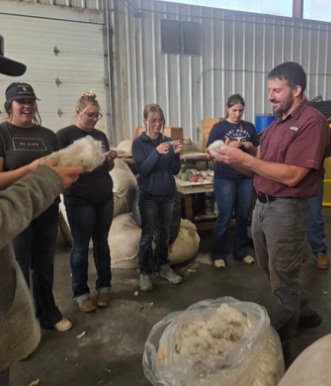
The mill is also investing in what comes next. Through partnerships with land-grant universities, including the University of Wyoming, Mountain Meadow processes wool from university flocks and returns a portion of sales to support sheep and textile programs. Internship opportunities give students hands-on exposure to the full wool pipeline, from raw fleece to finished garment, helping rebuild skills that have thinned in American classrooms.
Today, Mountain Meadow processes more than 60,000 pounds of wool annually. It’s a fraction of what Wyoming once produced, but it represents something steady: a supply chain that still exists.
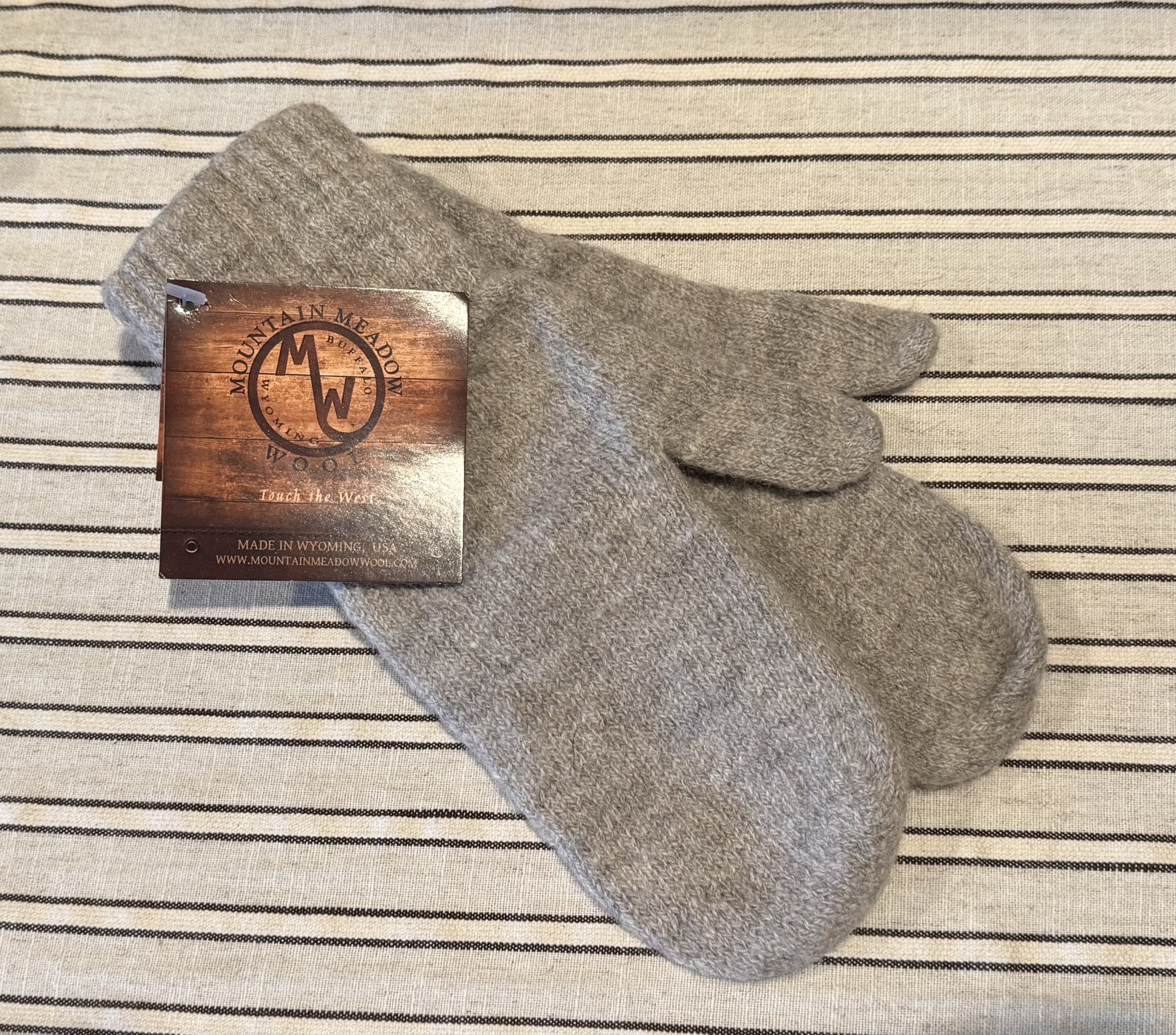
I ordered a pair of their wool mittens online, appreciating not just the quality but the story behind them: the ranchers, the workers and the small-town economy tied to every stitch.
Hostetler remains forward-looking. I’m optimistic about the future,” he said.
“The work is challenging, but fun at the same time,” he added, expressing pride in the team he is building and the problem-solving mindset they bring to the mill.
After speaking with Hostetler, what stayed with me wasn’t urgency or nostalgia. It was steadiness. There was no dramatic language about “saving” an industry, just a clear commitment to doing the work, investing in relationships and building something both economically and environmentally sustainable.
In Buffalo, Wyo., raw wool still enters one side of a building and finished garments leave the other. In today’s textile economy, that’s worth noticing.
The Alliance for American Manufacturing does not receive a commission from purchases made through the above links, nor was the organization or author paid for favorable coverage.
Labeling Note: This story is intended to highlight companies that support American jobs and that make great products in the United States. We rely on the companies listed to provide accurate information regarding their domestic operations and their products. Each company featured is individually responsible for labeling and advertising their products according to applicable standards, such as the Federal Trade Commission’s “Made in USA” standard or California’s “Made in USA” labeling law. We do not review individual products for compliance or claim that because a company is listed in the guide that their products comply with specific labeling or advertising standards. Our focus is on supporting companies that create American jobs.
For more on the Federal Trade Commission’s standards for “Made in USA” claims and California’s “Made in USA” labeling law, please also read this guest post by Dustin Painter and Kristi Wolff of Kelly Drye & Warren, LLP.