

Trade policy, trade remedy laws, tariffs, and their effects on the economy are readily in the news.
For policymakers encountering these issues for the first time, however, it can be difficult to understand the esoteric history of these remedies that have existed for almost a century, where their authority comes from, and what the impacts of their use have been for domestic jobs and production.
This report aims to provide an overview of the U.S. trade policy and remedies, their longstanding use as tools to preserve domestic production and job security, and the urgent need for their reform in the face of evolving global practices these laws were not designed to address.
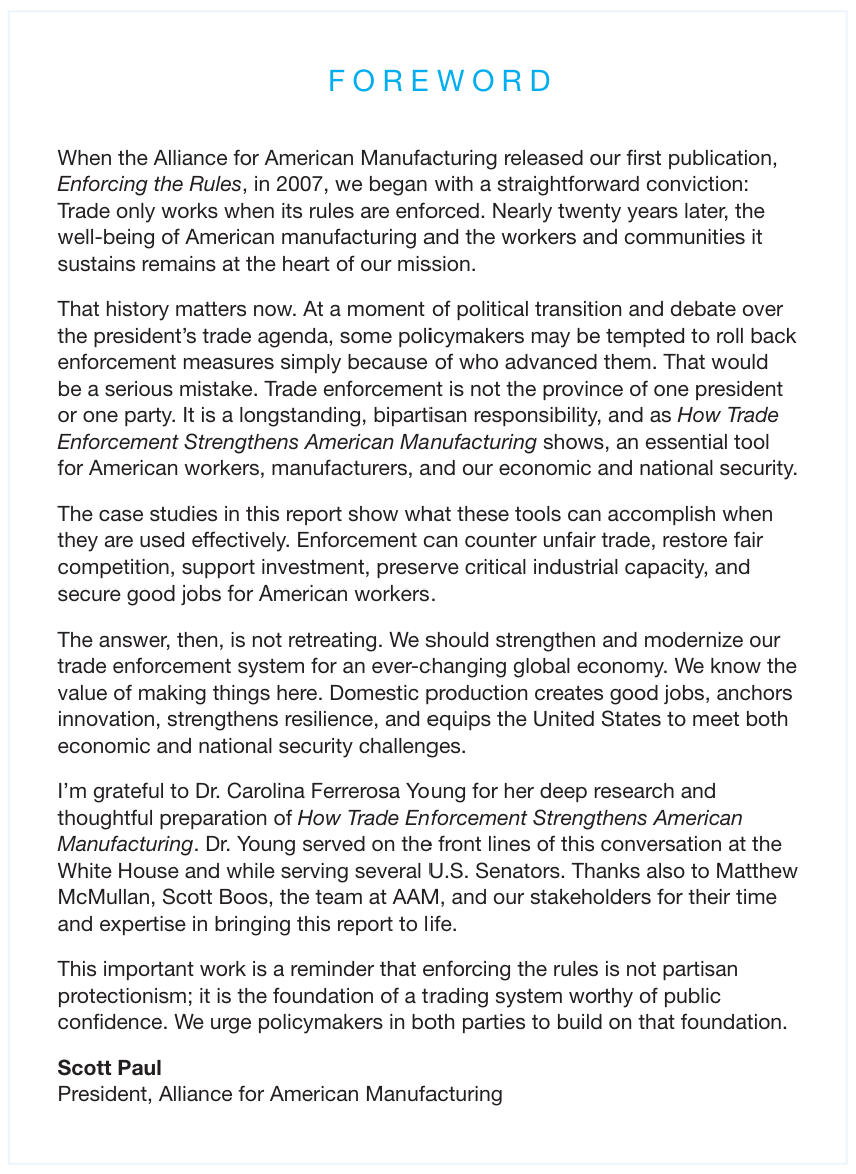
5 Key Takeaways
- Trade enforcement works, and it can unlock major U.S. investment. The report finds that anti-dumping and countervailing duties, Section 232 tariffs, Section 301 actions, and other enforcement tools can restore fairer market conditions and give manufacturers the certainty to invest in U.S. production. In steel alone, the industry announced more than $22 billion in capital investment amid improved market conditions following major trade enforcement.
- America is still confronting the consequences of decades of unfair trade and offshoring. “China Shock” accounted for nearly 60% of all U.S. manufacturing jobs lost between 2001 and 2019. Meanwhile, China-driven overcapacity continues to put U.S. producers under pressure. Global excess capacity alone if projected to reach 745 million metric tons by 2028, about eight times annual steel production in the United States.
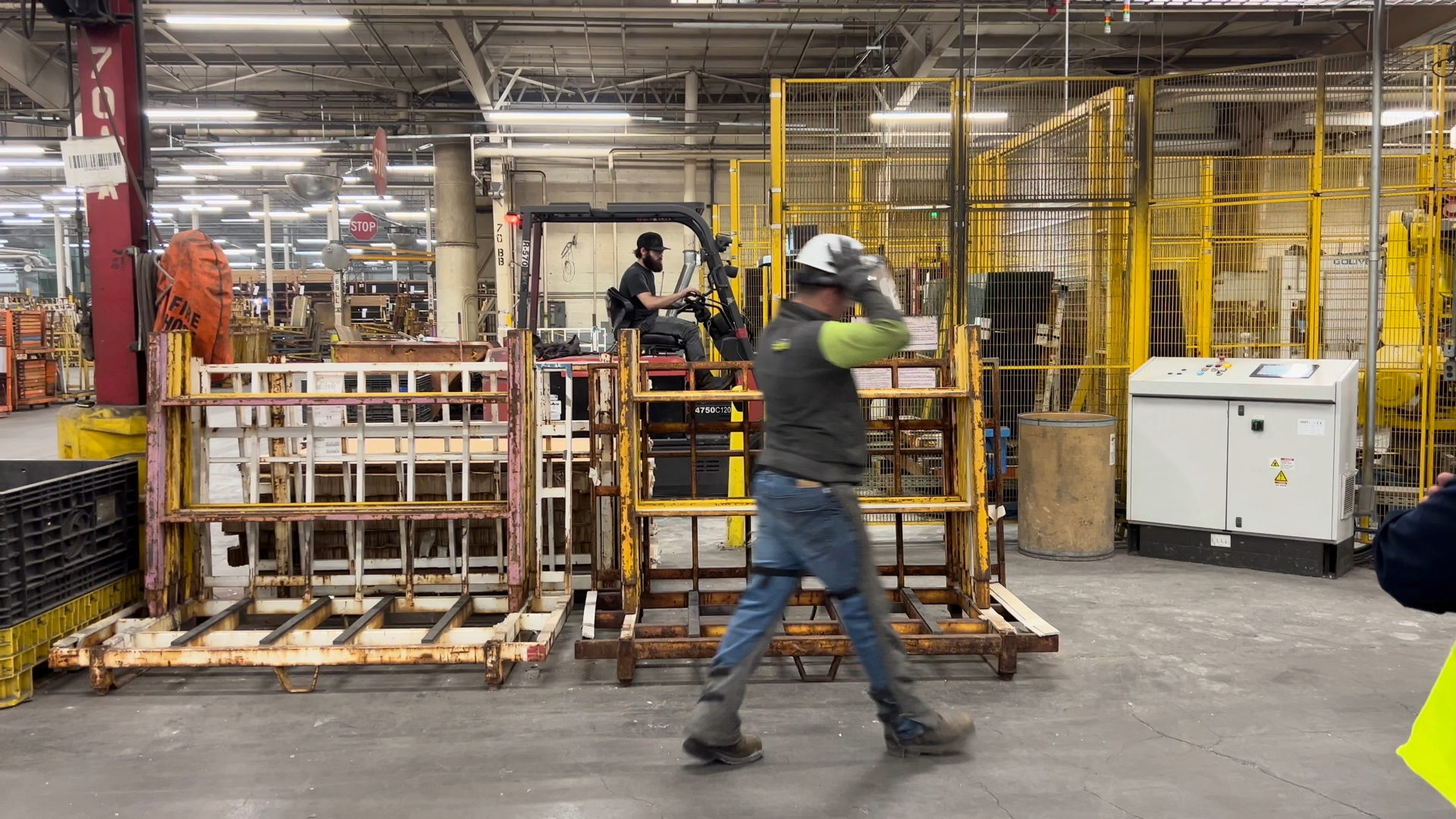
- Trade enforcement has real-world impacts on factories, workers and communities nationwide. The report’s case studies document what enforcement means on the factory floor and beyond. A planned Oklahoma aluminum smelter is projected to create 4,000 construction jobs and more than 1,000 permanent jobs. Solar panel manufacturer First Solar is on track to build more than 17GW of annual domestic manufacturing capacity and approximately 6,500 U.S. employees by 2027. In Pennsylvania, glassmaker Vitro restarted an idle production line in 2025 and rehired displaced workers to supply glass to First Solar.
- But America’s trade enforcement system is too slow for today’s economy. Manufacturers can spend millions of dollars pursuing a trade case, may need to demonstrate nearly a year of injury, and then wait an average of 14 months for duties to be applied. Meanwhile, foreign producers can shift production to third countries, transship goods, or slightly modify products to evade existing measures. America’s workers should not have to lose their jobs before the government can act.
- Congress needs to make trade enforcement faster, tougher and more proactive. Policymakers have the opportunity to preserve existing trade remedies while modernizing them to combat country-hopping, cross-border subsidies, customs fraud, and tariff evasion. That modernization will take strengthening federal enforcement capacity, improving access to trade remedies for smaller manufacturers and workers, and pairing enforcement with durable investment policies that expand strategic U.S. production.
TELL CONGRESS: LEVEL THE PLAYING FIELD!
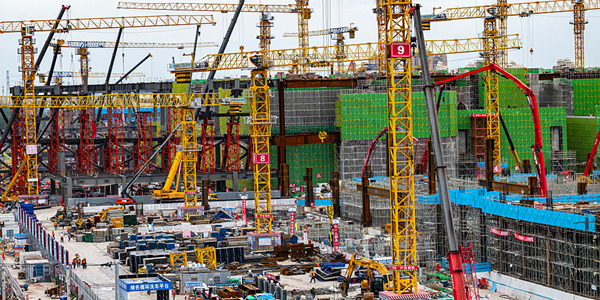
It’s no secret that China uses predatory trade practices to undermine American workers and businesses. These unfair tactics have led to millions of lost jobs and countless factory closures