

The administration says no deal is on the table ahead of President Trump’s visit to China. Some senators are still urging him not to consider one, and another’s expected legislation would cement a ban.
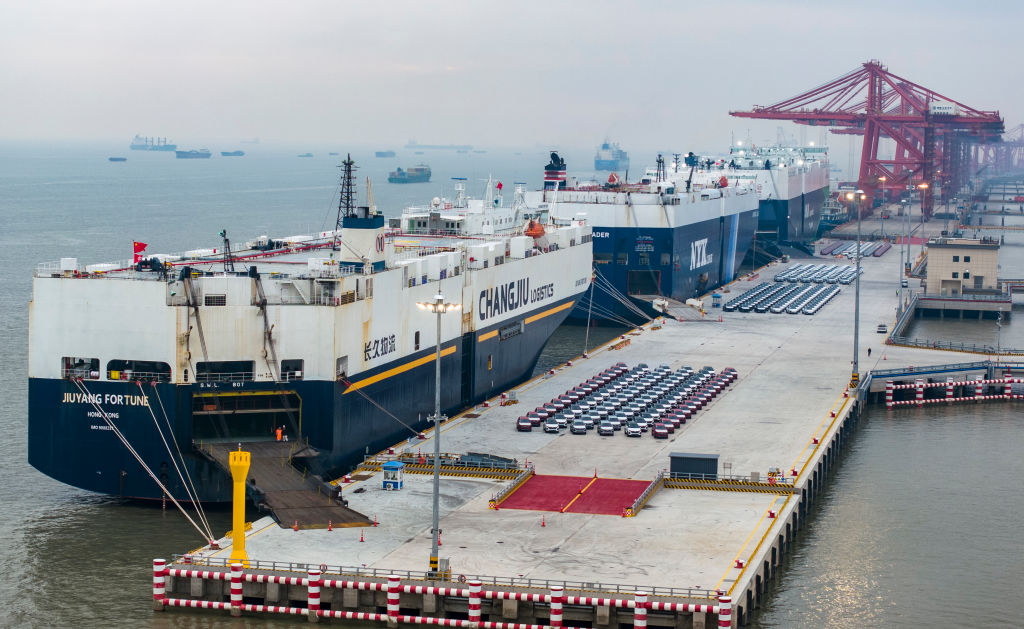
You still can’t buy a Chinese car in the United States. As we wrote in January there’s a 100% tariff on Chinese-made electric vehicles, and a federal ban on the use of Chinese software in connected vehicles is now in place. It’s an effective ban to Chinese auto imports.
But American car costs are high, the price tags on Chinese autos are astoundingly low and the drumbeat of calls to grant them U.S. market access is steady. As if to illustrate this point there’s an animated New York Times opinion on the subject today; a reminder of the story’s importance as President Trump’s visit to China approaches. His January comments to a Detroit audience suggest he’s open to the market access idea. And the president famously likes making deals.
The Alliance for American Manufacturing (AAM) believes an auto deal would invite a serious economic threat to domestic auto manufacturers and workers. In a 2024 report we argued “the introduction of cheap Chinese autos – which are so inexpensive because they are backed with the power and funding of the Chinese government – to the American market could end up being an extinction-level event for the U.S. auto sector, whose centrality in the national economy is unimpeachable.”
And last month, as China’s auto production overcapacity and exports continued to surge worldwide, AAM President Scott Paul wrote in a Detroit News opinion that “forcing (the domestic auto industry) into competition with vertically integrated rivals that are focused on seizing market share would, from an employment perspective, trigger a disaster on par with the China Shock of the 2000s.”
Lawmakers from both sides of the aisle agree. Sens. Tammy Baldwin (D-Wisc.), Elissa Slotkin (D-Mich.) and Chuck Schumer (D-N.Y.) recently warned the White House that exposing the market “would trigger a national security crisis that could never be reversed.” Sen. Bernie Moreno (R-Ohio), meanwhile, is expected to introduce legislation formalizing the ban. He told Reuters his expected proposal would seal off the U.S. so “there’s never a scenario where a Chinese automobile will enter our market, that’s hardware, that’s software, that’s partnerships.”
The administration says autos aren’t on the table. “We don’t see any change in that – so it seems like it would probably be difficult for certain countries to establish new production here, given those sets of rules,” said U.S. Trade Representative Jamieson Greer last week, referring to the software ban.
“We really coalesced around a handful of areas where we want to have outcomes, nothing really directly on the auto industry, specifically right now,” he said of the administration’s preparation for the Trump-Xi meeting.
That’s good to hear. Still, AAM will continue to pay close attention to this story. The U.S. auto industry represents a million American manufacturing jobs and millions more along its supply chains. We’ll risk a lot of them if we allow the Chinese auto export engine into their home market.