

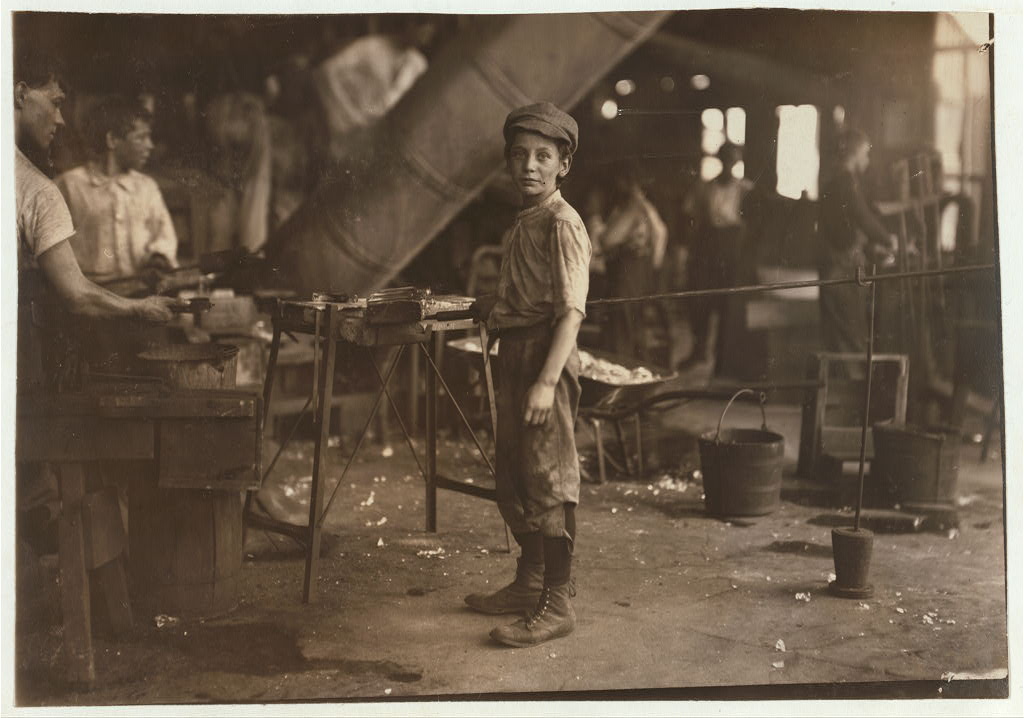
You’ve likely seen his striking images before. But did you know the man behind the camera was aiming for social reform?
America has a long history of manufacturing – almost 250 years of it. We began milling cotton in Rhode Island in 1790 and continued to innovate beyond what was thought possible.
Of course, with that history came the manufacturers and inventors that worked tirelessly behind the scenes. Hundreds, maybe thousands of Americans helped create, invent or patent ideas that helped move our country forward. This series, Unsung Heroes of Manufacturing, seeks to highlight the more underrepresented of those individuals, telling their stories even centuries after their impact began.
You might know some of these names – for example, Alexander Hamilton is no longer an ‘unsung hero’ (thanks, Lin-Manuel Miranda). But did you know that he has been credited as the Founding Father of American Manufacturing? No? Then this series is for you.
We’ve got a hefty list of subjects to cover, and manufacturing stories from the ironing board to the Phillips-head screw. Keep an eye out for an invention that you use regularly and let us know if there’s someone you want us to highlight!
Lewis W. Hine (1874-1940)
Born in Wisconsin in 1874, Lewis W. Hine went to work early. He became financially responsible for his family as a teenager after the death of his father and held a series of jobs for long hours and little pay. But he managed to maintain his education, taking university extension courses before moving to New York City in 1901 to further his study of sociology at Columbia University and New York University. He also took a teaching role at the Ethical Culture School.
It sounds like the beginning of a Progressive Era academic’s career, but it took Hine down a different path: He began using photography as an educational tool, taking his students on photographic excursions to observe the city’s commercial districts and tenements. By 1904, Hine had begun two projects. First, a series of photographs documenting immigrants’ arrivals at Ellis Island. The second was a series of pictures of harsh labor conditions published in the Pittsburgh Survey. Through his work, Hine was documenting human realities that many Americans rarely saw firsthand.
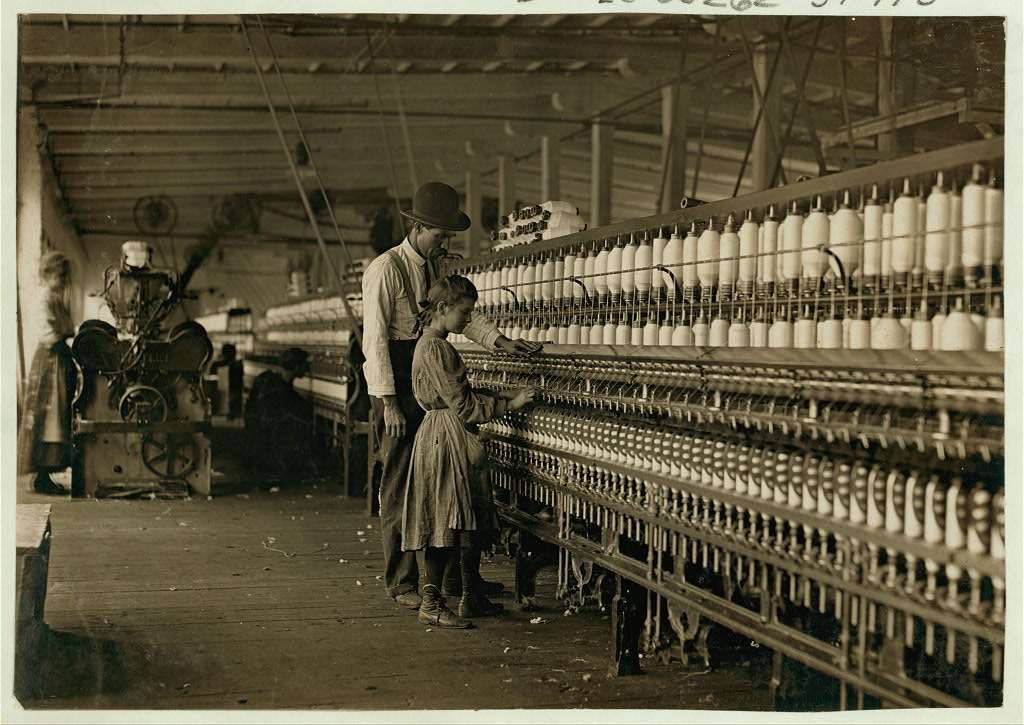
In the time following the Civil War, many children, often younger than 10 years old, labored in industries from textile mills and mines to factories to farms. Working children were often put in dangerous environments that threatened their health and safety. Yet, for many Americans, the realities of these workplaces remained largely unseen.
Hine’s photography helped change that. It drew the attention of the National Child Labor Committee (NCLC) and from 1911 to 1916 he worked with it, traveling throughout the country to document children in the workplace. He photographed them operating machinery, sorting materials and performing other tasks in industrial settings. His subjects included kids laboring in cotton mills, coal mines, agricultural fields and canneries where long hours and hazardous conditions were common.
Hine’s output was more than simply taking pictures. He frequently interviewed his subjects and their families, recording details about their ages, working hours and experiences. These notes gave the images context, helping viewers see the people behind them rather than child labor as an abstract economic issue. Hine’s photographs and accompanying reports were circulated through newspapers, publications, posters and public presentations, bringing the issue to audiences across the country.

This was an inherently dangerous project. Hine was documenting conditions that employers might otherwise have preferred to keep hidden, and he often had to assume guises to gain entrance to workplaces.
Nevertheless, Hine’s photographs became an important part of the child labor reform campaign. The images were praised for their sympathetic depiction of workers in harsh conditions and credited with helping pass child labor laws. During Hine’s time with the NCLC, the federal Children’s Bureau was created in 1912. Decades later, the Fair Labor Standards Act of 1938 eventually brought widespread child labor in the U.S. to an end.
After his work with the NCLC, Hine traveled abroad with the Red Cross, photographing the effects of World War I. He returned to the U.S. in the early 1920s and took on commercial assignments; in 1930, Hine was commissioned to document the construction of the Empire State Building, often putting himself in precarious positions (not unlike the construction workers) a thousand feet above the streets of Manhattan.
Hine’s final years brought professional and personal struggles. Interest in his work declined, and financial troubles cost him his house; he applied for welfare. Hines died in Hastings-on-Hudson, New York, at Dobbs Ferry Hospital following a medical operation in November 1940.
Hine’s legacy lives on in his photographs. The conditions he documented – and particularly his work with the NCLC, which can be viewed in its entirety at the Library of Congress – remind us that safe workplaces and fair labor standards were not always guaranteed. They required public attention, advocacy and reform. Today, strong labor protections remain essential to ensuring that manufacturing jobs provide opportunities for American workers without compromising their safety.
Hine’s photographs also convey something else. They celebrate the skill, determination and dignity of industrial workers, influencing how people understand American history. Manufacturing, after all, is about more than the products that come off a production line; it’s also about the people who make them.