

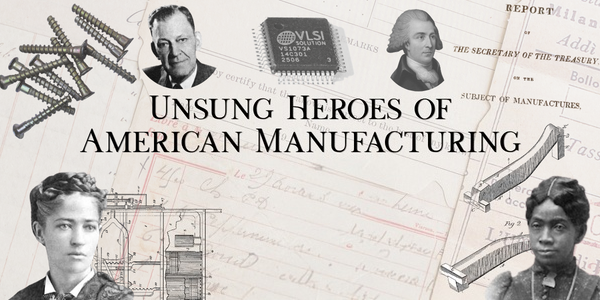
Ever stand before your kitchen sink and marvel at the number of dishes piled up over just a few meals? Josephine Cochrane did too – and she came up with a solution now embedded in homes and businesses around the world.
America has a long history of manufacturing – almost 250 years of it. We began milling cotton in Rhode Island in 1790 and continued to innovate beyond what was thought possible.
Of course, with that history came the manufacturers and inventors that worked tirelessly behind the scenes. Hundreds, maybe thousands of Americans helped create, invent or patent ideas that helped move our country forward. This new series, Unsung Heroes of American Manufacturing, seeks to highlight the more underrepresented of those individuals, telling their stories even centuries after their impact began.
You might know some of these names – for example, Alexander Hamilton is no longer an ‘unsung hero’ (thanks, Lin-Manuel Miranda). But did you know that he has been credited as the Founding Father of American Manufacturing? No? Then this series is for you.
We’ve got a hefty list of subjects to cover, and manufacturing stories from the ironing board to the Phillips-head screw. Keep an eye out for an invention that you use regularly and let us know if there’s someone you want us to highlight!
Josephine Cochrane (1841-1913)
It’s safe to say that everyone, at least once in their lives, has had to wash dishes. When you’re little your parents do it for you until you’re old enough to stand on a step stool in front of the kitchen sink. But, as an adult, you might not have as much time to spend up to your elbows in suds and dishwater, scraping away grease and food residue. In the late 1800s, a woman in Chicago decided enough was enough.
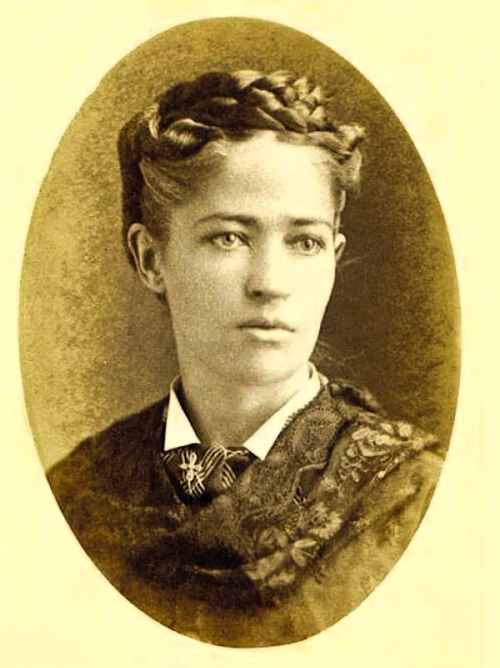
Josephine Garis Cochrane was born in 1841 in Ashtabula, Ohio, to John Garis and Irene Fitch Garis. Although many sources – and even Cochrane herself – have reported that she was the granddaughter or great granddaughter of steamboat inventor John Fitch, she was not related to him. She did, however, have an ancestor with the same name, and it is believed that she fabricated the connection to seem more legitimate as an inventor.
For her education, Cochrane attended a female seminary school in Illinois, and eventually moved to Windsor, Ill. to be with her sister. She met her future husband, William, while living in Windsor, and got married in Shelbyville, Ill. in 1858.
The story of how she came to invent the dishwasher might have been fabricated, too. After Cochrane’s husband died in 1883, she was left with little assets and needed to find a way to support her family. At the time, she lived with her sister, two half-siblings and her stepmother. The story Cochrane would later tell was that her servants had chipped heirloom dishes while handwashing them; but Cochrane likely didn’t have servants, as her and her husband were not affluent enough at the time. At the time of the 1870 census, there were none living in the couple’s home, and only one registered there ten years later.
Why did she tell these stories? Well, at the time, many male investors and manufacturers weren’t interested in doing business with a woman, especially a widowed one. In the early 1880s, when Cochrane began work on her design for an automatic dish washing machine, she had just lost her husband and was looking for ways to gain traction as an inventor. The embellished details and exaggerated stories were a perfect way for her to blend in with wealthy, upper class women, while also gaining credibility.
The first patent for her “dish washing machine” was granted in 1886 to a “J. G.” Cochrane, and later the next year she built a prototype with a young mechanic she’d hired. While others had presented ideas for dishwashers before Cochrane, her idea was different: Instead of having to pour boiling water into it or use scrubbers placed inside the machine, her design used water pressure to clean the dishes. She’d also thought up a rack that would hold the dishes in place, rather than precariously placing each plate, bowl and utensil inside.
After her first U.S. patent was granted, Cochrane continued to patent improvements to her design. By the time she moved to Chicago in the early 1890s, she’d already filed a British patent and a second U.S. patent with updated designs.
Her big break came in the form of the 1893 Chicago World’s Fair. Prior to the fair, Cochrane had been contracting a manufacturing firm in Decatur, Ill. since 1889. When she moved operations to Chicago, she changed the manufacturer, too. With the entirety of her business now based in one area, just in time for the World’s Fair, Cochrane was able to take advantage of the attention that the fair might bring to her invention.
She displayed her dish washing machine in both the Women’s Exhibition and Machinery Hall, and it had been installed in many fair restaurants. Even though she wasn’t the only person displaying a dishwasher in Machinery Hall that won recognition for their designs, Cochrane would go on to advertise that her machine won an award that placed hers above the rest. One ad read that the machine won the “highest award at World’s Fair. Medal and Diploma.”
Like the others, this embellishment helped propel Cochrane and her company into the limelight. She continued to manufacture and improve upon her dish washing machine, staying in Chicago for 23 years until her death in 1913. Posthumously, she was awarded one more patent, and following her death held six U.S. and two British patents.
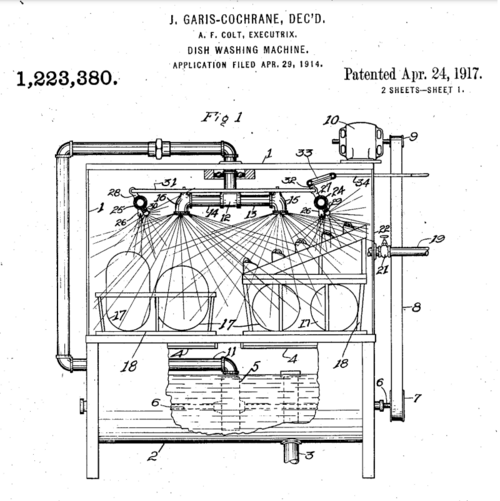
Despite the popularity of her machine at the time, Cochrane didn’t become a household name because most homes in the United States couldn’t produce the amount of hot water needed for her dishwasher. Average technology in homes couldn’t accommodate these needs until after World War II, when the first KitchenAid dishwasher was unveiled to the public.
So, next time you’re loading dishes into your dishwasher, stacking plates perfectly and nesting bowls next to each other, remember the woman who made this all possible. Without Cochrane’s inventions, we might still be hunched over our kitchen sinks, soap suds up to our chins!