

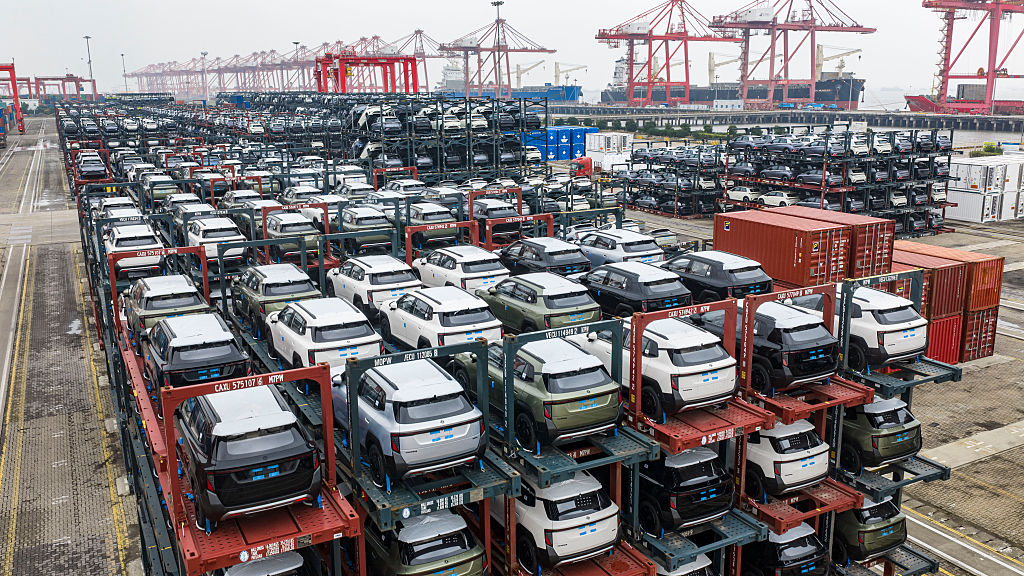
The U.S. Senate can preclude a flood of vehicles made by China’s well-tuned auto export machine into America by passing the Connected Vehicle Security Act.
Last week the German military barred Chinese drones and vehicles from its military bases after “a counterintelligence assessment showed that data was potentially being collected and disseminated.” That follows news the U.S. military recently barred vehicles made by BYD, the Chinese auto industry’s national champion, from a military base in Japan. It also follows the September discovery that Chinese-made rental vehicles filmed “access codes at secure sites and officials’ comings and goings” during a Norwegian military exercise at an Oslo airport.
We’ve recently wondered why such vehicles, made by companies linked to the Chinese government, are allowed to bid on federally backed infrastructure contracts in the United States. Another obvious question is: If they’re such a security threat, why are Chinese vehicles allowed to drive on American roadways at all?
They aren’t, technically. A U.S. Commerce Department rule issued during the Biden administration and maintained during the second Trump presidency bans the import of Chinese connected vehicle hardware and software. That effectively bans Chinese vehicles, which, like many modern autos are computers on wheels, are laden with microphones and cameras. But not all autos can be remotely disabled at the bottom of a mine shaft, or send unexplained data streams back to China.
And, what’s more, that Commerce Department rule is a rule, not a law; it can be changed, depending on who’s in the White House.
There is a bill in the U.S. Senate called the Connected Vehicle Security Act (CVSA) that would address that problem. This bipartisan legislation would codify the Commerce rule and ensure that the deluge of Chinese auto imports flooding the globe aren’t allowed into the American market.
But while it’s the national security concerns around these vehicles that have made recent headlines, the economic security threat is also clear. The American auto industry and its deep and varied supply chains are foundational to the U.S. manufacturing sector. Exposing the millions of workers who work in this industry to competition with Chinese rivals who are almost entirely focused on export markets would risk economic calamity in a dozen U.S. states, including the states represented by two senators – Rand Paul in Kentucky, home to Ford and Toyota plants, and Ted Cruz in Texas, home to Toyota and GM factories – whose objections have held the CVSA up.
They shouldn’t delay any longer. Congress is back for its lame-duck session to pass important year-end legislation and the CVSA should be among it. Don’t create carve-outs that will ultimately become exploitable loopholes, pass it as is and preclude the Chinese auto industry entry into the United States.
Letting it in would be a serious mistake, and it’s one we can see coming.