

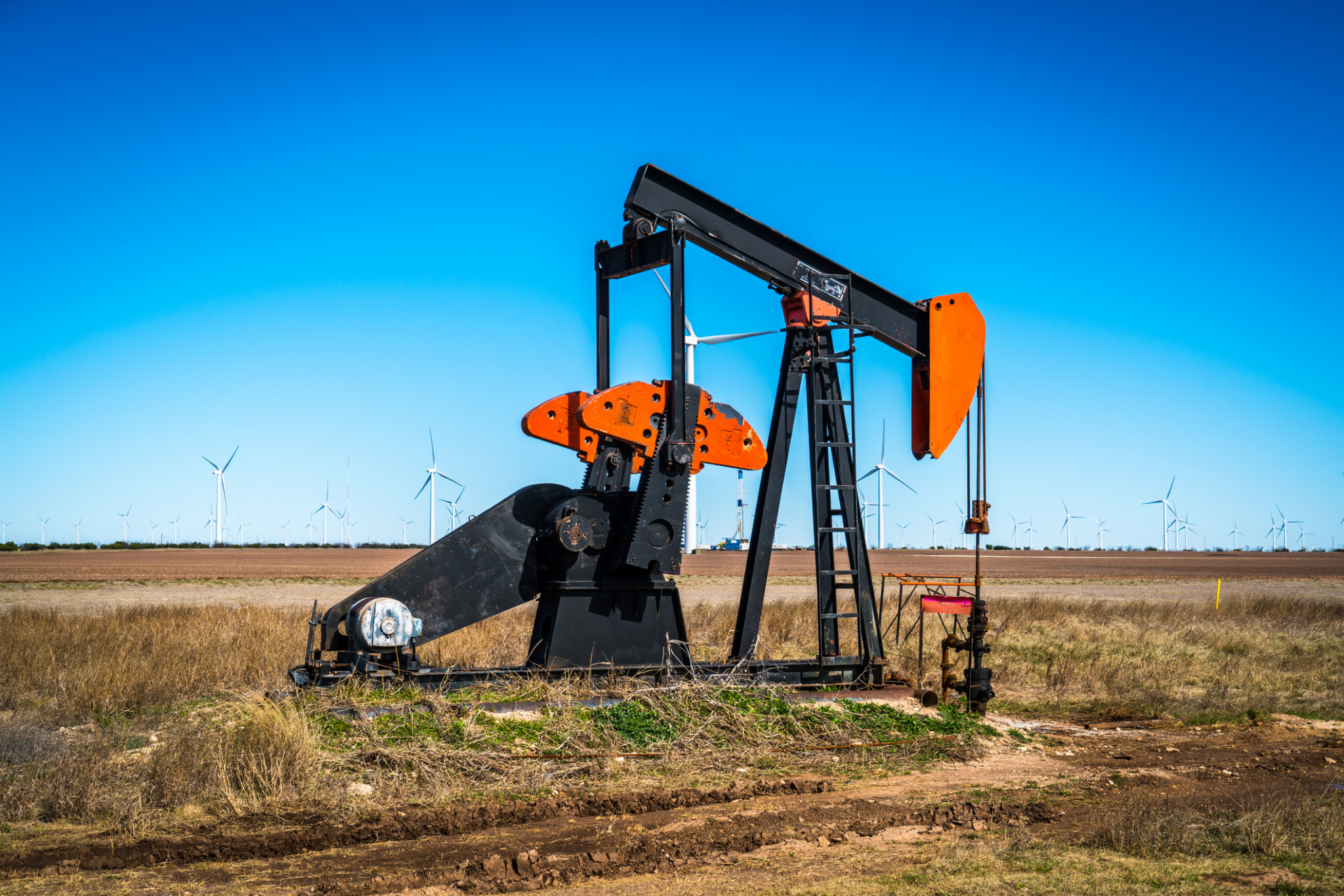
The nodding donkey, the thirsty bird, the rocking horse, the big Texan: We’ve all seen them, but who invented this icon of the American landscape?
America has a long history of manufacturing – almost 250 years of it. We began milling cotton in Rhode Island in 1790 and continued to innovate beyond what was thought possible.
Of course, with that history came the manufacturers and inventors that worked tirelessly behind the scenes. Hundreds, maybe thousands of Americans helped create, invent or patent ideas that helped move our country forward. This new series, Unsung Heroes of American Manufacturing, seeks to highlight the more underrepresented of those individuals, telling their stories even centuries after their impact began.
You might know some of these names – for example, Alexander Hamilton is no longer an ‘unsung hero’ (thanks, Lin-Manuel Miranda). But did you know that he has been credited as the Founding Father of American Manufacturing? No? Then this series is for you.
We’ve got a hefty list of subjects to cover, and manufacturing stories from the ironing board to the Phillips-head screw. Keep an eye out for an invention that you use regularly and let us know if there’s someone you want us to highlight!
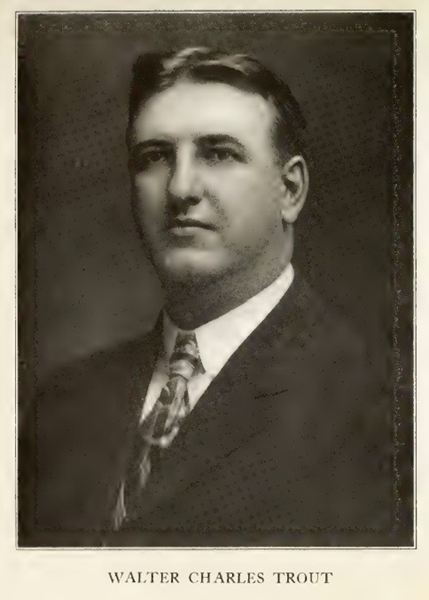
Walter C. Trout (1874-1947)
Born in Ontario, Canada, as the oldest of five children, Walter C. Trout’s path towards the oil industry was far from straightforward. As a young man, Trout wanted to become a horse doctor and worked as a veterinary assistant. After a horse procedure gone wrong, he changed course and entered the world of business. He worked in the laundry business and in a machine shop before becoming a sawmill machinery engineer and salesman in Milwaukee. Around age 31, Trout became interested in a relatively new company based out of East Texas.
The Lufkin Foundry and Machine Company was founded in 1902 by three East Texan families to serve the machinery fabrication and repair needs of local sawmills. The East Texas region is known as the “Pineywoods” for its thick pine forests and the introduction of the railroad to the area in the late 1800s had birthed a thriving lumber industry. Trout, his interest as a sawmill engineer piqued, moved to Lufkin, Texas, bought 40 shares of stock in Lufkin Foundry, and was elected the secretary of the company. Trout got to work selling equipment to area sawmills, using his engineering background to develop new equipment designs as he went (often in that order, as he was known to sell a job before creating the designs to fulfill it).
By the early 1920s, the lumber industry in East Texas began to decline, and sawmills fell on hard times. Fortunately, Trout recognized the potential of the new oil industry developing in the region after several oil field discoveries around the turn of the century. He traveled to oilfields to find inspiration for a new product that would compensate for the company’s sawmill losses and quickly discovered an opportunity: the standard oil rig of the time had not changed since oil was first produced in the 1800s.
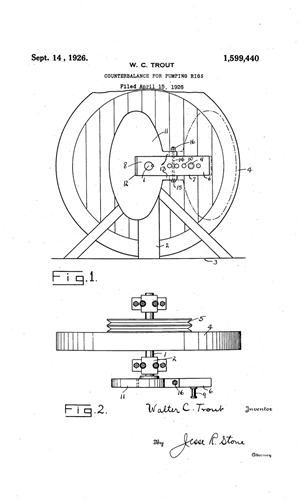
In 1923, Trout had lunch with Ross Sterling, future governor of Texas and then president of Humble Oil and Refining Company, who challenged him to build a gear-enclosed unit for pumping oil. Lufkin Foundry and Machine Company then built the first gear-enclosed pumping units, but they were too small and easily damaged with use. Despite this failure costing Lufkin Foundry around $100,000 (almost $2 million today, adjusted for inflation), Standard Oil expressed interest in the gear-enclosed units; however, they would not purchase any until some counterbalancing was implemented in the units. Trout sketched his ideas for a counterbalancing unit in 1925, and the company began experimenting with its production. In 1926, Trout’s design was patented, and the first of the new pumping units were installed.
There was just one problem: People thought it looked silly. According to Trout, “The well was perfectly balanced, but even with this result, it was such a funny-looking, odd thing that it was subject to ridicule and criticism, and it took a long time, nearly a year, before we could convince many the idea was a good one.”
Walter C. Trout passed away in 1947, and in 1948 the company’s board of directors named his son, Walter W., as the next president.
Under the leadership of Walter W., the quality of his father’s invention won over the skeptics, and Lufkin Foundry and Machine Company became the dominant manufacturer of the new global standard for oil production machinery. The engineers at Lufkin Foundry continued to tinker with their oil pump designs, and after bringing on another talented inventor, in the 1960s produced the Mark II. Also known as the “grasshopper,” the Mark II is the modern shape of oil pump jacks we see all over the country.