

The next time you quickly iron out a few wrinkles before a business-casual event, remember the Black woman who invented a padded, contoured board to make your work easy.
America has a long history of manufacturing – almost 250 years of it. We began milling cotton in Rhode Island in 1790 and continued to innovate beyond what was thought possible.
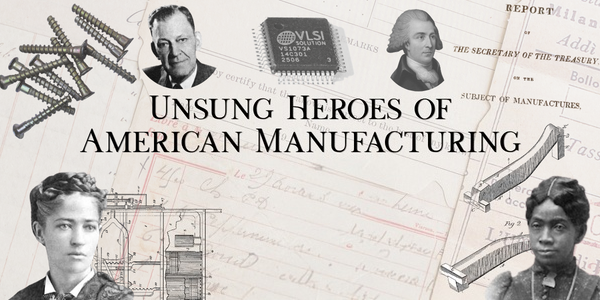
Of course, with that history came the manufacturers and inventors that worked tirelessly behind the scenes. Hundreds, maybe thousands of Americans helped create, invent or patent ideas that helped move our country forward. This new series, Unsung Heroes of American Manufacturing, seeks to highlight the more underrepresented of those individuals, telling their stories even centuries after their impact began.
You might know some of these names – for example, Alexander Hamilton is no longer an ‘unsung hero’ (thanks, Lin-Manuel Miranda). But did you know that he has been credited as the Founding Father of American Manufacturing? No? Then this series is for you.
We’ve got a hefty list of subjects to cover, and manufacturing stories from the ironing board to the Phillips-head screw. Keep an eye out for an invention that you use regularly and let us know if there’s someone you want us to highlight!
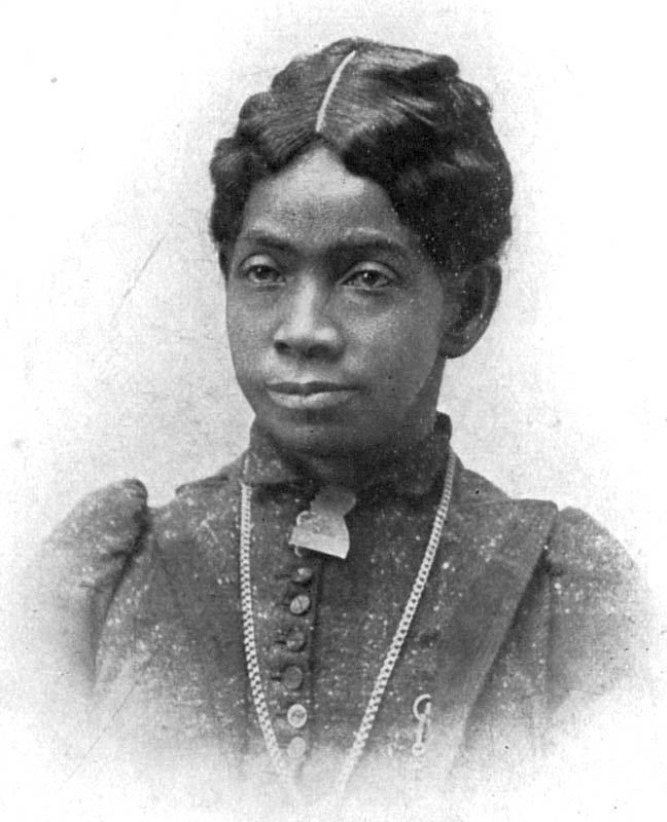
Sarah Boone (1832-1904)
It’s happened to the best of us. Some mornings you wake up, ready to pull on your business-casual work clothes and face the day. You pull down a pair of dress pants … and they’re wrinkled. Luckily, you’ve got a couple minutes of extra time, so you head to the laundry room, pull out your ironing board and get busy.
You might not think twice about this series of events, but in the early days of ironing technology, ironing boards weren’t exactly user-friendly. Clothes were often ironed on available tables or boards. If you didn’t have a good blanket or sheet to put between your clothes and the wood, the woodgrain would leave marks and indents on your fabric. Due to the shape of the board, it was also difficult to iron things like sleeves, pant legs and tight bodices or corsets commonly found on dresses.
To fix this, one woman had an idea.
Sarah Boone, née Marshall, was an African American woman born a slave in Craven County, North Carolina in 1832. At just 15 years old, Boone married a free man, James Boone, and was granted her own freedom soon after. The couple moved to New Haven, Connecticut, where Boone became a dressmaker and her husband got a job as a bricklayer.
Unfortunately, James died in 1876, leaving Boone alone with her work and their many children at a time when unmarried women (especially women of color) were immensely disadvantaged by society. As a dressmaker, Boone dealt with the struggles of the ironing board at the time and had plenty of time to conclude that the current standard of commercial boards could be improved.
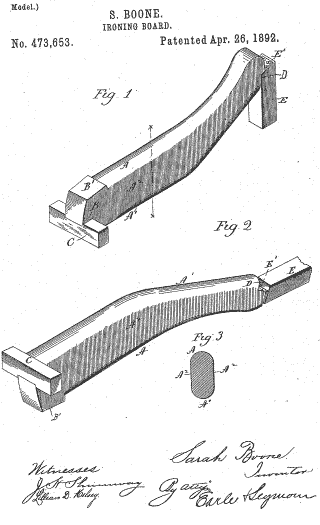
In 1891, Boone applied for a patent on her upgrades to the ironing board, and in 1892 became one of the first African American women in the United States to be granted a patent. On her application, Boone wrote, “My invention relates to an improvement in ironing-boards, the object being to produce a cheap, simple, convenient, and highly effective device, particularly adapted to be used in ironing the sleeves and bodies of ladies garments.”
Among her many updates to the board, Boone added more padding between the wood and the clothing, reshaped the design to make corsets, sleeves and delicate pieces easier to iron, and made the whole thing collapsible for easy storage. Our modern board isn’t exactly what Boone thought up, but she paved the way for a more streamlined and user-friendly product.
Just 12 years after patenting her design, Boone passed away at the age of 72 – living to twice the average lifespan for African American women at the time. For decades, little was known about her life, but scholars are beginning to dig deeper into Boone’s history and document her legacy.
While she didn’t get to see the long-term impact of her invention, Boone’s design has helped countless people all around the world look sharper and take better care of their clothes. Without her, we might still be ironing on wooden planks balanced across two chairs! So, the next time you wake up to a wrinkly shirt and pull down your ironing board, remember the woman who made it all possible.