
“The world’s best” AI chatbot can find false “Made in USA” claims, so why isn’t it taking these listings down?
Hunting for “Made in USA” goods in today’s marketplace can be shockingly difficult, especially online where country-of-origin labeling isn’t legally required (though there is legislation to change that). Now Amazon and Walmart are making it even more difficult, and they’re leveraging artificial intelligence (AI) to do it, according to a new report from Columbia’s Center for Law and the Economy.
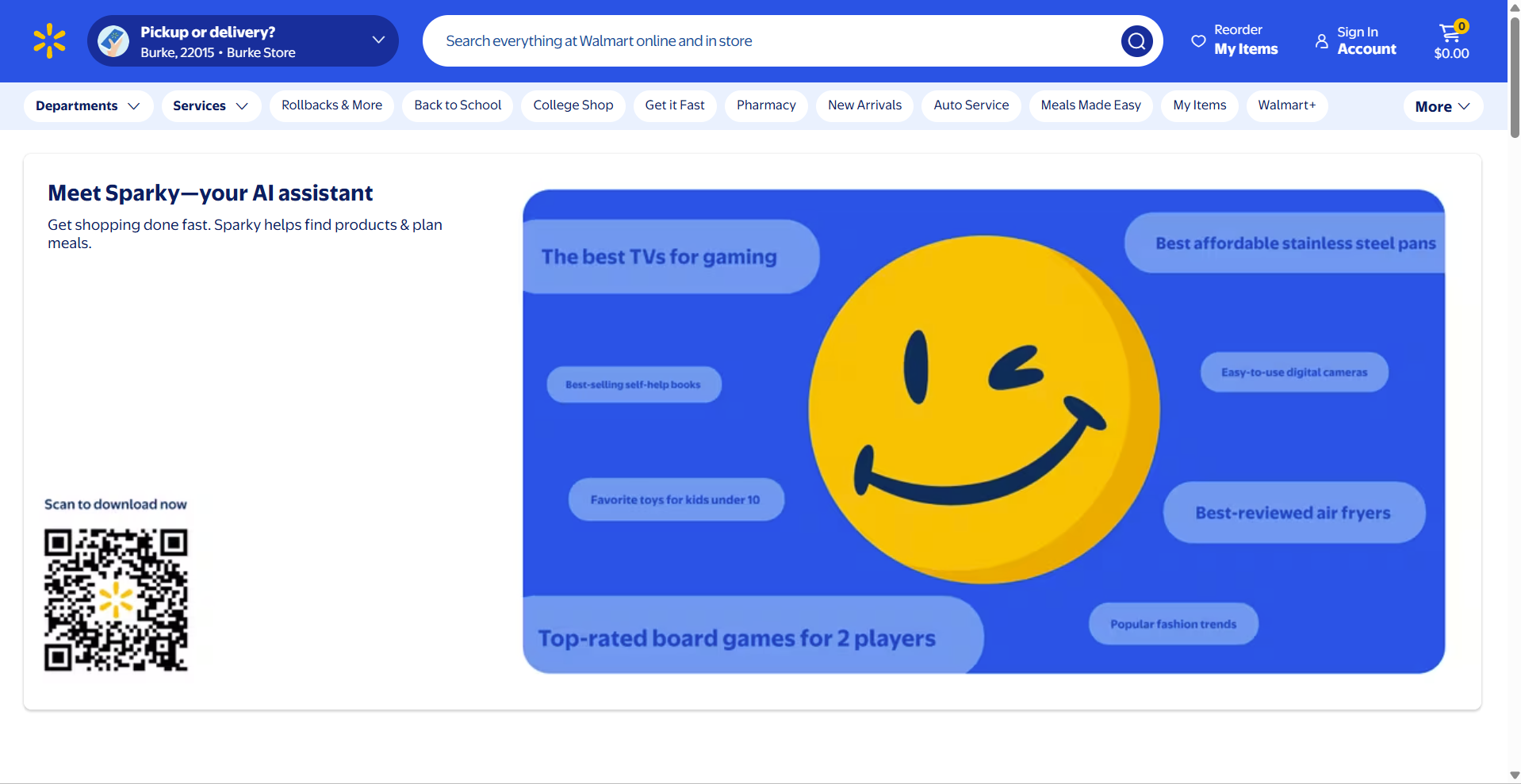
When Amazon launched the latest edition of its shopping chatbot, Alexa for Shopping, this May, it heralded the new AI as “the world’s best, most personalized AI assistant for shopping.” Almost a year earlier, Walmart proclaimed that Sparky, its own AI shopping assistant, would provide “instant and comprehensive answers to product-related questions.” Yet, both of these AI assistants won’t show “Made in USA” products when asked, despite having “Made in USA” items available on both Amazon and Walmart, according to Columbia’s report. (It’s a finding that you can easily replicate yourself if you query the chatbots. See how we did it in the video embedded in this article.)
That these sophisticated chatbots are stumped by a simple request may seem odd, but Columbia’s researchers discovered that both Amazon’s Alexa and Walmart’s Sparky “had access to the data and the ability to produce a complete answer all along” and “was an engineered block, not a genuine data gap.”
The report finds that Amazon and Walmart’s shopping AI chatbots can detect “Made in USA” fraud in their inventories but told Columbia’s researchers that “flagging such fraud is technically feasible, but the decision not to do so is ‘a business calculation, not a legal justification. Where legal exposure increases— through FTC action, state AG enforcement, or class action litigation—retailers tend to move faster on exactly these kinds of systems.’”
There are laws meant to prevent “Made in USA” fraud and regulate labeling. Under its authority to prohibit deceptive acts or practices in the U.S. marketplace, the Federal Trade Commission (FTC) “can bring law enforcement actions against false or misleading claims that a product is of U.S. origin.”
The agency defines an unqualified “Made in USA” claim as meaning “all or virtually all” of the product has been made in the United States and has penalized companies that fraudulently make that claim. Notably, the FTC imposed a financial penalty for a false “Made in USA” claim for the first time ever in its 2020 settlement with Williams Sonoma.
More than a year ago, the Federal Trade Commission (FTC) warned both Amazon and Walmart in separate letters that they must “monitor, identify, and take corrective action against third-party sellers who make false or misleading ‘Made in USA’ claims on your online marketplace,” as well as identifying several examples of this fraud via third-party sellers on their websites.
However, Columbia’s researchers “surfaced dozens of fraudulently-labeled products collectively worth thousands of dollars that were on the platforms today, and the limiting factor was our time, not the availability of examples.”
“Made in USA” labels are hard won. The manufacturers and makers who invest in our nation deserve to be recognized for it, and we know that consumers seek these labels out.
Nearly four in five (76%) Americans prefer to buy U.S.-made products, polling conducted by Morning Consult on the Alliance for American Manufacturing’s behalf shows—results that we’ve seen time and time again in polls over the years. Furthermore, the vast majority of Americans (83%) would buy more Made in America goods, if these products were more widely available.
Amazon and Walmart’s decision to neglect “Made in USA” fraud on its websites, as documented by Columbia’s report, makes it even more difficult for consumers to find “Made in USA” goods and dilutes the value of the label. We deserve better.
We curate our Made in America Directory with more than 1,000 U.S. makers and manufacturers to help shoppers find the American-made goods they want, but Americans should be able to shop anywhere on the internet and trust that the products they’re buying are correctly labeled.
The Alliance for American Manufacturing does not receive a commission from purchases made through the above links, nor was the organization or author paid for favorable coverage.
Labeling Note: This story is intended to highlight companies that support American jobs and that make great products in the United States. We rely on the companies listed to provide accurate information regarding their domestic operations and their products. Each company featured is individually responsible for labeling and advertising their products according to applicable standards, such as the Federal Trade Commission’s “Made in USA” standard or California’s “Made in USA” labeling law. We do not review individual products for compliance or claim that because a company is listed in the guide that their products comply with specific labeling or advertising standards. Our focus is on supporting companies that create American jobs.
For more on the Federal Trade Commission’s standards for “Made in USA” claims and California’s “Made in USA” labeling law, please also read this guest post by Dustin Painter and Kristi Wolff of Kelly Drye & Warren, LLP.